Natural pre-workout uses plant-based caffeine sources (like guarana), skips artificial colours, sweeteners, and synthetic stimulants, and shows every ingredient dose on the label. It performs just as well as regular pre-workout when properly dosed. If you care about what you're putting in your body, it's absolutely worth it.

What makes a pre-workout "natural"?
There's no official legal definition of "natural" on a supplement label in Australia, so it's worth knowing what to actually look for.
A genuinely natural pre-workout typically means:
-
Natural caffeine sources — guarana, green tea extract, or green coffee bean instead of synthetic caffeine anhydrous
-
No artificial colours — none of the petroleum-derived dyes like tartrazine (102), sunset yellow (110), or allura red (129)
-
No artificial sweeteners — no sucralose, aspartame, or acesulfame potassium
-
No synthetic stimulants — no DMAA, synephrine, or other lab-made compounds
-
Whole-food or plant-derived ingredients — things you could trace back to a plant or food source
-
Fully disclosed doses — every ingredient listed with its exact amount
Compare that to a typical "regular" pre-workout. You'll often find synthetic caffeine anhydrous, a neon colour from a petroleum-derived dye, sucralose as the sweetener, and a "proprietary blend" that hides individual ingredient doses behind a single total weight. That last one is the biggest red flag. If a brand won't tell you how much of each ingredient is in the product, you can't know if it's actually effective.
To understand what pre-workout actually does in the body, the fundamentals are the same whether the formula is natural or not — it's the ingredient quality and transparency that differ.

Natural vs regular pre-workout — the key differences
Here's a straight comparison across the factors that matter most:
|
Feature |
Natural Pre-Workout |
Regular Pre-Workout |
|---|---|---|
|
Caffeine source |
Guarana, green tea, green coffee |
Synthetic caffeine anhydrous |
|
Energy curve |
Gradual rise, sustained energy |
Fast spike, potential crash |
|
Jitters risk |
Lower (slow-release caffeine) |
Higher (rapid absorption) |
|
Colours |
None or plant-based |
Often artificial (102, 110, 129) |
|
Sweeteners |
Stevia, monk fruit, or none |
Sucralose, aspartame |
|
Label clarity |
Full ingredient disclosure |
Often proprietary blends |
|
Banned substance risk |
Lower (simpler ingredient list) |
Higher (more complex formulas) |
|
Price point |
Slightly higher on average |
Wide range, often cheaper |
Honest caveat: natural doesn't automatically mean better performance. A natural pre-workout with underdosed ingredients will underperform a well-dosed regular one every time. The real advantage of natural is fewer unknowns — you know what you're getting, where it came from, and roughly how your body will respond.
Does natural pre-workout actually perform as well?
This is the question most people actually want answered. Short version: yes, if it's properly dosed.
The core doubt usually comes down to caffeine. Synthetic caffeine anhydrous is fast-acting and well-studied. Guarana delivers the exact same caffeine molecule — but the delivery is different.
Guarana seeds contain natural tannins and saponins that bind to the caffeine. These compounds act like a natural time-release mechanism, slowing the rate at which caffeine enters your bloodstream. The result is a more gradual energy curve rather than the sharp spike and crash you get from straight caffeine anhydrous.

Research supports this. Studies show that guarana's tannins and saponins slow caffeine absorption, providing a sustained effect rather than a sudden jolt. Some research also suggests guarana may offer stimulation beyond caffeine alone, due to additional bioactive compounds including theophylline and theobromine. In practical terms, that means a smoother workout without the mid-session energy cliff.
For the full breakdown of the science, read our article on what guarana is and how it works.
The other ingredients — creatine, citrulline, beta-alanine — work identically regardless of whether the product is labelled "natural." Read more about creatine in pre-workout and what citrulline does if you want to understand the full formula picture.
Bottom line: natural pre-workout performs as well as regular pre-workout when the doses are right. The energy just arrives differently — steadier, longer, with less crash risk.
What to look for in a natural pre-workout

Use this as your checklist when reading a label:
Natural caffeine source (guarana, green tea, or green coffee) The caffeine molecule is the same. The source determines how fast it hits and how long it lasts.
Fully disclosed doses — no proprietary blends Every ingredient should have its exact amount listed. If you see "performance matrix 4,500mg" with five ingredients underneath and no individual doses, walk away.
No artificial sweeteners Sucralose and aspartame are the most common. Look for stevia, monk fruit, or no sweetener at all.
No artificial colours If the powder is neon blue or radioactive orange, that colour came from somewhere. Check for codes 102, 110, or 129 on the label.
Vegan-friendly Not just an ethical consideration — vegan formulas tend to avoid the animal-derived fillers and gelatine capsules that can sneak into cheaper products.
Made in Australia or manufactured in a GMP-compliant facility In Australia, sports supplements that meet certain criteria are regulated under the Therapeutic Goods Administration (TGA). Products made in GMP-compliant Australian facilities are subject to stricter quality and labelling standards than many imported alternatives. That's a meaningful quality signal.
No banned substances Sport Integrity Australia's research found banned substances in 34% of pre-workout supplements that hadn't been independently batch-tested. If you compete in any tested sport, this matters a lot.
What to avoid in a pre-workout (natural or not)

These are the red flags — they apply to any pre-workout, natural or otherwise.
Proprietary blends A "blend" with a total weight but no individual doses is a transparency problem. You can't assess whether the key ingredients are actually effective at the listed amount.
Underdosed key ingredients Citrulline malate needs to be dosed meaningfully to do anything useful. Same with beta-alanine and creatine. A product that includes 10 ingredients at tiny doses isn't a formula — it's a label.
Excessive caffeine (above 200mg per serve) More caffeine isn't better. High doses increase jitter risk, disrupt sleep, and can cause heart palpitations in sensitive individuals. For most people, 100–175mg is the sweet spot.
Artificial colours 102, 110, and 129 Tartrazine (102), sunset yellow (110), and allura red (129) are petroleum-derived synthetic dyes. They serve zero performance purpose in a pre-workout — they're there to make the powder look impressive. The EU requires warning labels on foods containing these colours. They add nothing to your workout.
Synthetic stimulants like DMAA The TGA has issued recalls over products containing undeclared DMAA. It's banned in competitive sport and carries real health risks. Avoid any product that doesn't clearly disclose every stimulant ingredient.
Banned substance risk for athletes If you compete in any tested sport, check the Sport Integrity Australia app before taking any pre-workout. The contamination risk is real — even in products that look clean on the label.
For a full rundown of what's normal and what's not, see our guide on pre-workout side effects.
Is Spark a natural pre-workout?

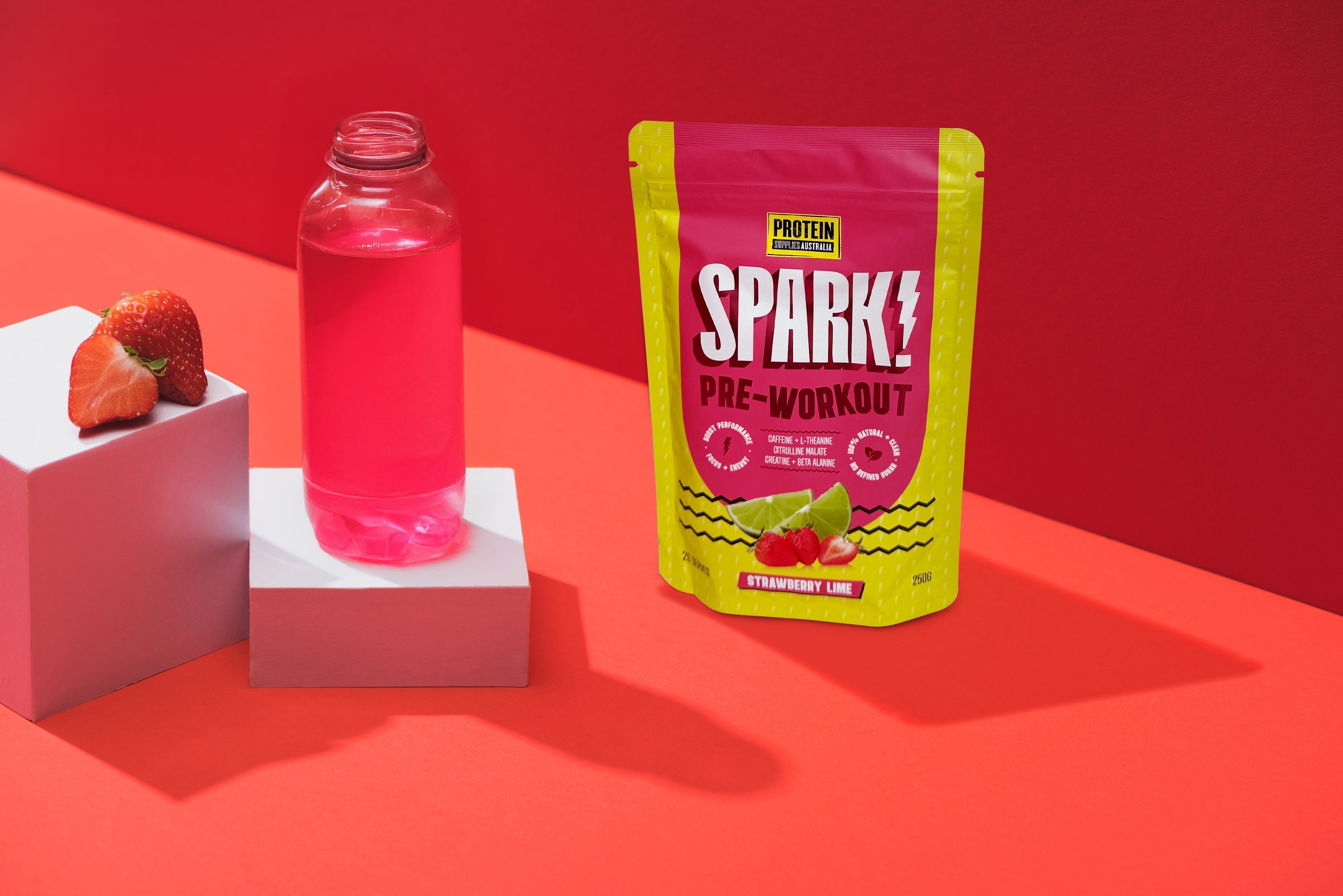
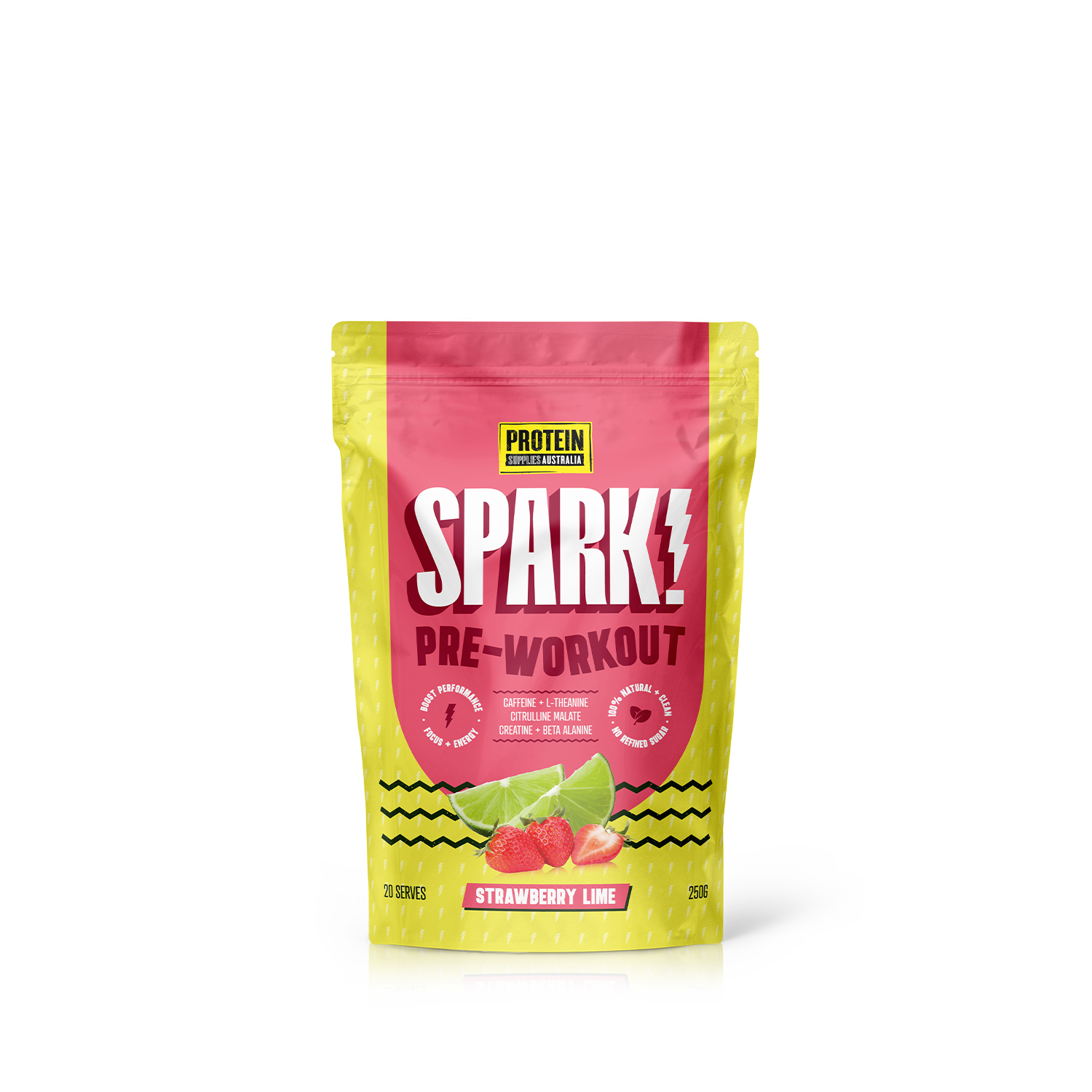
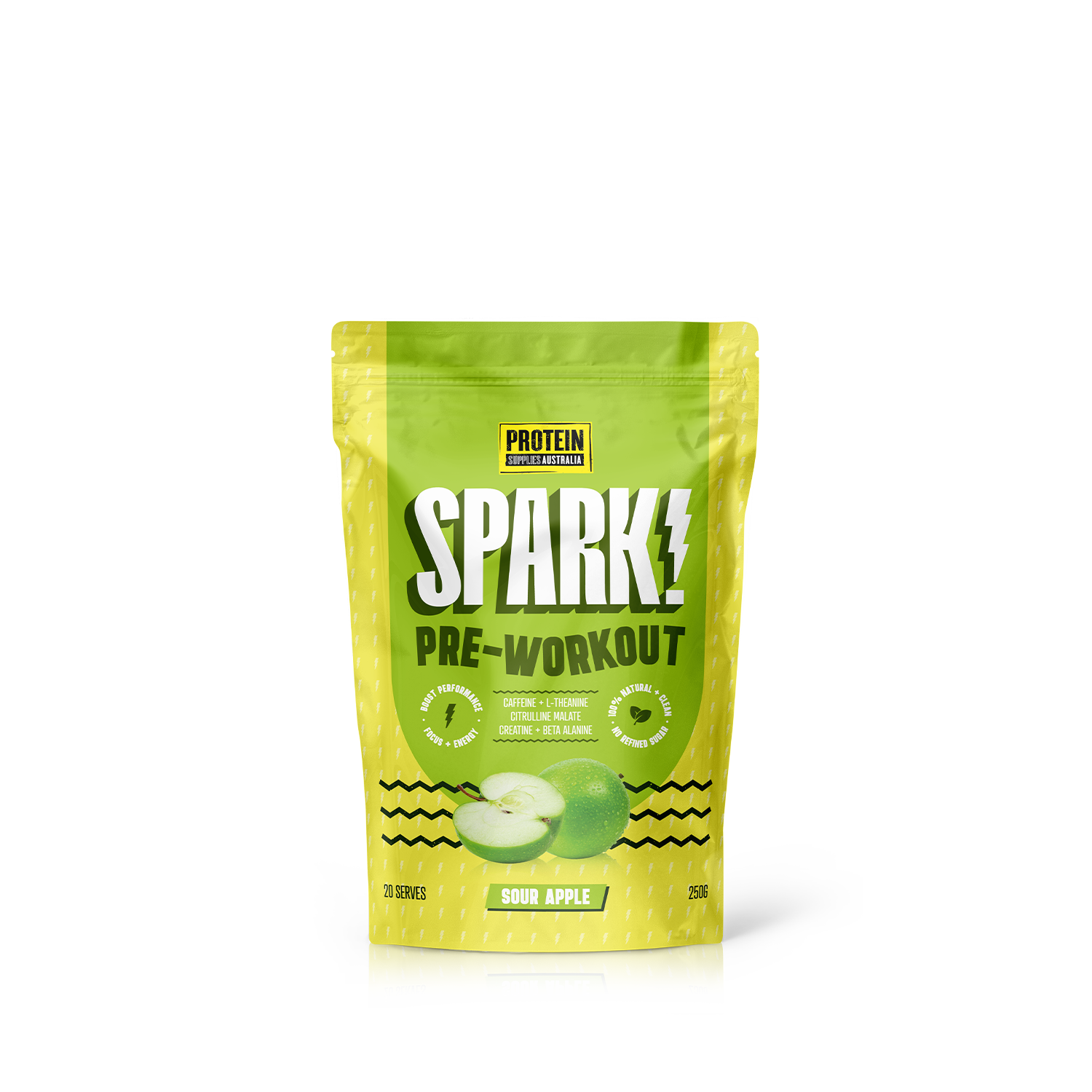
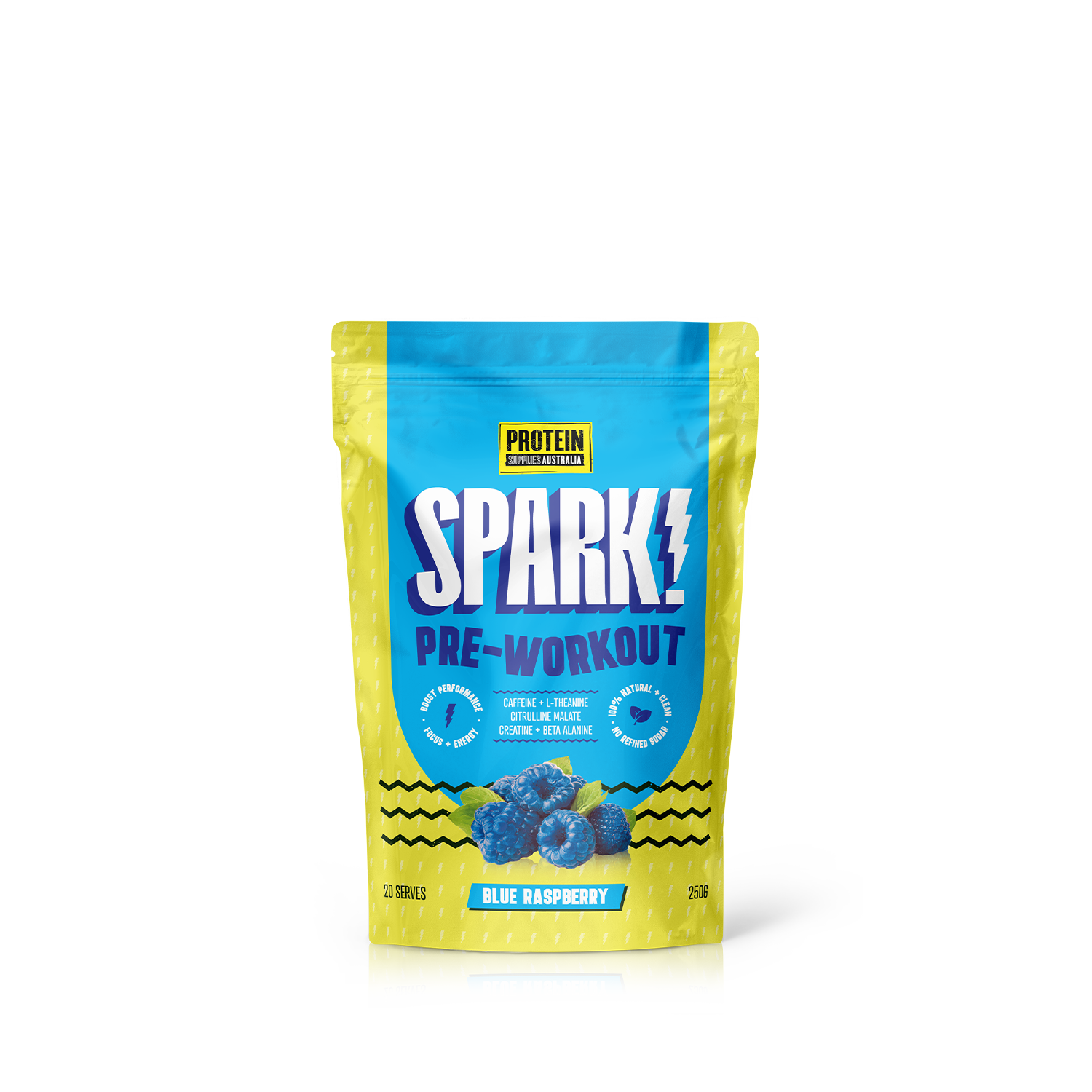
Yes. Spark is Protein Supplies Australia's pre-workout, and it's built on the principles above.
Here's what's in it and why it qualifies as a genuinely natural pre-workout:
Caffeine source: Guarana (105mg natural caffeine) Not synthetic caffeine anhydrous. Guarana delivers the same molecule with a slower, smoother release profile thanks to its natural tannin content.
Creatine Monohydrate: 3g The most researched form of creatine. 3g per serve contributes to your daily creatine intake — pair with a standalone creatine dose if you want to hit the full 5g research threshold.
Citrulline Malate: 2g Supports blood flow and muscle endurance. Every milligram disclosed.
Beta-Alanine: 1.3g Buffers lactic acid build-up during high-intensity efforts. The tingling sensation (paraesthesia) is normal and harmless.
Alpha GPC 99% A high-purity choline source that supports focus and the mind-muscle connection during training.
L-Tyrosine An amino acid that supports dopamine and noradrenaline production — relevant for mental sharpness under physical stress.
L-Theanine Works alongside caffeine to smooth out the energy curve and reduce jitter risk. A smart pairing with guarana.
PANMOL B Complex A bioavailable B vitamin complex to support energy metabolism.
Electrolytes (Mg, K, Na) Magnesium, potassium, and sodium to support hydration and muscle function during training.
The label facts:
-
100% natural ingredients
-
Vegan and gluten-free
-
No artificial colours, flavours, or sweeteners
-
No banned substances
-
Made in Australia
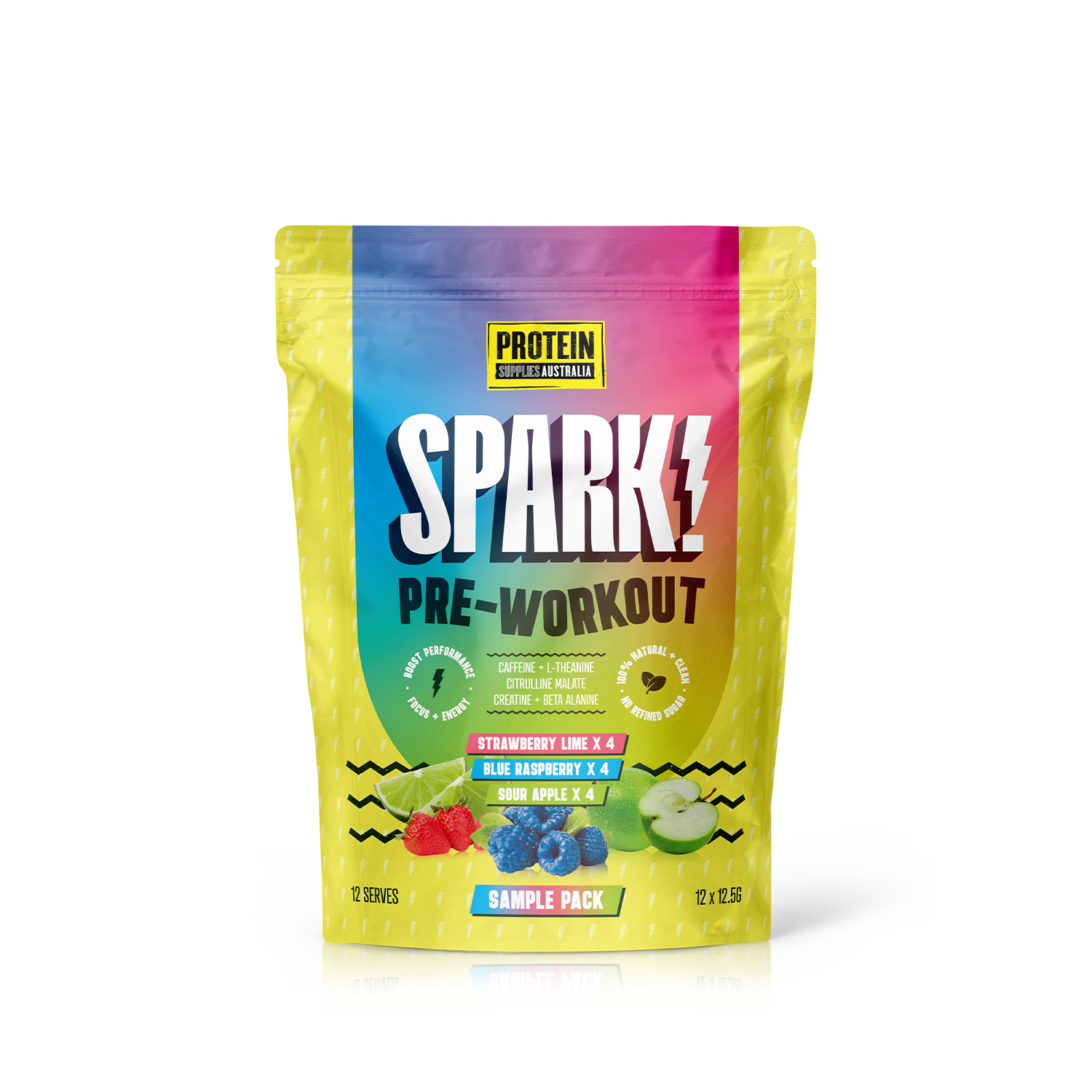
Spark comes in three flavours — Sour Apple, Blue Raspberry, and Strawberry Lime. Not sure which one to start with? Grab the Spark Sample Pack and try all three before committing to a full bag.

Creatine in Pre-Workout: What It Does, Why It's There, and How Much You Need
L-Theanine and Caffeine: Why This Stack Works