
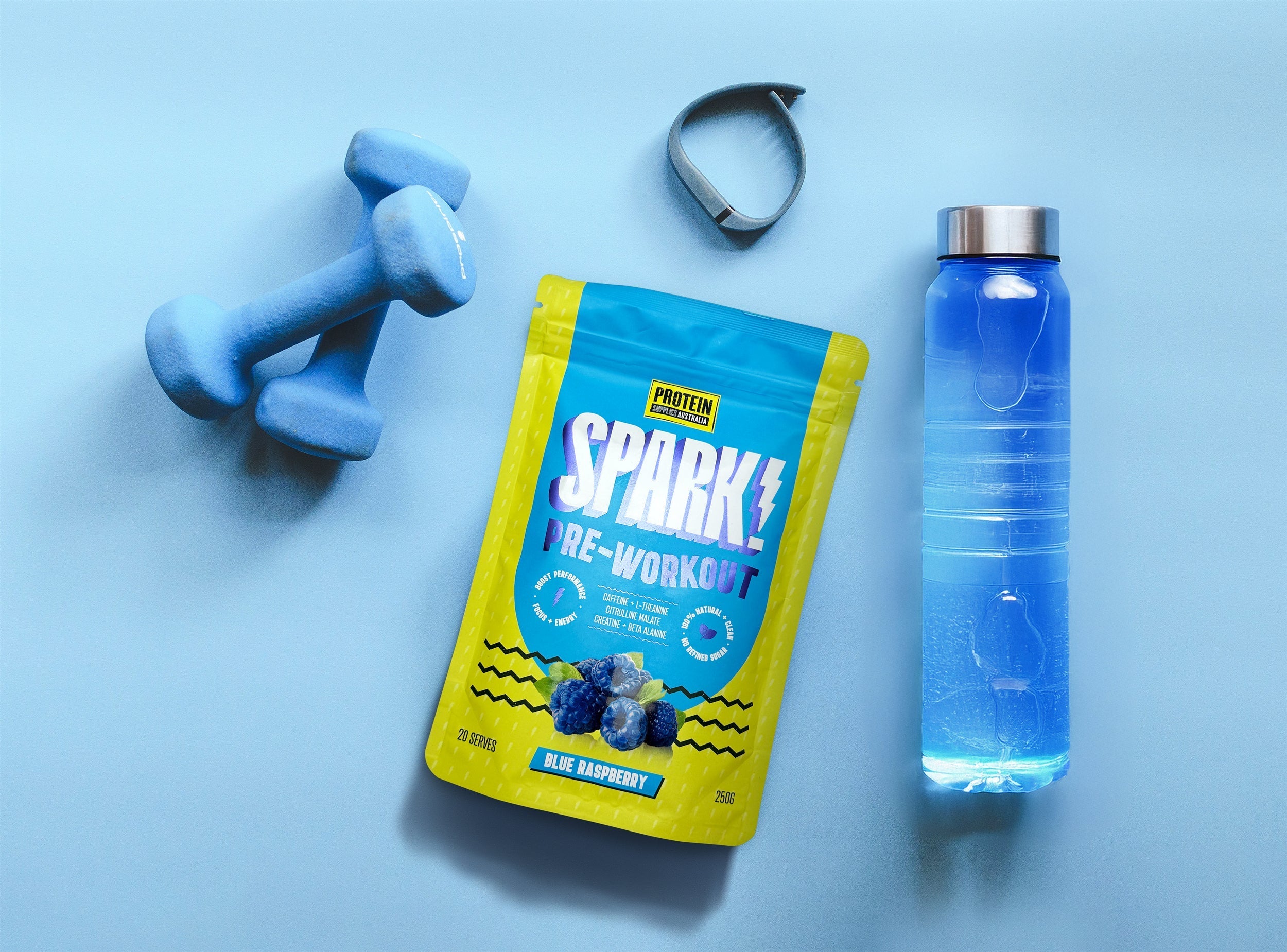
TL;DR: The creatine in a pre-workout like Spark (3g per serve) sits right at the low end of the effective daily dose range (3–5g). For most people, 3g daily is enough to maintain saturated muscle stores over time. If you're a larger athlete, doing a loading phase, or want to hit 5g consistently, topping up with a standalone creatine product makes sense. Either way, creatine works timing and source don't matter nearly as much as daily consistency.

What is creatine?
Creatine is a naturally occurring compound your body makes from three amino acids: arginine, glycine, and methionine. About 95% of it is stored in your skeletal muscle, mostly as phosphocreatine (PCr).
Here's the short version of how it works:
Your muscles run on ATP (adenosine triphosphate). During explosive, high-intensity efforts a heavy squat, a sprint, a max-effort set ATP gets used up fast. Phosphocreatine donates a phosphate group to regenerate ATP almost instantly, keeping your muscles firing when they'd otherwise start to fade.
Your body produces roughly 1–2g of creatine per day on its own. You also get small amounts from food — red meat and fish are the main sources, with around 1–2g per 500g of beef. That's why vegetarians and vegans often have lower baseline muscle creatine levels, and tend to respond more noticeably to supplementation.
Why is creatine so well-researched?
It's one of the most studied supplements in sports nutrition history. There are over 500 peer-reviewed publications on creatine supplementation, and the International Society of Sports Nutrition (ISSN) has published multiple position stands confirming its safety and effectiveness. No other single supplement has that depth of evidence behind it.

What does creatine do in a pre-workout?
Creatine doesn't give you an immediate buzz like caffeine does. It works over time by increasing the phosphocreatine stores in your muscles — which means more fuel available for high-intensity efforts.
The main benefits backed by research:
-
Increased power output — more phosphocreatine means more ATP regeneration during explosive movements
-
Greater strength — consistent creatine use supports improvements in 1-rep max and overall lifting performance
-
Better training volume — you can do more reps, more sets, before fatigue kicks in
-
Faster recovery between sets — ATP replenishment happens more quickly when creatine stores are topped up
-
Lean muscle support — creatine draws water into muscle cells, supporting cell hydration and protein synthesis
So why put it in a pre-workout?
Convenience, mostly. If you're already mixing a pre-workout before training, adding creatine to that formula means one less thing to remember. It also means you're consistently dosing around your workout window, which is a reasonable time to take it (more on timing below).

Pre-workouts like Spark combine creatine with other performance ingredients — citrulline, beta alanine, guarana-sourced caffeine, electrolytes — so you get a complete training stack in one scoop. That's the practical appeal. Want to understand what a pre-workout actually does? We've broken that down in full.
How much creatine do you actually need?
The research-backed effective dose is 3–5g per day. That's the maintenance dose supported by the ISSN and confirmed across hundreds of studies.
Loading phase vs. no loading:
|
Approach |
Protocol |
Time to full saturation |
|---|---|---|
|
Loading phase |
~0.3g/kg/day for 5–7 days, then 3–5g/day |
~7 days |
|
No loading |
3–5g/day from day one |
~3–4 weeks |
Loading gets you to full muscle saturation faster — useful if you want results in the first week. Skipping it is fine too; you'll reach the same endpoint, just a few weeks later.
Where does 3g sit in that range?
Spark contains 3g of Creatine Monohydrate per serve. That's at the lower end of the 3–5g maintenance window, but it's within the effective range.
For most people — say, someone training 4–5 days a week at 70–80kg — 3g daily is enough to maintain elevated muscle creatine stores over time, especially if you're already eating red meat or fish regularly.
Who might want more than 3g?
-
Larger athletes (90kg+) whose muscle mass means higher creatine demand
-
Anyone doing a loading phase (you'd need 15–20g/day for that first week)
-
People who eat little to no meat and are starting from a lower baseline
-
Those who want to hit the upper end of the 5g dose consistently
If that's you, stacking Spark with a separate serve of Creatine Pure is a clean, simple way to top up your daily dose without switching products.
Australian note: The Australian Institute of Sport (AIS) classifies creatine monohydrate as a Group A supplement — meaning it has strong scientific evidence for use in specific sport situations. It is also not on the WADA Prohibited List, confirmed by Sport Integrity Australia.

Creatine pre-workout vs post-workout — does timing matter?
This is one of the most searched questions around creatine, and the honest answer is: timing matters less than you think.
What the research actually shows:
A 2022 randomised, double-blind study published in Frontiers in Sports and Active Living found that the timing of creatine monohydrate — pre vs. post-workout — did not produce any significant difference in resistance training adaptations or body composition over 8 weeks.
An earlier 2013 study (Antonio & Ciccone) did find a slight trend favouring post-workout creatine for fat-free mass and strength, but the sample size was small and the differences weren't statistically significant.
A 2021 review in Nutrients noted that while there's emerging evidence suggesting post-exercise may offer a modest edge, the methodological limitations of current studies mean no firm conclusion can be drawn.
The bottom line:
Daily consistency is what drives results. Creatine works by saturating your muscle stores over time — it's not an acute hit like caffeine. Whether you take it before training, after, or with breakfast on rest days, what matters is that you take it every day.
If you're using Spark, you're getting your 3g pre-workout by default. That's a perfectly fine approach. Just make sure you're taking it on rest days too — creatine stores deplete gradually if you skip days.

Can you take creatine and pre-workout together?
Yes, absolutely. There's no safety concern with combining creatine and other pre-workout ingredients. The two work through completely different mechanisms.
Creatine works at the cellular level over days and weeks, building up phosphocreatine stores.
Other pre-workout ingredients (caffeine, citrulline, beta alanine) work acutely — within 20–60 minutes of taking them.
They complement each other well. Caffeine gives you the immediate energy and focus. Creatine supports the underlying power output and recovery that accumulates over time.
When you might want to stack Spark + Creatine Pure separately:
-
You want to hit 5g of creatine daily (Spark gives you 3g, so add 2g from Creatine Pure)
-
You're in a loading phase and need 15–20g/day for the first week
-
You train twice a day and want creatine in both sessions
-
You want creatine on rest days without taking a full pre-workout
Creatine Pure is unflavoured and dissolves easily in water or your post-workout shake — no taste, no fuss.
For more on what's normal (and what's not) when combining supplements, check out our guide on pre-workout side effects.
Creatine vs pre-workout — are they the same thing?
No. They're very different.
Creatine is a single ingredient — one compound with one well-defined mechanism. You can buy it as a pure powder (like Creatine Pure), and that's all it is.
A pre-workout is a multi-ingredient formula designed to support energy, focus, pump, and endurance. It typically includes a stimulant (caffeine or guarana), a pump ingredient (citrulline), an endurance buffer (beta alanine), and often electrolytes, adaptogens, or nootropics.
Some pre-workouts include creatine as part of the formula. Some don't.
Why it matters when you're choosing a pre-workout:
If your pre-workout doesn't contain creatine, you'd need to supplement it separately to get the benefits. If it does contain creatine, you need to check the dose — many formulas include token amounts (under 1g) that won't move the needle.
A 3g dose, like in Spark, is the minimum effective amount. Anything less is essentially label decoration.
Want to understand the other key ingredients in a pre-workout? Read our explainers on citrulline and guarana — the natural caffeine in Spark.

Why Spark includes creatine — and how much
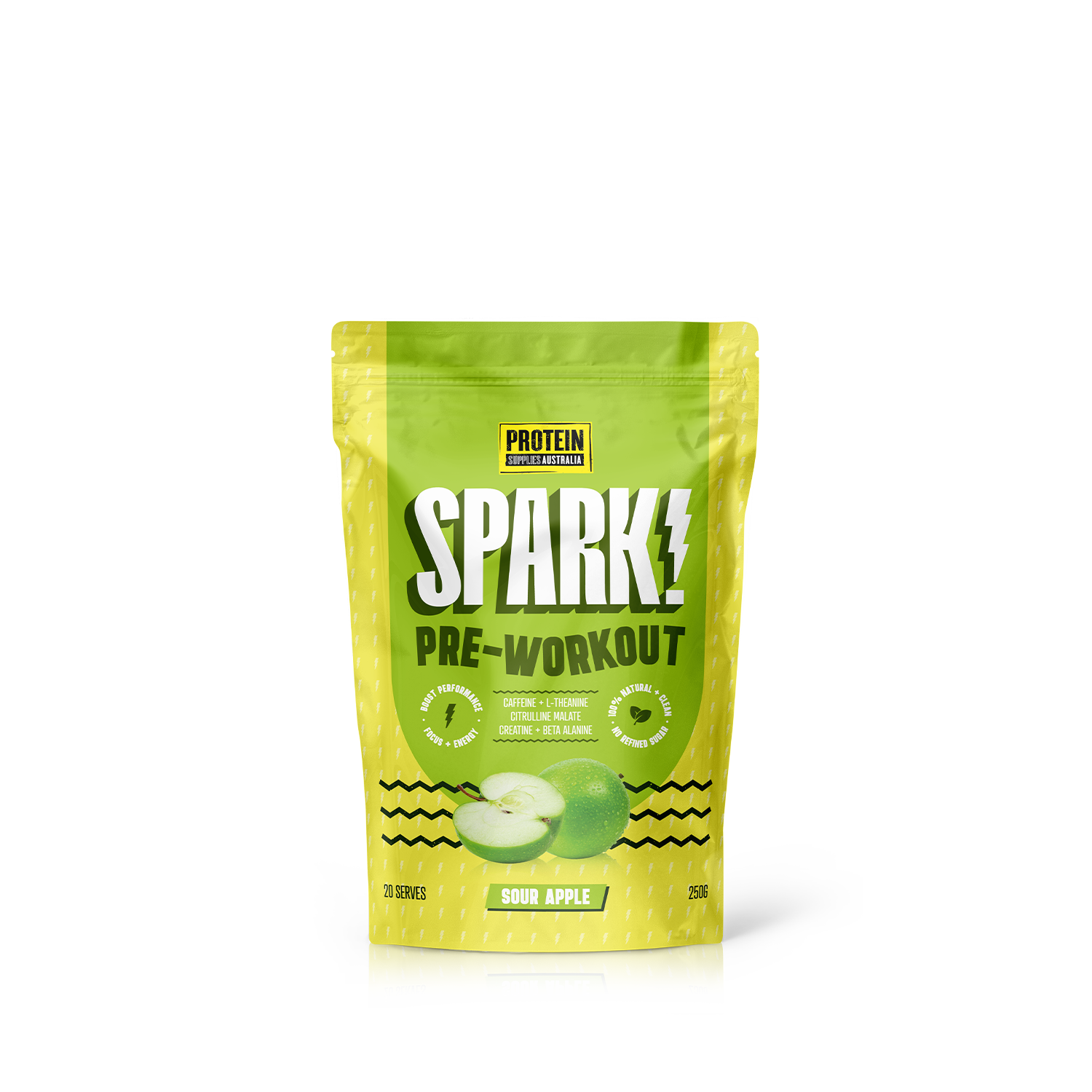
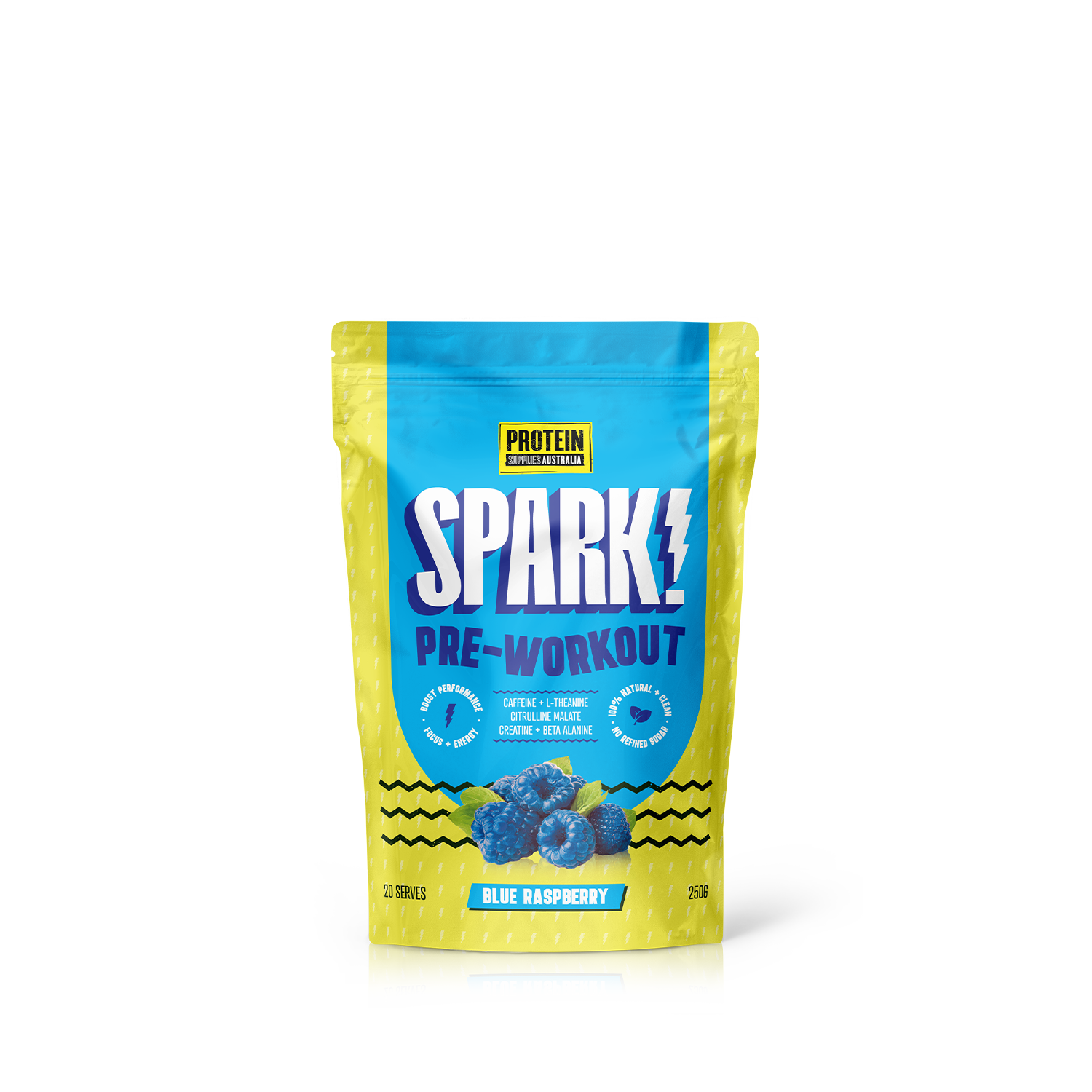
Spark is PSA's clean pre-workout formula. Each 12.5g serve contains:
-
3g Creatine Monohydrate
-
2g Citrulline Malate
-
1.3g Beta Alanine
-
105mg Natural Caffeine (from guarana)
-
Electrolytes (magnesium, potassium, sodium)
-
Alpha GPC, L-Theanine, B-Vitamin Complex
-
No artificial colours, flavours, or sweeteners
The 3g creatine dose is deliberate. It's the minimum effective maintenance dose — enough to support muscle creatine saturation with daily use, without padding the formula with unnecessary bulk.
PSA's philosophy is straightforward: every ingredient in the formula is there for a reason, at a dose that does something. No fillers, no amino spiking, no banned substances.
Shop Spark pre-workout:
Want to top up your creatine dose?
Add Creatine Pure to your stack. It's unflavoured, vegan-friendly, and gives you a clean 3–5g dose to combine with Spark or take on its own.

Useful sources
🇦🇺 Australian sources
-
Creatine — AIS Supplement Framework — Australian Institute of Sport (Group A classification: strong evidence for performance use)
-
Creatine for Athletes — Factsheet — Sports Dietitians Australia
-
Supplements in Sport — Sport Integrity Australia (creatine is not a prohibited substance under WADA)
International research
-
ISSN Position Stand: Safety and Efficacy of Creatine Supplementation (2017) — Kreider et al., Journal of the International Society of Sports Nutrition
-
ISSN Position Stand: Creatine Supplementation and Exercise (2007) — Buford et al., Journal of the International Society of Sports Nutrition
-
Timing of Creatine Supplementation around Exercise: A Real Concern? (2021) — Ribeiro et al., Nutrients
-
Effects of Creatine Monohydrate Timing on Resistance Training Adaptations (2022) — Dinan et al., Frontiers in Sports and Active Living
-
Common Questions and Misconceptions about Creatine Supplementation (2021) — Antonio et al., Journal of the International Society of Sports Nutrition
What is Guarana? The Natural Caffeine in Your Pre-Workout Explained
Natural Pre-Workout vs Regular Pre-Workout