
TL;DR Most pre-workout side effects: tingling, mild jitters, a bit of a pump-face flush, are harmless and manageable. The ones to actually worry about are heart palpitations, severe nausea, or extreme anxiety, which usually point to a dodgy product with excessive stimulants. Start with half a scoop, stay hydrated, and choose a clean-label product with natural caffeine. That covers about 90% of issues before they start.

If you've ever googled "pre workout side effects" at 11pm before your first tub arrives, you're not alone. The internet is full of horror stories, and also a lot of people dramatically describing what is, frankly, just beta alanine doing its thing.
So let's cut through it. This article covers what's actually normal, what's a red flag, and how to set yourself up for a smooth experience. If you're still getting your head around what pre-workout actually does in the first place, check out our full breakdown here.
The Side Effects You'll Actually Experience
Most people who try pre-workout for the first time encounter one or two of these. None of them should send you to the emergency room. Here's what's going on.

The Tingle (Beta Alanine Paresthesia)
This is the big one. You take your pre-workout, 15 minutes later your face, neck, or hands feel like they're lightly buzzing. Some people love it. Some people think they're having a reaction.
You're not. It's just beta alanine doing its thing.
What it is: Beta alanine causes a harmless sensation called paresthesia — a tingling or prickling feeling that typically affects the face, neck, hands, and feet.
Why it happens: Beta alanine is absorbed into your bloodstream and reaches nerve endings in your skin. It can stimulate those nerve endings in a way that feels similar to pins and needles. Researchers believe it activates specific receptors on nerve cells, causing them to fire rapidly — hence the tingle.
Is it dangerous? No. Research consistently confirms that paresthesia from beta alanine is a non-harmful side effect. It typically peaks around 15–30 minutes after ingestion and fades on its own within about an hour.
How to manage it: Lower doses mean less tingling. Spark Pre-Workout uses 1.3g of beta alanine per serve, a moderate, effective dose that's well below the threshold where tingling becomes intense (doses above 0.8g per serve tend to trigger it more noticeably). If you're sensitive, start with half a scoop.

The Jitters
Feeling wired, shaky, or like you've had five espressos? That's usually a caffeine issue — specifically, too much caffeine hitting your system too fast.
Why it happens: Synthetic caffeine anhydrous (the kind in most cheap pre-workouts) absorbs very rapidly, causing a sharp spike in blood caffeine levels. That spike is what triggers the jittery, anxious feeling.
The natural caffeine difference: Spark uses 105mg of natural caffeine from guarana — not synthetic anhydrous caffeine. Guarana releases caffeine more gradually because the caffeine is bound to other compounds in the plant, which slows absorption. The result is a smoother, more sustained energy lift without the sharp spike that causes jitters.
How to manage it: Start with half a scoop if you're caffeine-sensitive. Avoid stacking pre-workout with coffee or energy drinks. And check the label — if a product doesn't tell you exactly how much caffeine is in it, that's a problem.

The Crash
You finish your session feeling great, then an hour later you're face-down on the couch wondering what happened to your energy.
Why it happens: The classic pre-workout crash is almost always a synthetic caffeine issue. When anhydrous caffeine hits fast and hard, it burns through quickly — leaving you with a sharp drop in energy and sometimes a headache.
Why guarana helps: Because natural caffeine from guarana releases more gradually, the energy curve is smoother on both ends. You get a steady lift during your session and a gentler come-down afterwards, rather than a cliff edge.
How to manage it: Choose a product with natural caffeine sources. Eat something before training. And don't take pre-workout if you're already running on empty — it'll make the crash worse.

Digestive Discomfort
Bloating, stomach cramps, or feeling a bit queasy after your pre-workout? This one's common, especially with certain ingredients.
Common culprits:
-
Artificial sweeteners (sucralose, acesulfame-K) in large amounts can cause gut irritation in some people
-
Taking pre-workout on an empty stomach
-
High doses of certain amino acids
Spark uses stevia (steviol glycosides) as its only sweetener — a natural option that's much gentler on the gut than artificial alternatives. No artificial colours or flavours either.
How to manage it: Take pre-workout with a small meal or snack, not on a completely empty stomach. If gut issues persist, check the sweetener list on your product.

Trouble Sleeping
Pre-workout at 7pm, still staring at the ceiling at midnight. Yep. This is just caffeine timing.
Caffeine has a half-life of roughly 5–6 hours in most people, meaning half of it is still in your system hours after you take it. Take it too late and it will interfere with your sleep.
The fix: Aim to take pre-workout at least 6 hours before bed. If you train in the evenings, consider a stimulant-free option, or go with a lower-caffeine product. The ISSN recommends avoiding caffeine within 6 hours of bedtime to prevent sleep disruption.

Headaches
A dull headache after pre-workout is usually one of two things: dehydration or too much caffeine.
Pre-workout increases blood flow and can cause you to sweat more during training. If you're not drinking enough water, that's a recipe for a headache.
The fix: Drink at least 400–500ml of water with your pre-workout, and keep sipping throughout your session. Spark includes electrolytes (sodium, magnesium citrate, potassium citrate) to support hydration — which helps here.
If headaches happen consistently, try reducing your dose or switching to a lower-caffeine product.
Side Effects That Are Actually Red Flags
These are less common but worth knowing. If any of these happen, stop taking the product and see your GP.
Heart palpitations or a racing heart — some degree of elevated heart rate is normal with caffeine. But if your heart is pounding out of your chest, skipping beats, or you feel chest tightness, that's not normal. This is most often linked to products with very high caffeine doses, multiple stimulant stacks, or undisclosed ingredients.
Severe nausea or vomiting — feeling slightly off on an empty stomach is one thing. Actual vomiting or severe nausea that doesn't pass quickly is a sign something's wrong, either with the product or your response to it.
Extreme anxiety or panic — a bit of alertness and focus is the goal. Feeling like you're having a panic attack is not. Again, usually tied to excessive stimulant doses.
Allergic reactions — rash, hives, swelling, or difficulty breathing. Rare, but possible with any supplement. Stop immediately and seek medical attention.
A 2025 integrative review of pre-workout supplements and cardiovascular health found that adverse cardiovascular effects were most commonly associated with high stimulant doses and products with undisclosed or poorly controlled ingredient profiles. Clean-label products with transparent dosing carry significantly lower risk.
Is Pre-Workout Bad for You Long Term?
This is the question most people are actually asking when they search "long term side effects of pre workout." Here's the honest answer.
Caffeine dependence and tolerance — this is real. Regular caffeine use does build tolerance over time, meaning you'll need more to get the same effect. You can also develop mild dependence, with headaches or fatigue if you stop suddenly. The fix is simple: cycle off every 6–8 weeks. Take a week or two without pre-workout to reset your tolerance.
Kidney and liver concerns — this comes up a lot online and is mostly overblown for healthy individuals. The research on creatine monohydrate — one of the most common pre-workout ingredients — is extensive. The ISSN position stand confirms that short and long-term creatine supplementation (up to 30g per day for 5 years) is safe and well-tolerated in healthy individuals. Spark contains 3g per serve, well within safe ranges.
The kidney concern is relevant if you already have a pre-existing kidney condition, or if you're taking extremely high doses of multiple supplements simultaneously. If that's you, talk to your doctor before starting any supplement.
Why ingredient quality matters long term — the biggest long-term risk with pre-workout isn't any single ingredient at a sensible dose. It's consistent use of products with artificial additives, undisclosed blends, or excessive stimulant stacks. That's where the cumulative risk builds. A transparent, clean-label product with natural ingredients and sensible doses is a very different proposition to a mystery proprietary blend with 400mg of caffeine anhydrous.
How to Minimise Side Effects

Most pre-workout side effects are avoidable with a bit of common sense. Here's what actually works:
Start with half a scoop. Seriously. Especially if you're new to pre-workout or caffeine-sensitive. Half a scoop lets you gauge your response before committing to a full dose.
Stay hydrated. Drink 400–500ml of water with your pre-workout and keep drinking throughout your session. Most headaches and some digestive issues trace back to dehydration.
Don't take it on an empty stomach. Have a light snack beforehand — a banana, some yoghurt, a handful of nuts. It slows absorption and reduces the chance of gut irritation.
Avoid late-night use. Give yourself at least 6 hours between your pre-workout and bedtime. If you train late, consider a stim-free option.
Cycle off every 6–8 weeks. Take a week or two off every couple of months. It resets your caffeine tolerance and keeps the product working effectively.
Choose a clean-label product. Natural caffeine sources, no artificial sweeteners, transparent dosing. These choices directly reduce your risk of jitters, crashes, gut issues, and the more serious cardiovascular concerns.
Why Spark Is Designed to Minimise Side Effects
When I (Mat, founder of PSA) was formulating Spark, the brief was simple: build a pre-workout that actually works without making people feel like garbage.

That meant making some deliberate choices.
Natural caffeine from guarana, not synthetic anhydrous. This was non-negotiable. Guarana releases caffeine gradually because it's bound within the plant matrix. The result is a smoother energy curve — less spike, less crash, less jitter. At 105mg per serve, it's also a sensible dose. Enough to make a real difference, not so much that you're vibrating.
Stevia only — no artificial sweeteners. Sucralose and acesulfame-K are everywhere in pre-workouts. They're also a common cause of gut discomfort. Spark uses steviol glycosides (stevia) as the only sweetener. Natural, effective, and much gentler on the stomach.
No artificial colours or flavours. Spirulina and beetroot red for colour. Real flavouring. Nothing synthetic. Less stuff your body has to process that isn't contributing to performance.
Transparent label, no proprietary blends. Every ingredient and every dose is listed. You know exactly what you're getting. That's how it should be.
Electrolytes included. Sodium, magnesium citrate, and potassium citrate support hydration during training — which directly helps with headaches and cramping.
The full formula also includes L-Theanine, which takes the edge off caffeine's stimulant effects and promotes calm focus. That's the combination that gives you energy without the anxiety.
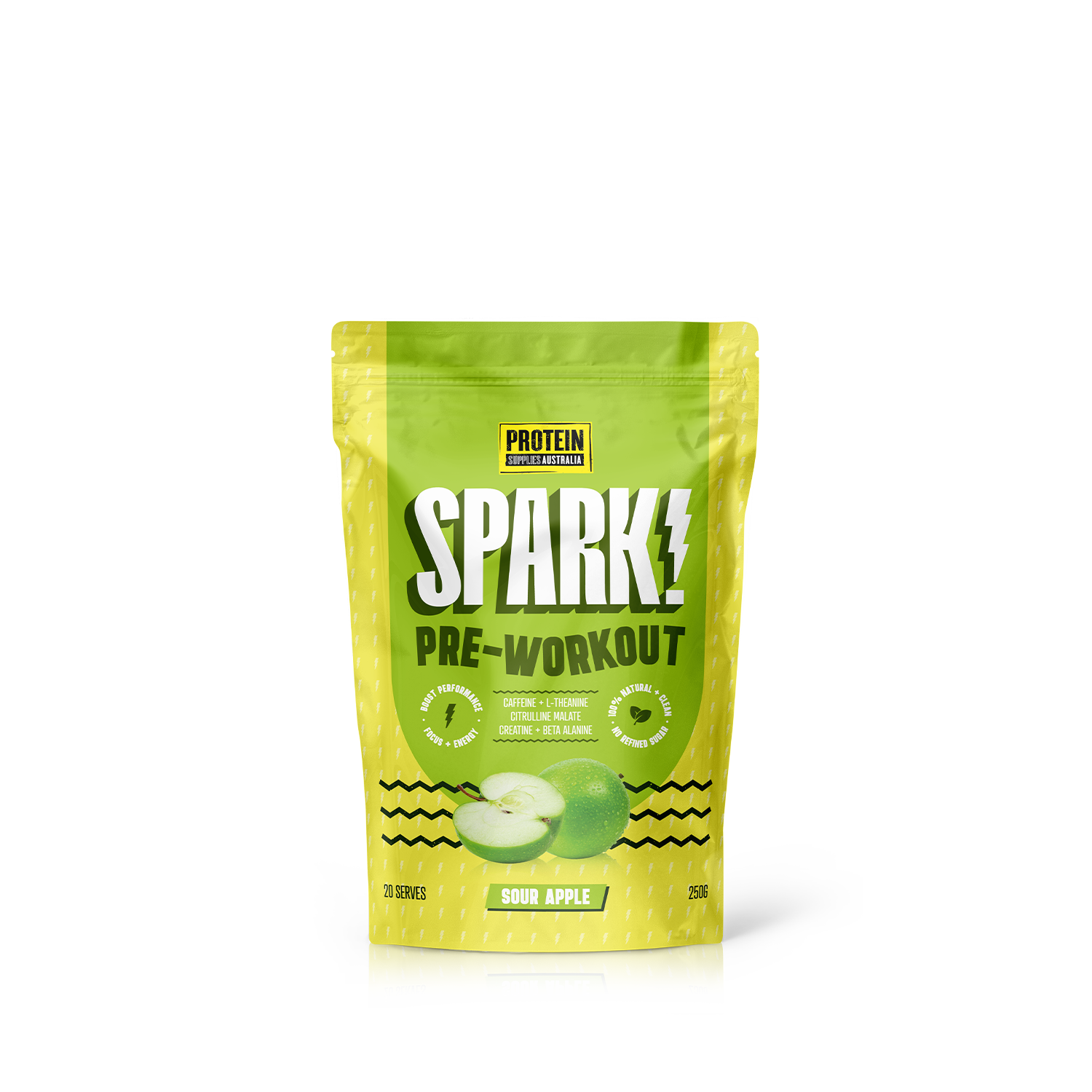
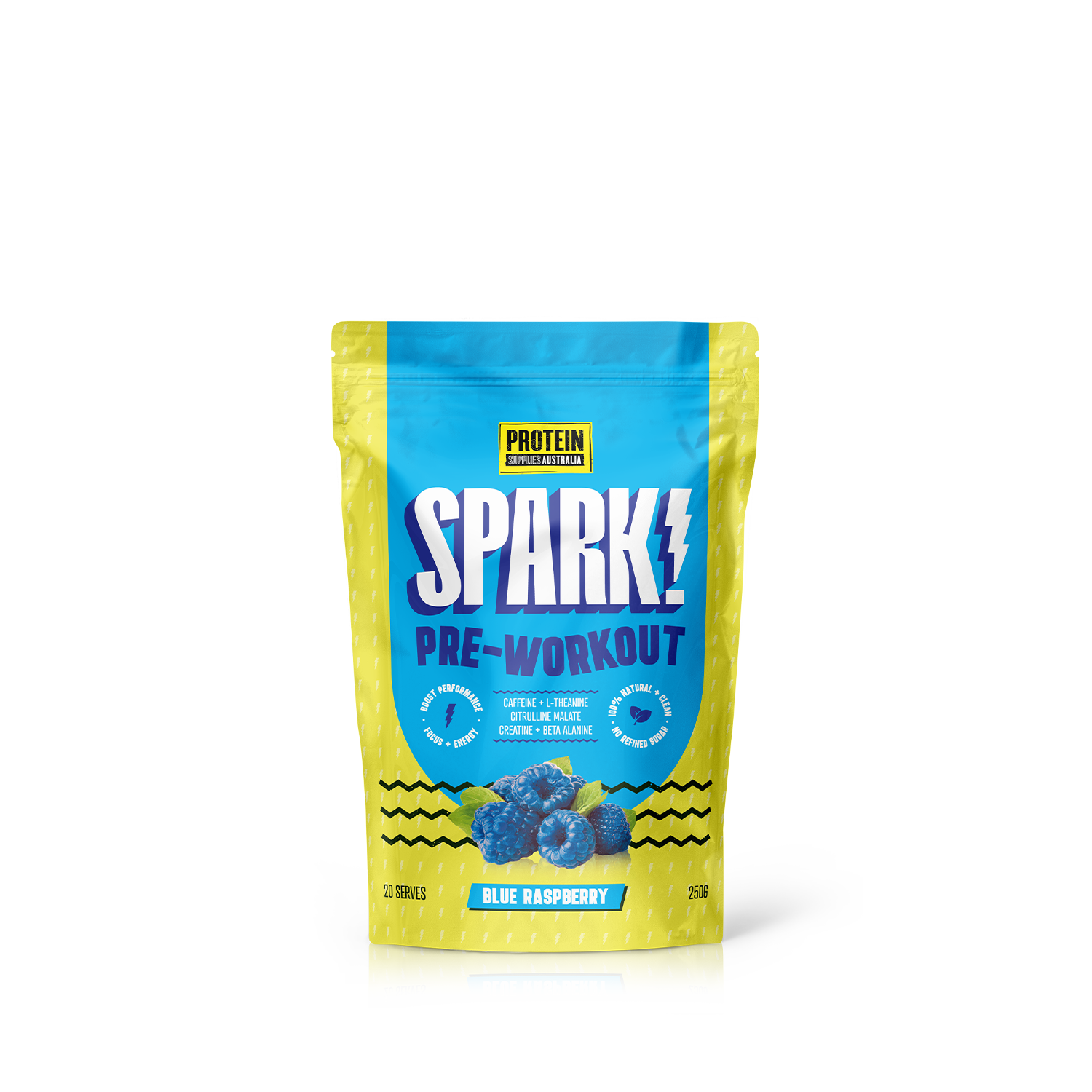
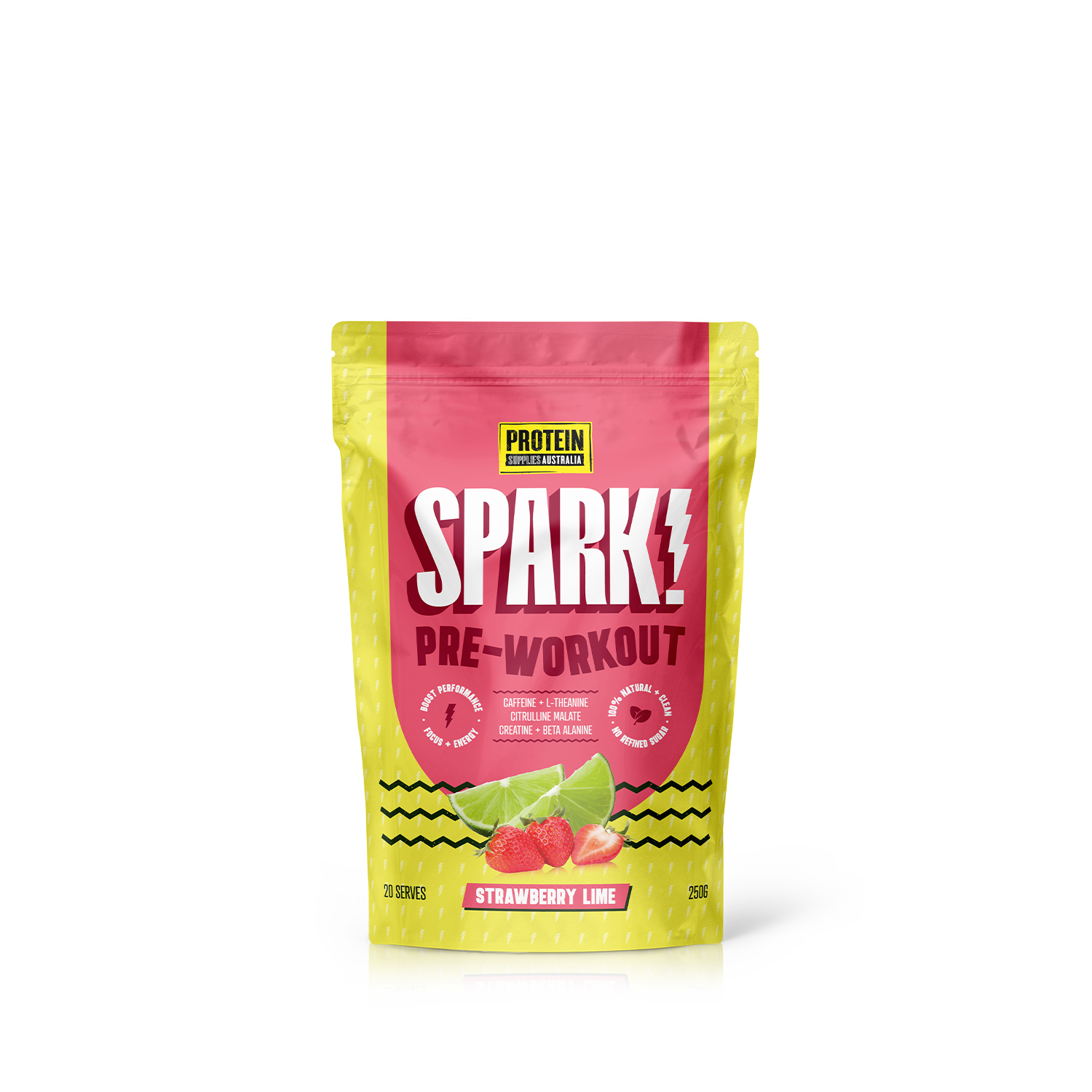
Browse the full Spark Pre-Workout range here available in Sour Apple, Blue Raspberry, and Strawberry Lime.
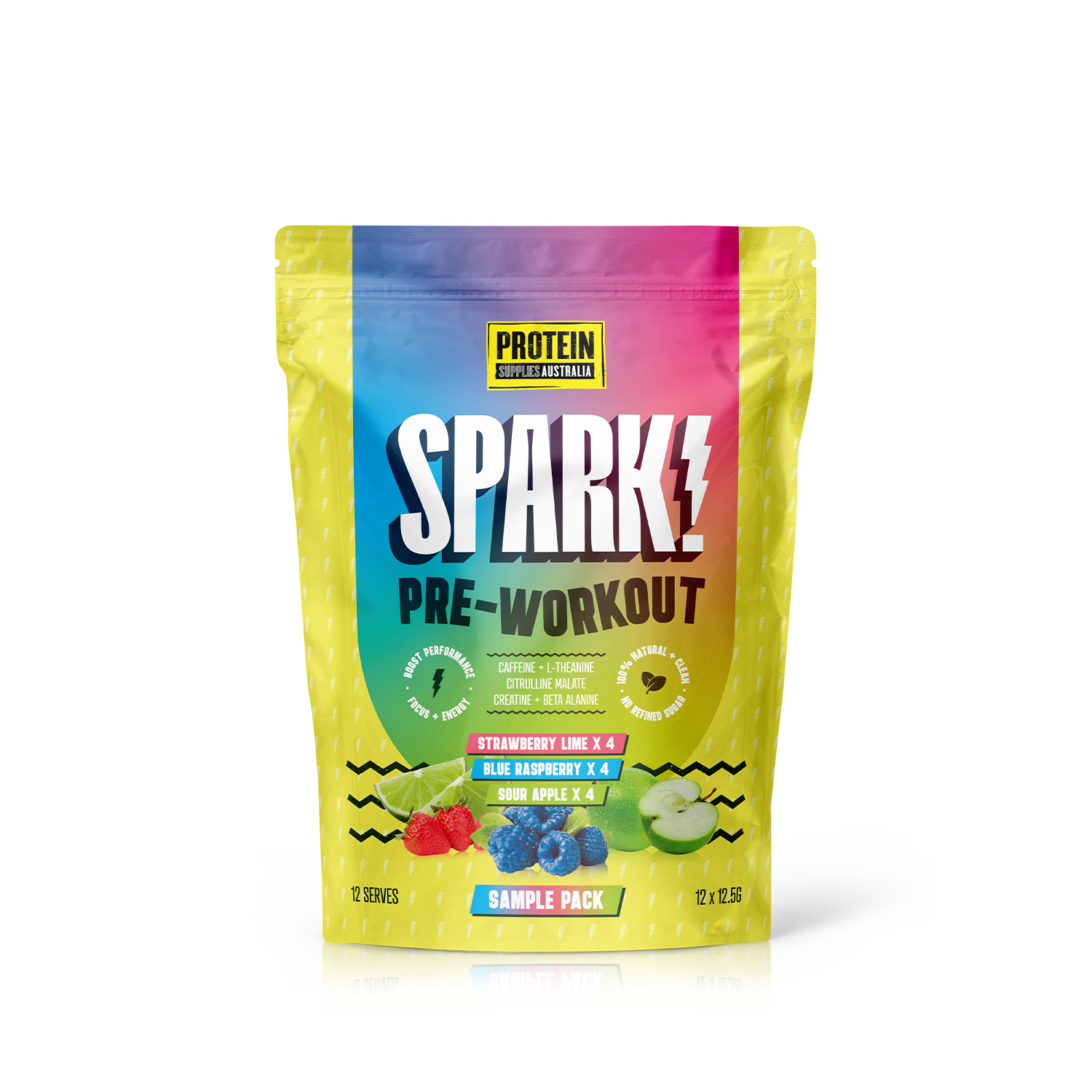
Not sure which flavour to start with? The Spark Sample Pack gives you 12 sachets (4 of each flavour) for $39.95 — perfect for testing your response before committing to a full 250g pouch.
Useful Sources
-
Beta Alanine Dosing Strategies — Journal of the International Society of Sports Nutrition (2025)
-
ISSN Position Stand: Caffeine and Exercise Performance (2021)
-
Pre-Workout Supplements and Cardiovascular Health — PMC Integrative Review (2025)
-
Multi-Ingredient Pre-Workout Supplements: Safety and Performance Review (2018)
What Does Pre-Workout Actually Do?
What Is Citrulline and Why Is It in Your Pre-Workout?