
TL;DR
-
Citrulline is a non-essential amino acid that boosts nitric oxide, improving blood flow, endurance, and recovery during training.
-
Citrulline Malate is the preferred pre-workout form, it combines citrulline with malic acid for a potential dual benefit on blood flow and energy production.
-
Research-backed doses sit at 6-8g of L-Citrulline or 8g of Citrulline Malate for maximum effect, most pre-workouts are underdosed.
-
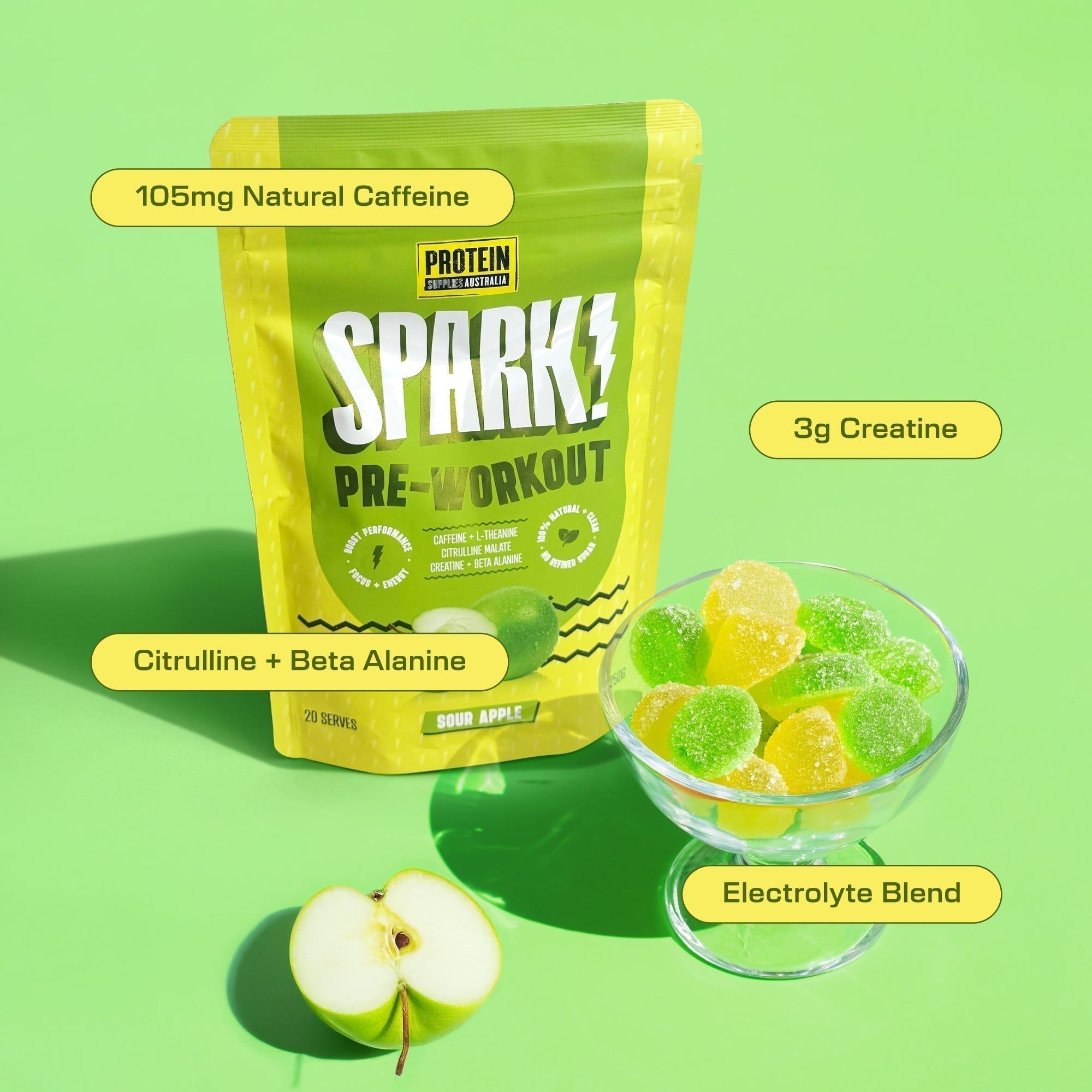
PSA Spark contains 2g Citrulline Malate as part of a complete, clean-label stack — it's designed to work with the full formula, not as a standalone citrulline product.

What Is Citrulline?
Citrulline is a non-essential amino acid — your body makes it naturally, and you can also get it from food. The name literally comes from Citrullus vulgaris, the Latin term for watermelon, which is one of the richest natural food sources of this compound.
It's not a protein-building amino acid like leucine or lysine. Instead, citrulline plays a supporting role in two key processes: nitric oxide production and the urea cycle (more on both of those below). That's exactly why it's ended up in pre-workout formulas.
Two forms: L-Citrulline vs Citrulline Malate
You'll see both on labels. Here's the difference:
L-Citrulline is the pure amino acid on its own. It's what your body actually uses, and it's well-absorbed.
Citrulline Malate is L-Citrulline bonded with malic acid (malate), a compound involved in the body's energy production cycle (the Krebs cycle). The standard ratio is 2:1 — two parts citrulline to one part malate.
The idea behind Citrulline Malate is that you get the nitric oxide benefits of citrulline plus a potential boost to aerobic energy production from the malate component. It's the form you'll find in most pre-workout supplements, including PSA Spark.
One thing worth knowing: because Citrulline Malate is only about 56-57% actual citrulline by weight, an 8g dose of Citrulline Malate delivers roughly 4.5g of actual L-Citrulline. Keep that in mind when comparing labels.

What Does Citrulline Actually Do?
The nitric oxide pathway
Here's the simple version of what happens when you take citrulline:
Citrulline → converted to arginine in the kidneys → arginine → nitric oxide (NO) → blood vessels dilate → more blood flow to muscles.
That's the core mechanism. Citrulline is essentially a backdoor route to raising arginine levels in the blood. And here's the kicker: citrulline actually raises arginine levels more effectively than taking arginine directly. Why? Because unlike L-arginine, L-citrulline bypasses breakdown in the gut and liver, so more of it makes it into circulation.
Nitric oxide is a signalling molecule that relaxes and widens blood vessels. When NO levels rise, blood vessels expand, circulation improves, and your muscles receive more oxygen and nutrients during exercise.
The pump and why it's more than just aesthetics
The "pump" is that full, tight feeling in your muscles mid-session. It's real, it's measurable, and it's driven by increased blood flow to working muscle tissue.
Beyond looking good in the mirror, better blood flow means your muscles get more oxygen and nutrients delivered during your set, and metabolic waste (like lactate) gets cleared out faster. That's why the pump isn't just a vanity metric — it's a functional signal that your cardiovascular system is doing its job.
Endurance and fatigue delay
During high-intensity exercise, ammonia builds up in your muscles. That's a problem, because ammonia activates certain metabolic pathways that accelerate fatigue and push your body toward exhaustion faster.
Citrulline is a key player in the urea cycle — the process your liver uses to clear ammonia from the body. By supporting this cycle, citrulline supplementation may help keep ammonia levels in check during hard training, which could translate to more reps, more sets, or more time before you hit the wall.
Recovery
Better blood flow doesn't just help during training — it helps after. More circulation means metabolic waste products get flushed out faster, and nutrients (including amino acids for muscle repair) get delivered more efficiently. Some research has also pointed to reductions in post-exercise muscle soreness with citrulline supplementation.

How Much Citrulline Do You Actually Need?
This is where things get honest.
The research-backed doses are:
-
6-8g of L-Citrulline taken about 60 minutes before exercise
-
8g of Citrulline Malate (which delivers roughly 4.5g of actual citrulline) taken 60 minutes before exercise
Most studies that show meaningful performance benefits use doses in this range. Timing matters too, research consistently points to taking citrulline about 60 minutes before training to hit peak plasma arginine levels when you need them.
The problem with most pre-workouts
A lot of pre-workouts on the market use proprietary blends that hide the actual amounts of each ingredient. You might see "citrulline" on the label, but have no idea if you're getting 1g or 6g. That's a real issue, and it's one reason PSA uses a fully transparent label.
What about PSA Spark?
Spark contains 2g of Citrulline Malate per serve. That's a moderate dose — we'll be straight with you about that. It's not a standalone citrulline product, and it's not trying to be.
Spark is a complete, clean-label pre-workout stack. The citrulline works alongside 3g of Creatine Monohydrate, 1.3g of Beta Alanine, natural caffeine from guarana (105mg), Alpha GPC 99%, L-Tyrosine, L-Theanine, electrolytes, and a B vitamin complex. The synergy across those ingredients is the point. If you want a high-dose standalone citrulline product, that's a different product category entirely.

L-Citrulline vs Citrulline Malate: Which Is Better?
|
|
L-Citrulline |
Citrulline Malate |
|---|---|---|
|
What it is |
Pure amino acid |
Citrulline + malic acid (2:1 ratio) |
|
Citrulline content |
100% |
~57% by weight |
|
Mechanism |
NO production, ammonia clearance |
NO production + potential ATP support |
|
Typical dose |
6-8g |
8g |
|
Best for |
Circulatory support, general use |
Pre-workout performance stacks |
|
Taste |
Mild |
Slightly tart/acidic |
|
In pre-workouts? |
Less common |
Very common |
When would you choose L-Citrulline?
If you're stacking citrulline on top of an existing pre-workout, or taking it purely for cardiovascular or blood pressure support, pure L-Citrulline gives you more citrulline per gram and is slightly easier on the stomach.
When does Citrulline Malate make more sense?
In a pre-workout context, Citrulline Malate is the standard choice. The malate component may support aerobic energy production via the Krebs cycle, and the combined formula has been the most studied form in exercise research. It also mixes well in multi-ingredient formulas.
The research on which form is definitively "better" is still evolving. What's clear is that both forms work through the same core NO pathway — the differences are more about context and dosing than one being categorically superior.

Who Benefits Most from Citrulline?
Endurance athletes are a natural fit. Citrulline's ability to support oxygen delivery and ammonia clearance is particularly relevant for sustained-effort sports — running, cycling, rowing, swimming. The blood flow benefits compound over longer sessions.
Strength and hypertrophy training is where most of the pre-workout citrulline research has been done. More blood flow during resistance training means better nutrient delivery to working muscles, a more pronounced pump, and potentially more reps before failure. Research has also shown meaningful reductions in post-exercise muscle soreness with citrulline supplementation.
People who train fasted may get extra value from citrulline. When you're training without a pre-workout meal, blood flow and nutrient delivery to muscles is already somewhat compromised. Citrulline's vasodilatory effects can help offset that.
People sensitive to high-stim pre-workouts should know that citrulline is completely stimulant-free. No caffeine, no jitters, no heart rate spike. If you're cutting back on stimulants but still want functional performance support, citrulline is one of the few pre-workout ingredients that works independently of the stimulant pathway.

Does Citrulline Have Any Side Effects?
The short answer: citrulline is one of the better-tolerated supplements around.
It's not a stimulant, so there's no jitteriness, no elevated heart rate, and no post-workout crash. Most people take it daily without any issues.
The main side effect reported in some studies is mild stomach discomfort, and that's more common at very high doses (think 10g+). At the doses found in pre-workouts, it's rarely a concern. Citrulline Malate is slightly more acidic than pure L-Citrulline, so if you have a sensitive stomach, taking it with a small amount of food can help.
For a full rundown of what's normal and what's not across all pre-workout ingredients, check out our guide to pre-workout side effects.

PSA Spark and Citrulline: What You Need to Know
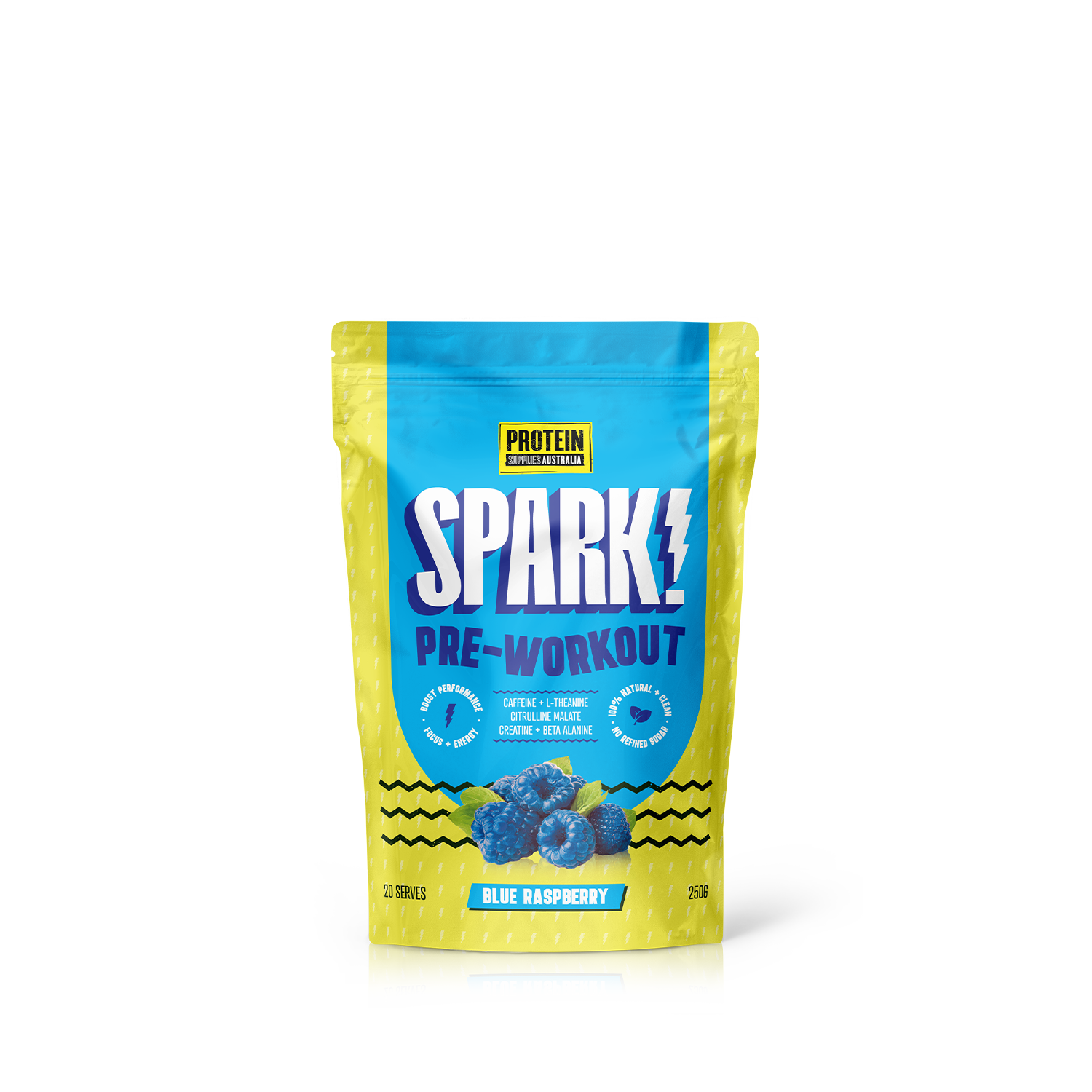
Spark Pre-Workout contains 2g of Citrulline Malate as part of a complete, transparent formula. Every ingredient is listed with its exact dose — no proprietary blends, no hidden amounts.
Here's the honest positioning: Spark isn't a high-dose citrulline product. It's a full-stack pre-workout built around synergy. The citrulline supports blood flow and ammonia clearance. The creatine supports power output. The Beta Alanine buffers muscle acidity. The natural caffeine from guarana drives focus and energy. The Alpha GPC and L-Theanine sharpen mental performance without the edge. Together, they cover more ground than any single ingredient at a high dose could.
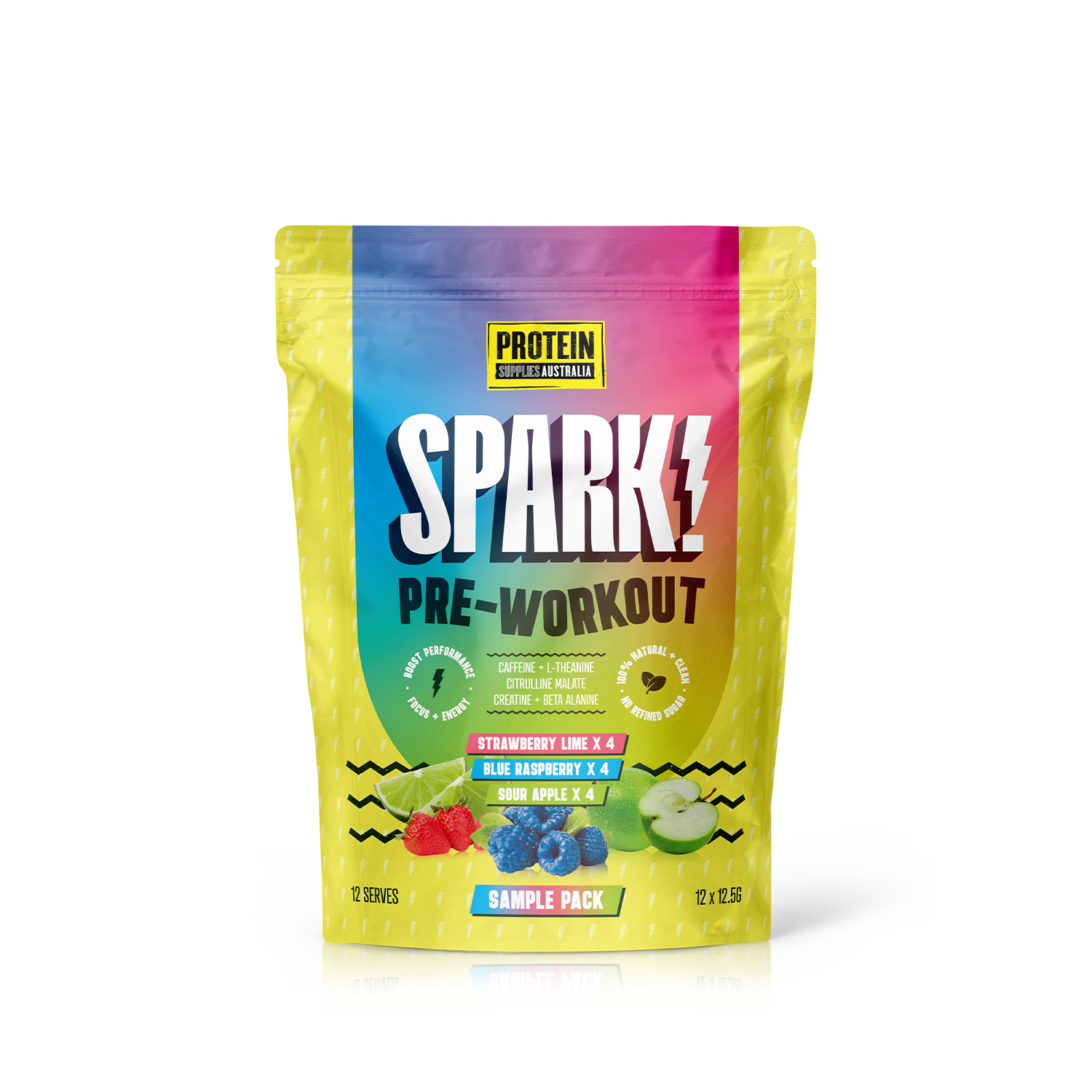
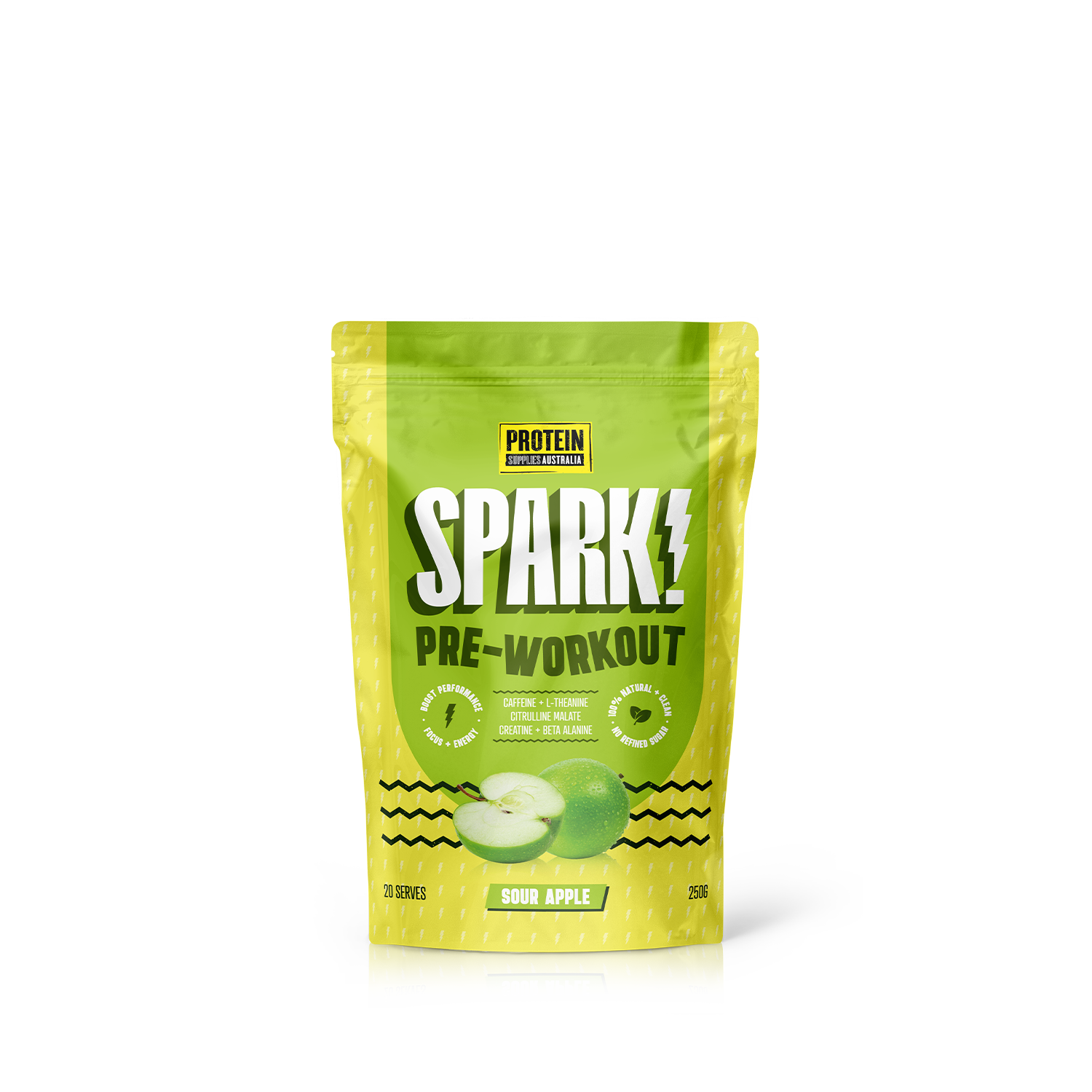
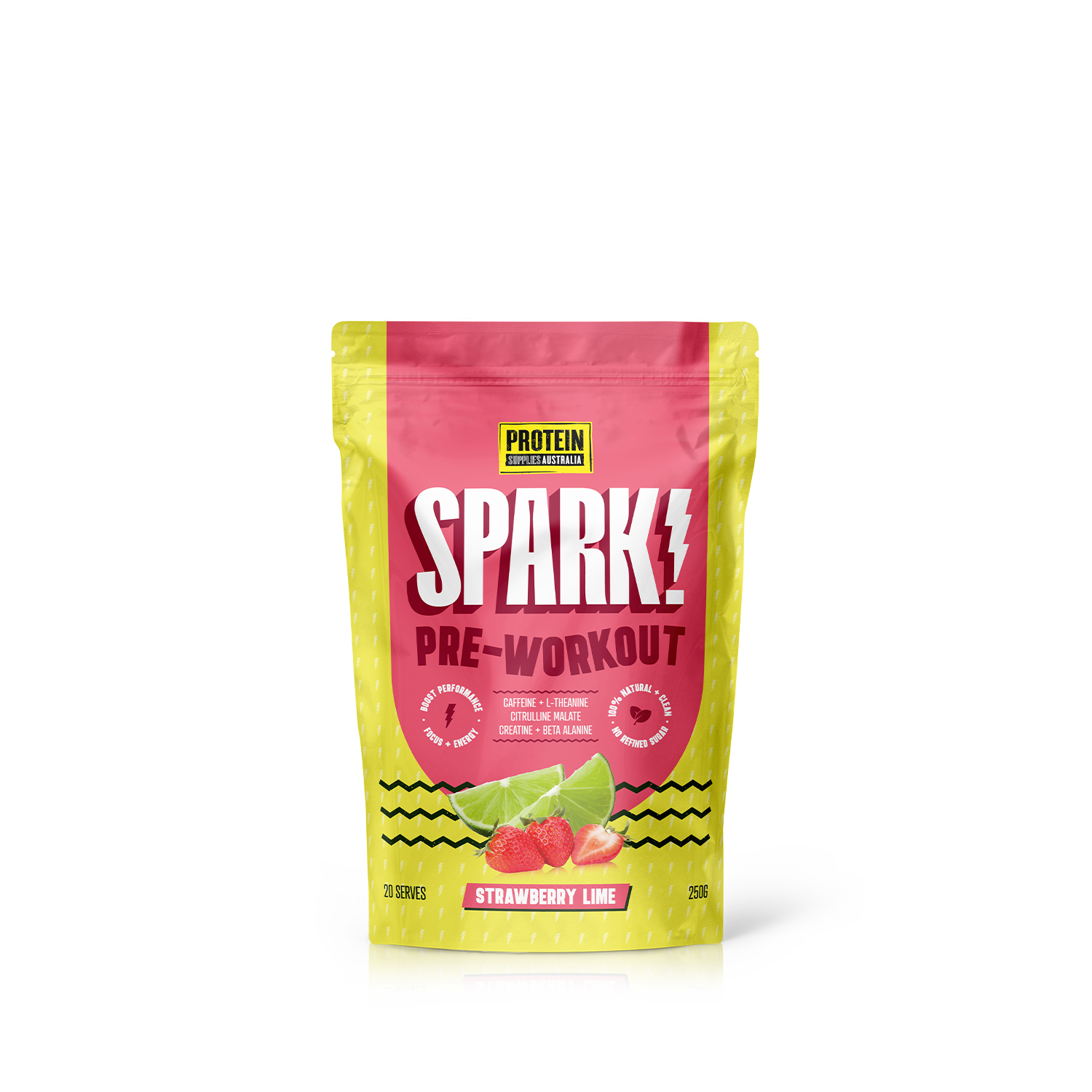
Spark is also 100% natural — no artificial colours, flavours, or sweeteners. Vegan, gluten-free, Australian made, and free from banned substances. Sweetened with Steviol Glycosides (stevia-derived). Available in three flavours: Sour Apple, Blue Raspberry, and Strawberry Lime.

Not sure which flavour you'll love? Grab the Sample Pack — 12 sachets (4 of each flavour) for $31.96 AUD. It's the best way to try the full range before committing to a full pouch.
Ready to go all in? The full-size 250g pouch (20 serves) is $39.95 AUD. Pick your flavour:
Curious about the full picture of what pre-workout actually does? We've got a deep dive on that too.

Pre-Workout Side Effects: What's Normal and What's Not
What is Guarana? The Natural Caffeine in Your Pre-Workout Explained