
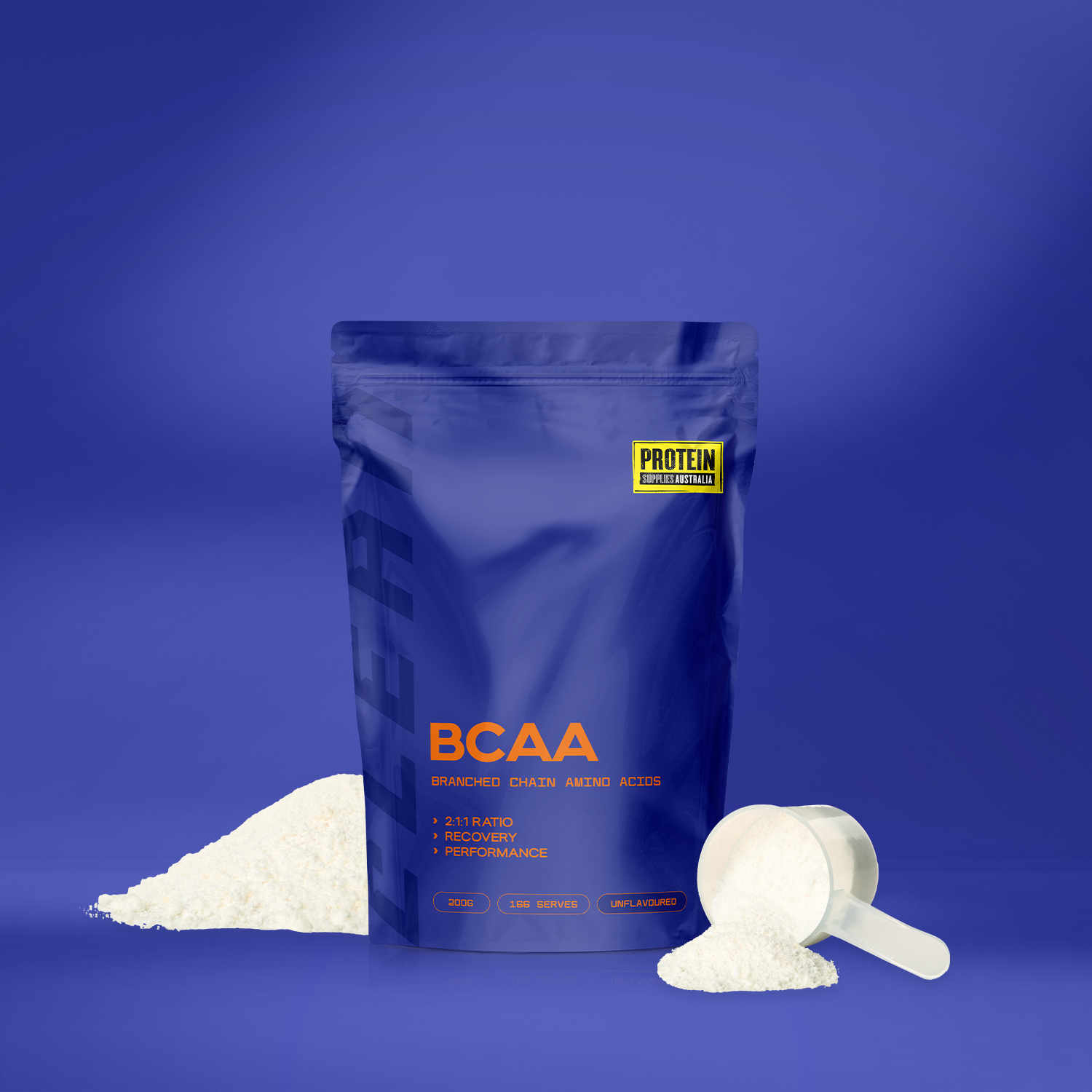
Branched-chain amino acids (BCAAs) — leucine, isoleucine, and valine — are essential amino acids that cannot be synthesised by your body and must be supplied by diet. BCAA supplementation reduces muscle damage markers and muscle soreness immediately post-exercise and accelerates their recovery process.

However, supplementation of BCAAs alone does not increase muscle growth, as all essential amino acids must be present for muscle protein synthesis to occur. BCAAs work best when combined with proper training and adequate overall protein intake.
What Are Branched Chain Amino Acids?
The branched-chain amino acids (BCAAs) are leucine, isoleucine, and valine — essential amino acids that cannot be synthesised endogenously by humans and must be supplied by diet. They differ from other essential amino acids in that the liver lacks the enzymes necessary for their catabolism, meaning your muscles metabolise them directly for energy.

The three proteinogenic BCAAs account for 35% of the essential amino acids in muscle proteins and 40% of the preformed amino acids required by mammals.
The Three BCAAs Explained
| BCAA | Primary Role | Key Function |
|---|---|---|
| Leucine | Helps your body make protein and growth hormones. It also helps grow and repair muscle tissue, heal wounds and regulate blood sugar levels | Most anabolic of the three |
| Isoleucine | Involved with your body's muscle metabolism and immune function. It also helps your body make hemoglobin and regulate energy | Supports immune system |
| Valine | Involved in muscle growth, tissue regeneration and making energy | Energy production |
The Main Benefits of BCAA Supplementation
1. Reduces Muscle Soreness (DOMS)
BCAA ingestion attenuates muscle soreness with small effects immediately post-exercise and accelerates their recovery process.
Seven studies demonstrated that BCAA reduced DOMS after 24 to 72 hours, with overall effects considered useful for improving muscle recovery by reducing DOMS in trained subjects, at low doses, in mild to moderate exercise-induced muscle damage.
Practical takeaway: If you experience soreness after intense workouts, BCAA supplementation may help reduce discomfort within 24-72 hours.
2. Decreases Muscle Damage Markers
BCAA ingestion attenuates creatine kinase (CK) levels with medium effects immediately post-exercise. BCAA supplementation appears to reduce CK levels within the first 24 hours and at 72 hours post-exercise-induced muscle damage.
Creatine kinase (CK) is an enzyme released when muscle tissue is damaged, so lower CK levels indicate less muscle damage.
3. Supports Muscle Recovery After Training
BCAA supplementation before and after exercise has beneficial effects for decreasing exercise-induced muscle damage and promoting muscle-protein synthesis.
BCAA supplementation may be used as an effective strategy to accelerate the recovery process after intense exercise.
4. Helps Preserve Lean Muscle Mass
In a 12-week clinical trial in 121 participants (age 60 or older) with impaired mobility, exercise plus branched-chain amino acids and vitamin D improved physical test scores and preserved lean mass, whereas lean mass declined in other groups.
This is particularly important for older adults and those in caloric deficit.
5. Supports Immune Function During Intense Training
BCAA supplementation recovers peripheral blood mononuclear cell proliferation in response to mitogens after long distance intense exercise, as well as plasma glutamine concentration. The BCAA also modifies the pattern of exercise-related cytokine production, leading to a diversion of the lymphocyte immune response towards a Th1 type.
What BCAAs DON'T Do
Won't Directly Increase Muscle Growth Alone
Studies show that supplementation of BCAAs alone does not increase muscle growth, as all essential amino acids must be present for muscle protein synthesis to occur.
Important: You need all 9 essential amino acids for optimal muscle building, not just the 3 BCAAs.
Won't Improve Athletic Performance
No significant differences were identified between BCAA and placebo conditions for muscle performance at 24 or 48 hours post-exercise.
Studies suggest that BCAAs may prevent muscle breakdown during exercise. But they are not likely to help with athletic performance.
BCAA Dosage & Timing
Recommended Daily Intake
It's estimated that adults should consume about 68 mg/kg daily (leucine 34 mg/kg, isoleucine 15 mg/kg, valine 19 mg/kg).
Example for a 70kg person:
- Leucine: 2.4g per day
- Isoleucine: 1.1g per day
- Valine: 1.3g per day
Optimal Ratio
The average BCAA requirement in adults according to WHO/FAO/UNU is 39 leucine, 20 isoleucine and 26 valine (mg/kg body weight per day), corresponding to a leucine/isoleucine/valine ratio equal to 1.95/1/1.3 respectively.
A common supplemental ratio is 2:1:1 (leucine:isoleucine:valine).
When to Take BCAAs
The dose–response relationship for multiple factors was evident, suggesting ingestion of either low or high dosage across a longer supplementation period (thus resulting in higher total dosage) may increase BCAA efficacy when ingested after exercise-induced muscle damage.
Best practice: Take BCAAs both before and after intense training sessions for optimal recovery benefits.
Best Food Sources of BCAAs
You don't always need supplements. BCAAs are important nutrients found in protein sources such as meat, dairy, and legumes.
High-BCAA Foods
| Food Source | BCAA Content |
|---|---|
| Chicken breast | ~2.5g BCAA per 100g |
| Beef | ~2.2g BCAA per 100g |
| Eggs | ~1.3g BCAA per egg |
| Greek yoghurt | ~1.8g BCAA per 100g |
| Cottage cheese | ~1.5g BCAA per 100g |
| Lentils | ~1.2g BCAA per 100g cooked |
| Chickpeas | ~0.9g BCAA per 100g cooked |
Note: If you consume enough protein in your diet, BCAA supplements are unlikely to provide additional benefits.
Who Benefits Most From BCAA Supplements?
Ideal Candidates
✅ Athletes in heavy resistance training — especially those doing eccentric exercises (negatives)
✅ People training in a caloric deficit — helps preserve muscle during weight loss
✅ Older adults — supports lean mass preservation
✅ Those training multiple times per week — accelerates recovery between sessions ✅ Endurance athletes — may help prevent muscle breakdown during long efforts
May Not Need Supplementation
❌ Sedentary individuals
❌ Those eating adequate complete protein (whey, eggs, meat, dairy)
❌ People doing light to moderate exercise
BCAA Supplementation Timing & Protocol
Pre-Exercise Protocol
100 mg/kg BCAA supplementation before exercise was an effective means of inhibiting muscle damage.
Example: A 70kg person would take 7g BCAA before training.
Post-Exercise Protocol
BCAA supplementation appears to reduce CK levels within the first 24 hours and at 72 hours post-exercise-induced muscle damage and reduce DOMS from 24 hours up to 96 hours post-exercise.
Best approach: Consume BCAAs within 30-60 minutes after intense training.
Safety & Side Effects
When taken up to 6 months, oral supplements of BCAAs have not often been linked with harmful side effects.
Precautions
⚠️ Avoid using BCAAs if you are pregnant or breastfeeding ⚠️ BCAAs may interfere with blood glucose levels during and after surgery. You may also be at increased risk if you have chronic alcoholism or branched-chain ketoaciduria
BCAA Supplements vs. Complete Protein
| Aspect | BCAAs | Whey Protein | Whole Foods |
|---|---|---|---|
| Cost | Moderate | Low-Moderate | Variable |
| Convenience | High | High | Low |
| Complete amino acids | No (3 only) | Yes (9) | Yes (9) |
| Additional nutrients | None | Micronutrients | Vitamins, minerals, fiber |
| Best for | Recovery focus | Overall muscle building | Sustainable nutrition |
Our recommendation: Use BCAAs as a supplement to, not a replacement for, complete protein sources.
How to Choose Quality BCAA Supplements
✅ Look for:
- 2:1:1 ratio (leucine:isoleucine:valine)
- Free-form amino acids (faster absorption)
- Third-party tested
- No artificial sweeteners (if possible)
- Clear labeling of each BCAA amount
✅ Popular formats:
- Powder (mix with water or juice)
- Capsules (convenient, portable)
- Tablets (easy to dose)
Quick Product Guide
BCAA Collections at Protein Supplies Australia
Complete BCAA Range
- Browse our amino acids collection — Full range of amino acid supplements
Premium BCAA Formula
- Check our BCAAs product — High-quality BCAA supplement with optimal ratios
How Much Protein Do You Need a Day?
Casein Protein vs Whey Protein: Which Is Better for You?