
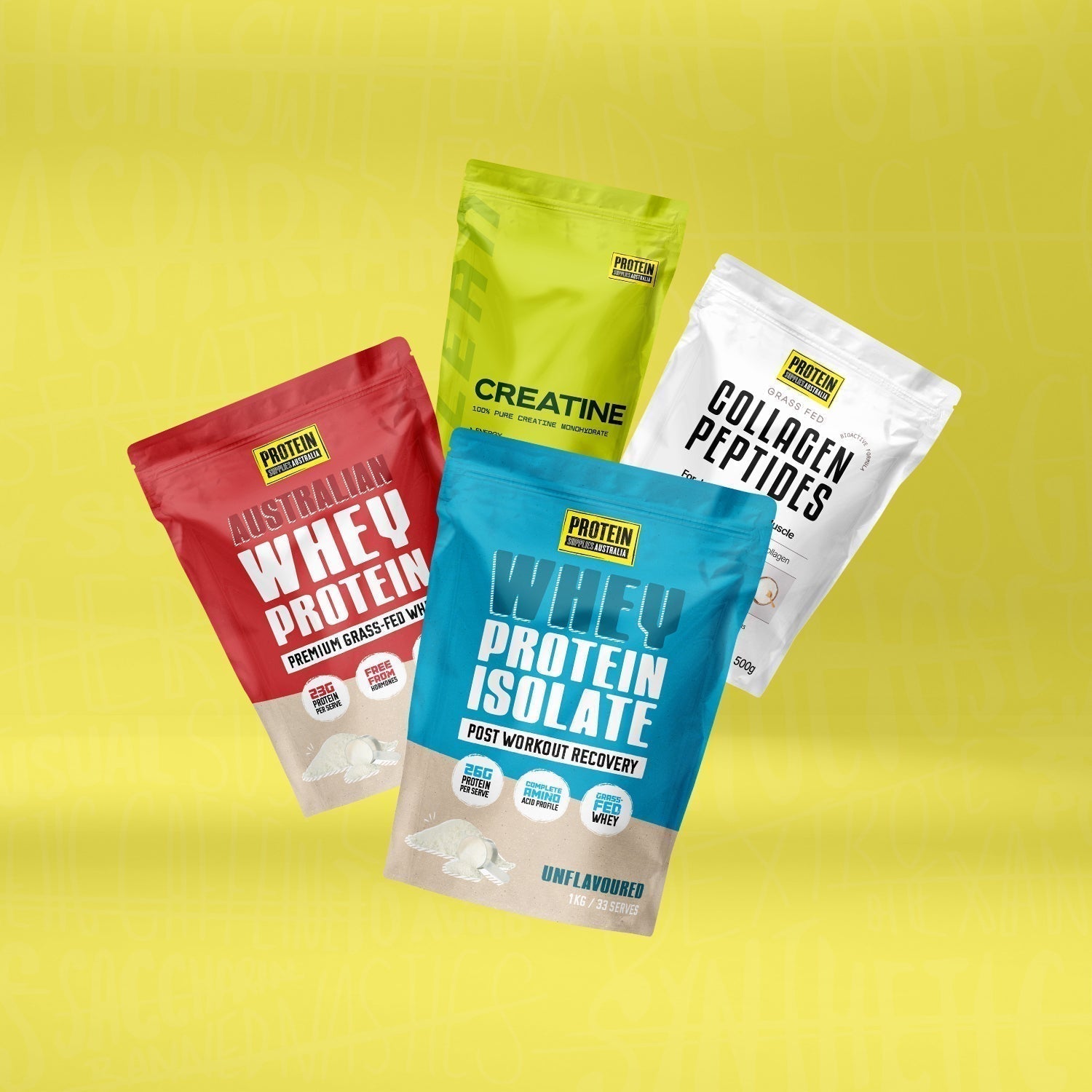

TL;DR: Supplements split into three buckets, and the clock matters a lot less than most labels suggest.
-
Daily foundations - protein, creatine, collagen, magnesium, electrolytes and PHGG fibre - work because you take them every day, not because you take them at a specific hour. Total daily intake is what drives results.
-
Training-specific supplements - beta-alanine, citrulline malate, caffeine, intra-workout carbs, post-workout protein - do have a window, but it's usually wider than people think (minutes to hours, not seconds).
-
Evening recovery - magnesium, a bit of collagen or a protein-rich snack - rounds the day out rather than replacing anything.
None of this replaces a decent diet or a training program you're actually sticking to. Supplements support what you're already doing - they don't do the work for you.
If you've ever stood in your kitchen holding four tubs wondering what to take, and when, this guide's for you. We've split it the way we'd actually explain it in-store: what to take daily no matter what, what to time around your session, and what's worth adding once the day winds down - plus the actual mechanisms and dosing behind each one, not just "take this, then."
Daily Foundations
These are the supplements that earn their keep through consistency - day in, day out - rather than through perfect timing.
Protein Powder
Protein powder is a fast, low-effort way to hit your daily protein target - it's not a magic post-workout potion, it's food in powder form.
How it works: dietary protein gets broken down into amino acids, which your body uses to repair and build muscle tissue (a process called muscle protein synthesis). Your muscles are more responsive to protein for roughly 24 hours after a hard session, not just the 30 minutes right after - so a shake three hours later still counts.
Dosage guidance: most active adults do well aiming for 1.6–2.2g of protein per kg of bodyweight per day (higher end if you're in a calorie deficit and trying to hold onto muscle), spread across 3–4 meals or shakes of roughly 20–40g each. A single scoop of whey or WPI typically delivers 20–25g.
Whey vs WPI vs plant:
-
Whey concentrate is cost-effective, contains a small amount of lactose and fat, and works well for most people.
-
WPI (whey protein isolate) is more heavily filtered - lower in lactose and carbs, higher in protein per scoop - a good option if whey concentrate sits heavy on your stomach.
-
Plant blends (pea, rice, or a mix) suit anyone avoiding dairy; blending two plant sources usually covers the amino acid gaps you'd get from a single source alone.
Who it's for: anyone not consistently hitting their protein target from food alone - that's most people training regularly, not just bodybuilders. A shake with breakfast, blended into oats, or as a midafternoon top-up all count toward the daily number.
Creatine
Creatine is one of the most researched supplements in sports nutrition, and it's not just for powerlifters - anyone doing repeated high-intensity efforts (sprints, sets to failure, team sports) can benefit.
How it works: creatine tops up the phosphocreatine stores in your muscles, which your body taps into for quick energy during short, intense bursts of effort. More stored creatine means slightly more fuel for those efforts and a bit more capacity to push out extra reps.
Dosage guidance:
-
No-load approach: 3–5g per day, every day. Saturation builds gradually over 3–4 weeks.
-
Loading approach: 20g/day (split into 4 doses) for 5–7 days, then drop to 3–5g/day maintenance - saturates muscle stores faster if you don't want to wait a month.
Why timing is flexible: creatine works by saturation, not by an acute spike. Once your muscles are topped up, it doesn't matter whether you take it with breakfast, in a post-workout shake, or before bed - what matters is that you take it every day. Skipping a dose here and there won't undo weeks of saturation either.
Safety notes: creatine monohydrate has a long safety record in healthy adults, including in longer-term studies. The main "side effect" reported is a small amount of water retention in the muscle - not fat gain. It's not a stimulant, so there's no tolerance build-up or need to cycle it.
Collagen Peptides
Collagen peptides are a different protein to whey - they're not built for muscle repair in the same way, they're better thought of as structural support for skin, joints, and connective tissue.
How it works: collagen supplies specific amino acids (glycine, proline, hydroxyproline) that are the building blocks of your own collagen, mostly Type I and Type III - the types found in skin, tendons, and ligaments. It's not a complete protein in the way whey is, which is why it doesn't substitute for your protein shake.
Dosage guidance: most of the research behind collagen peptides uses 10–15g per day, taken consistently over weeks to months rather than around a single session.
Why consistency beats timing: unlike caffeine or citrulline, there's no "acute" window where collagen does more - the benefit comes from steady daily intake building up over time. Stir it into coffee, tea, a smoothie, or your oats; it dissolves easily and doesn't change the taste much.
Magnesium
Magnesium is involved in over 300 processes in the body, including muscle contraction and relaxation, energy production, and nervous system function - it's genuinely a daily-use mineral, not a niche one.
Glycinate vs citrate - what's the difference:
-
Magnesium glycinate is bound to glycine, an amino acid with its own calming effect, which is why it's the more popular pick for evening use.
-
Magnesium citrate is absorbed a little faster and is a common choice earlier in the day; higher doses can have a mild laxative effect for some people.
Dosage guidance: typical daily intakes sit around 200–400mg, depending on the form and what your diet already provides. Check the label - combined with magnesium from food, you don't want to consistently exceed the upper intake levels used in supplement studies.
Why evening is popular (without overclaiming): magnesium supports normal muscle relaxation and nervous system function, which is why a lot of people build it into a wind-down routine. That said, there's no hard rule saying evening is biologically superior - it's a habit that works well for a lot of people, not a requirement.
Hydration / Electrolytes
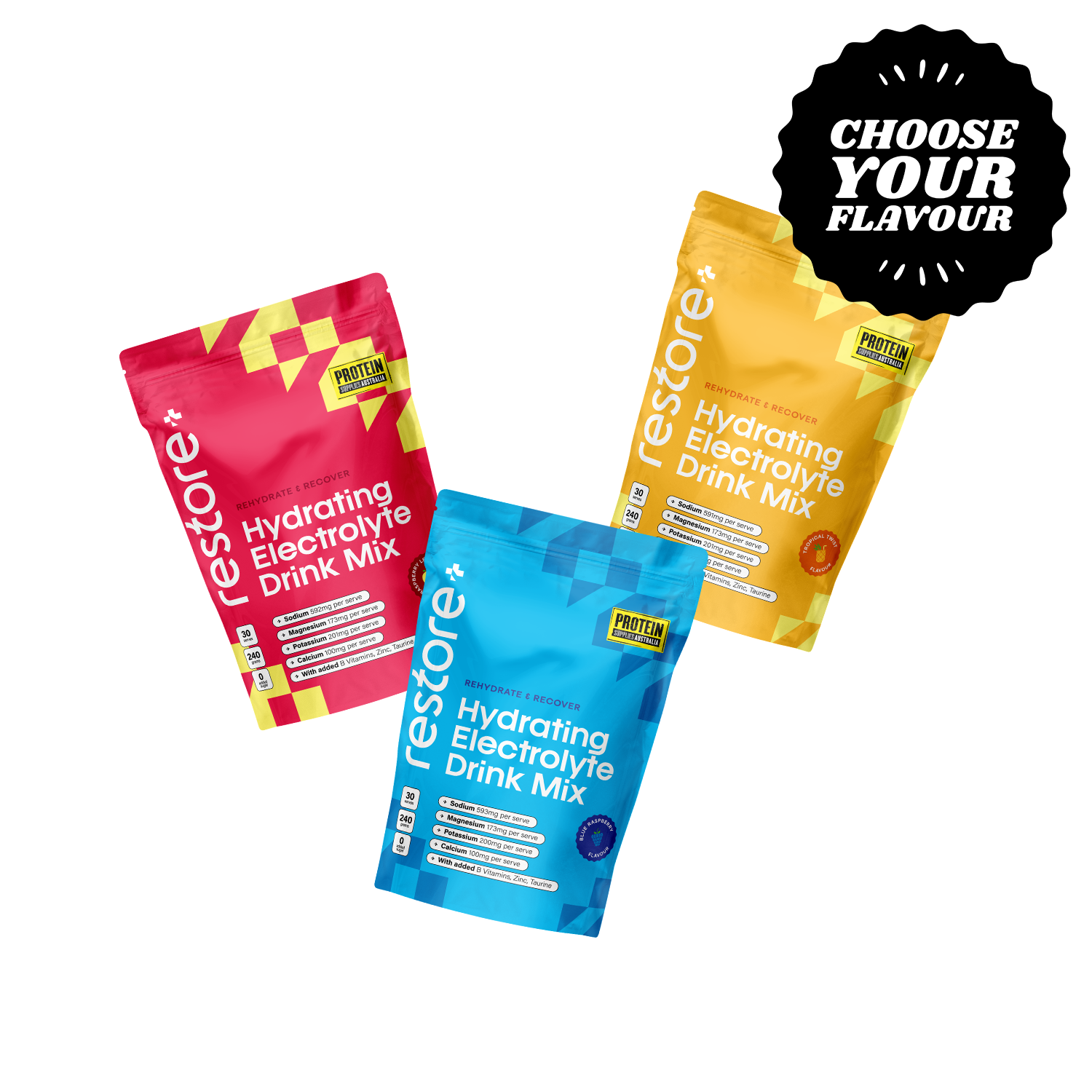
Plain water rehydrates you. Electrolytes replace what water alone doesn't - the sodium, potassium, and magnesium you lose in sweat, which water can't put back.
How it works: sodium is the main electrolyte lost in sweat and it's what helps your body actually retain the fluid you drink - plain water without it can just pass straight through. Potassium and magnesium support muscle and nerve function alongside it.
When plain water isn't enough:
-
Sessions longer than 60–90 minutes
-
Training in the heat or high humidity
-
You're a heavy sweater (salty-looking sweat marks on clothing are a decent clue)
-
Back-to-back sessions in a day, where you need to rehydrate fast between them
Who it's for: anyone training hard in Australian summer heat, endurance athletes, or people who just sweat a lot regardless of session length. For a light 30-minute walk, water's genuinely fine.
PHGG Fibre
PHGG (partially hydrolysed guar gum) is a 100% soluble fibre that's fermented slowly by gut bacteria - which is exactly why it's gentler than a lot of other fibre supplements.
How it works: unlike insoluble fibre, PHGG dissolves fully in liquid and doesn't add bulk the way psyllium can. It ferments gradually in the colon, feeding beneficial gut bacteria without the rapid gas and bloating that can come from a big dose of a coarser fibre.
Start-low-go-slow dosing: start at around 2–3g per day, and build up to 5g per day (or as directed on the label) over a week or two. Jumping straight to a full dose is the most common reason people think a fibre supplement "doesn't agree with them" - it's usually just too much, too fast.
Why it's gentler than psyllium: psyllium swells and gels quickly, which can feel abrupt on the gut if you're not used to fibre. PHGG's slower fermentation profile tends to sit more comfortably, which makes it a reasonable starting point if you've tried psyllium and found it too intense.
Daily fibre target context: the NHMRC recommends around 25g/day for women and 30g/day for men, and most Australians fall short of that from food alone. PHGG is a top-up, not a replacement for vegetables, legumes, and wholegrains - mix it into water, a shake, or a meal without much change to taste.
For a deeper look at how it works, who it may suit and why it is often gentler than other fibre supplements, read our complete guide to PHGG fibre.
When to Take What: Before, During, After Training

Training days are where timing genuinely starts to matter - though even here, the windows are usually more forgiving than the "take it in the next 20 minutes or lose the benefit" messaging you'll see elsewhere.
Before Training
Creatine - if this is when it fits your routine, that's fine, but remember it's not doing anything acutely; it's the daily habit that counts.
Caffeine / pre-workout - the most well-studied stimulant for exercise performance, working through the central nervous system to reduce perceived effort and improve focus and endurance. Research supports 3–6mg/kg bodyweight (roughly 200–400mg for most adults), taken 20–30 minutes before training. A couple of practical notes: regular users build up some tolerance, so the effect can feel smaller over time, and taking it too late in the day can interfere with sleep - which then undermines recovery anyway.
During Training
Electrolytes and hydration matter most once you're past the point where plain water can keep up with sweat losses.
Intra-workout carbohydrates - for sessions under an hour, your glycogen stores are generally enough on their own. Past 60–90 minutes, especially for endurance or repeated high-intensity work, 30–60g of carbohydrate per hour helps maintain blood glucose and delay fatigue. This is squarely for longer sessions - a 45-minute gym workout doesn't need it.
After Training
Whey protein or WPI plus carbohydrates support muscle repair and glycogen replenishment. Here's the part that surprises a lot of people: the old "30-minute anabolic window" isn't backed by current research. The ISSN's position on nutrient timing is that your muscles stay responsive to protein for up to 24 hours after resistance training, and total daily protein intake - spread across the day in 20–40g doses - matters more than what you do in the few minutes after you rack the weights. So a post-workout shake is a convenient way to hit your number, not a race against the clock.
Electrolytes are worth adding after a session where you've sweated heavily, to help rehydrate properly before your next session - particularly important if you're training again within a day.
Evening Recovery
As the day winds down, recovery doesn't stop - it's arguably when a lot of the repair work actually happens.
Magnesium is a popular evening addition because of its role in normal muscle relaxation and nervous system function, often paired with collagen peptides or a protein-rich snack to help close out daily nutrition targets without a big meal right before bed. None of this needs to be exact down to the minute - it's more about building a habit that fits your evening than hitting a specific hour on the clock.
What supplements fit your routine?
Answer 4 quick questions to get a practical starting routine, including what to take daily, what only matters around training, and what you probably do not need yet.
Question 1 of 4
What is your main priority right now?
Question 2 of 4
How consistently do you hit your daily protein target from food?
Question 3 of 4
What best describes your usual training session?
Question 4 of 4
Which statement best matches caffeine and your training time?
Strength and muscle support
Your best starting point is a small daily foundation that supports hard, repeated efforts and helps you cover your total protein needs.
Creatine monohydrate
Supports repeated high-intensity training by gradually topping up muscle creatine stores.
When: 3 to 5g every day. Exact timing is flexible.
Shop CreatineProtein powder
Useful when food alone is not consistently getting you to your daily protein target.
When: breakfast, between meals or after training.
Shop ProteinSession support
Pre-workout or electrolytes can help in the right session, but neither needs to be automatic.
When: match them to caffeine tolerance, session length, heat and sweat.
Explore Pre-WorkoutWhat your other answers mean
Protein: make protein powder a genuine priority. Aim to spread your total intake across the day rather than relying on one large shake.
Protein: keep powder as a convenient top-up on the days meals fall short. It does not need to be used every day if food covers the target.
Protein: food already appears to cover the job, so a shake is optional rather than essential.
Hydration: for a normal session under an hour, water is usually enough. Electrolytes are not automatically required.
Hydration: electrolytes become more useful when the session is hot, humid or noticeably sweaty.
Hydration: make electrolytes a higher priority, especially when sessions run beyond 90 minutes or you train again soon.
Pre-workout: an earlier caffeine-based pre-workout can be useful for selected hard sessions. You do not need it for every workout.
Pre-workout: skip late caffeine. Protecting sleep is more valuable than forcing a temporary energy boost.
Pre-workout: avoid stimulant-heavy options. Creatine still works because it is not a stimulant.
Pre-workout: leave it out. Creatine, protein and sensible hydration cover the more important foundations.
General educational information only. Individual needs vary. Check product labels and seek professional advice if you take medication, have a medical condition, are pregnant or breastfeeding, or are unsure what is suitable.
Endurance and long-session support
Your priorities change as sessions become longer, hotter and sweatier. Hydration and fuelling matter more here than adding a large general supplement stack.
Electrolytes
Replace the sodium and other electrolytes lost through meaningful sweat, especially in Australian heat.
When: sip during training or use after heavy sweat loss.
Try Restore HydrationCarbohydrate fuelling
Longer sessions may benefit from easily digested carbohydrate to maintain blood glucose and delay fatigue.
When: generally once sessions move beyond 60 to 90 minutes.
Explore PerformanceProtein powder
Helps close a daily protein gap when higher training volume makes food intake harder to manage.
When: whenever it conveniently fills the gap.
Shop ProteinWhat your other answers mean
Recovery: protein powder is worth prioritising because your current food intake may not consistently support recovery.
Recovery: use protein powder on higher-volume days or when meals are delayed, not simply because the session has ended.
Recovery: if food already covers your daily target, a post-workout shake is optional.
During training: a short session usually does not need intra-workout carbohydrate or electrolytes unless conditions are unusually hot or sweaty.
During training: consider electrolytes, with carbohydrate becoming relevant near the longer end of this range.
During training: electrolytes are a strong fit, and roughly 30 to 60g of carbohydrate per hour may be useful for demanding endurance work.
Before training: caffeine may help selected morning or daytime sessions when you already know you tolerate it.
Before training: avoid late caffeine. A disrupted night can undermine the recovery you are trying to improve.
Before training: keep the routine stimulant-free and focus on fuelling, electrolytes and pacing.
Before training: no pre-workout is required. Hydration and session-specific carbohydrate are the more relevant tools.
General educational information only. Individual needs vary. Check product labels and seek professional advice if you take medication, have a medical condition, are pregnant or breastfeeding, or are unsure what is suitable.
Recovery and connective-tissue support
Think in weeks and months rather than chasing a single post-workout window. Consistency, complete protein and sensible training progression remain the base.
Collagen peptides
Provides collagen-specific amino acids used in a consistent joint, tendon and connective-tissue routine.
When: 10 to 15g daily, or follow the product serving guide.
Shop CollagenComplete protein
Whey, WPI or a suitable plant blend still matters for total daily protein and muscle repair.
When: spread across 3 to 4 meals or shakes.
Shop ProteinMagnesium
A practical addition when magnesium intake and normal muscle-relaxation support are genuine priorities.
When: often used as part of a repeatable evening routine.
Shop MagnesiumWhat your other answers mean
Protein: prioritise a complete protein source as well as collagen. Collagen does not replace whey, WPI, eggs, meat or a complete plant blend.
Protein: keep a complete protein powder available for days when meals fall short. Count collagen separately.
Protein: your food intake may already cover muscle-repair needs, so use collagen specifically for the connective-tissue goal.
Hydration: water is generally enough for a short, lightly sweaty session.
Hydration: electrolytes may help when heat or sweat loss is meaningful, but they are not a direct joint supplement.
Hydration: prioritise electrolytes and post-session rehydration so you are ready for the next session.
Pre-workout: caffeine can be used earlier in the day, but it does not replace recovery habits.
Pre-workout: avoid late stimulants. Sleep is a more important recovery tool.
Pre-workout: choose a stimulant-free routine and keep the focus on daily consistency.
Pre-workout: leaving it out is completely reasonable for this goal.
General educational information only. Individual needs vary. Check product labels and seek professional advice if you take medication, have a medical condition, are pregnant or breastfeeding, or are unsure what is suitable.
Simple daily foundations
Start with a clear nutrition gap rather than buying a supplement for every possible benefit. Fibre, protein and hydration should support the diet you already have.
PHGG fibre
A gentle soluble-fibre top-up when food intake regularly falls short of your fibre needs.
When: start around 2 to 3g daily and build gradually.
Shop PHGG FibreProtein powder
A convenient food-based tool when meals do not consistently cover your daily protein target.
When: use it wherever the genuine gap occurs.
Shop ProteinHydration
Increase fluid gradually alongside fibre. Electrolytes are mainly useful for long, hot or very sweaty training.
When: water consistently across the day.
View Restore HydrationWhat your other answers mean
Protein: add a protein powder before adding more specialised products. It solves a clearer daily nutrition gap.
Protein: use powder only on the days your meals fall short.
Protein: there is no strong reason to force in a shake when food already covers your needs.
Training hydration: plain water is generally enough for your usual session.
Training hydration: electrolytes may be worthwhile on hotter or sweatier days.
Training hydration: electrolytes become a stronger priority due to session length and sweat loss.
Pre-workout: use caffeine only when it solves a real performance need. It is not a daily foundation.
Pre-workout: avoid caffeine late in the day and keep the evening routine simple.
Pre-workout: skip stimulants and focus on food, hydration and consistent training.
Pre-workout: you are not missing an essential supplement by leaving it out.
General educational information only. Introduce fibre gradually with adequate fluid. Individual needs vary, so seek professional advice if you take medication, have a medical condition, are pregnant or breastfeeding, or are unsure what is suitable.
Useful Sources
-
International Society of Sports Nutrition – Position Stand: Protein and Exercise
-
International Society of Sports Nutrition – Position Stand: Nutrient Timing
-
International Society of Sports Nutrition – Position Stand: Creatine Supplementation and Exercise
-
International Society of Sports Nutrition – Position Stand: Beta-Alanine Supplementation
-
International Society of Sports Nutrition – Position Stand: Caffeine and Exercise Performance
-
Citrulline Malate and Exercise Performance – Research Review
-
Eat for Health (NHMRC) – Dietary Fibre Nutrient Reference Values
-
National Institutes of Health – Office of Dietary Supplements
Disclaimer: This article and quiz are intended for general educational purposes only and should not be considered medical advice. The quiz provides a general guide based on your responses and does not replace personalised advice from a qualified healthcare professional. If you have a medical condition, are pregnant or breastfeeding, take prescription medication, or are unsure which supplements are right for you, consult your GP, accredited practising dietitian or other qualified healthcare professional before starting a new supplement or making significant changes to your diet or training routine.

What Is PHGG Fibre? The Science Behind the Gentlest Gut Supplement
PHGG Fibre or Psyllium Husk? Take the Quiz.