
TL;DR
-
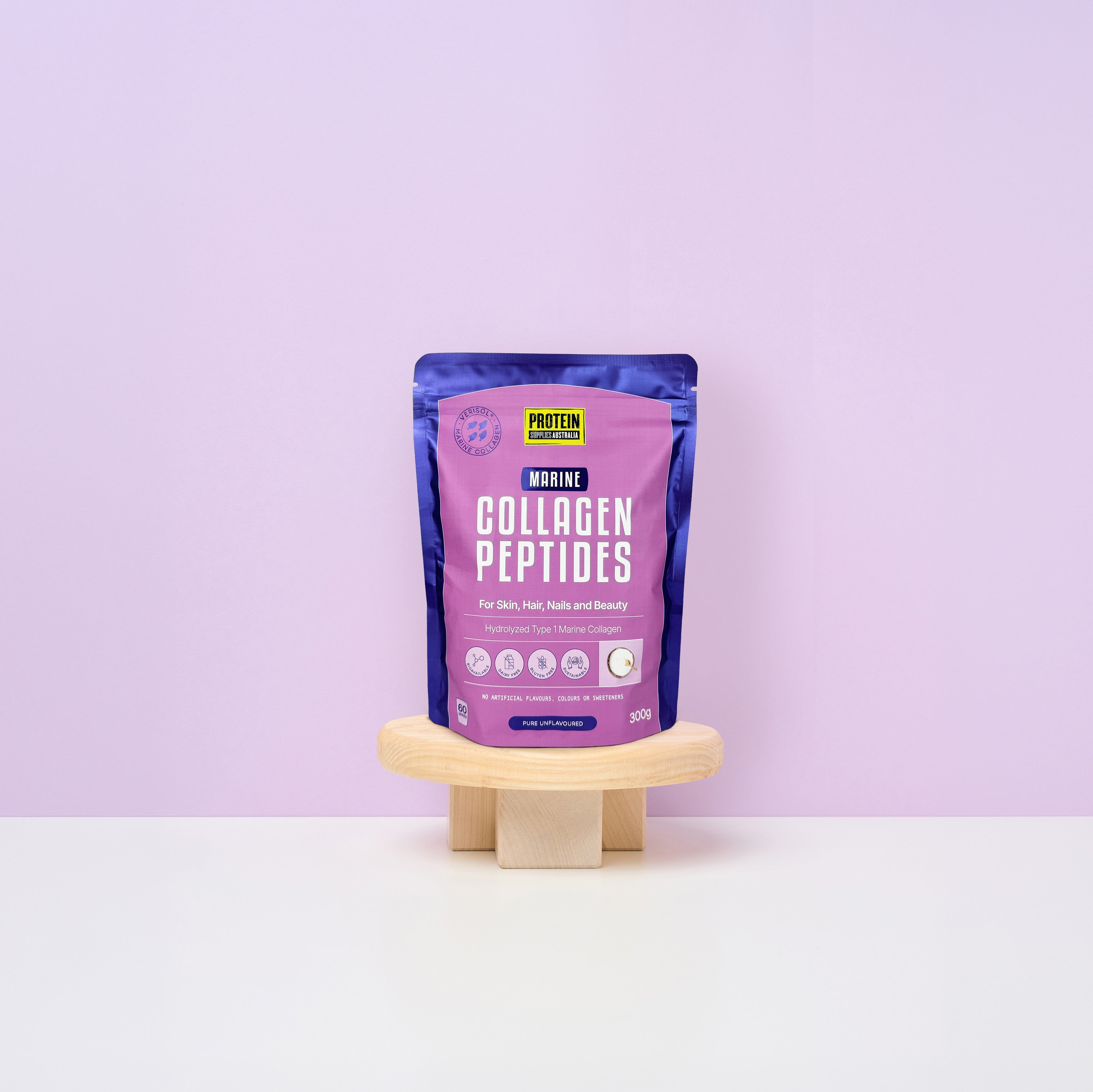
Marine collagen (fish collagen) is predominantly Type I - the collagen type most associated with skin, hair, and nail support.
-
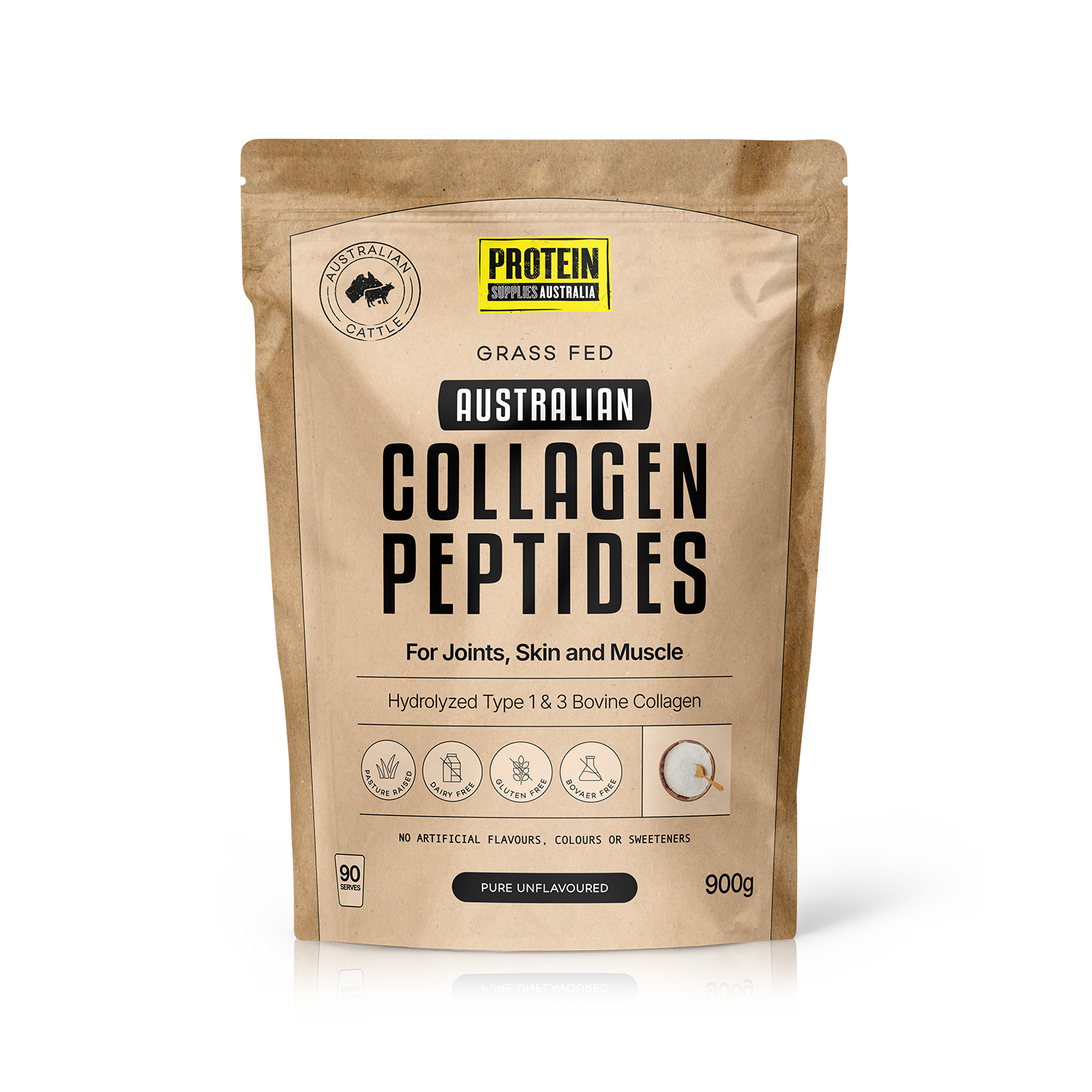
Bovine collagen provides both Type I and Type III, making it a broader option for skin and connective tissue, joints, and muscle recovery.
-
Marine collagen bioavailability is often cited as superior, but a 2024 Frontiers in Nutrition randomised crossover trial found absorption is largely comparable across sources - the difference is peptide-specific, not universal.
-
If you have a fish allergy or follow a pescatarian diet, the allergen profile of each source matters - choose accordingly.
-
There's no single "best" option. Your goal - skin health, joint support, or both - should drive the decision.
What Is Marine Collagen?

Where it comes from
Marine collagen is extracted from the skin, scales, and bones of fish. Most commercial products use wild-caught deep-sea or freshwater fish - the skin and scales are byproducts of the fishing and seafood-processing industries, meaning the raw material would otherwise go to waste.
It's sometimes called fish collagen, and the terms are used interchangeably in most supplement contexts.
How it's processed (hydrolysed marine collagen peptides)
Raw fish collagen is broken down through enzymatic hydrolysis - a controlled process that cleaves the large collagen protein into smaller fragments called hydrolysed marine collagen peptides.
These short-chain peptides are water-soluble, easy to mix, and absorbed more readily than intact collagen protein. The result is a fine, typically unflavoured powder that dissolves cleanly in water, smoothies, or coffee.
VERISOL® F is one example of a clinically validated, patented fish collagen peptide ingredient - a specific formulation with published human trial data behind it, rather than a generic fish collagen powder.
Collagen types in marine collagen (Type I focus)
Marine collagen is almost exclusively Type I collagen - the most abundant collagen in the human body, found in skin, tendons, ligaments, and bone.
Because it's concentrated in a single type, marine collagen is particularly well-matched to skin-focused goals. Type I collagen is the primary structural protein responsible for skin firmness, elasticity, and hydration.
What Is Bovine Collagen?

Where it comes from
Bovine collagen is derived from cattle - specifically from the hide (skin), bones, and connective tissue of cows. Most quality supplements use grass-fed or pasture-raised bovine sources, though this varies by brand.
It's one of the most widely used collagen sources globally, particularly in Western markets, partly because of its broad availability and cost-effectiveness.
How it's processed
Like marine collagen, bovine collagen is hydrolysed into peptides. The hide or bones are cleaned, demineralised where necessary, and then enzymatically broken down into a soluble peptide powder.
The resulting bovine collagen peptides dissolve easily and are virtually tasteless and odourless - making them straightforward to add to any drink or food.
Collagen types in bovine collagen (Type I + III)
This is where bovine collagen stands apart. Bovine hide and skin yield both Type I and Type III collagen - two structurally distinct proteins with overlapping but complementary roles.
-
Type I supports skin, bone, tendons, and ligaments.
-
Type III is found alongside Type I in skin, blood vessels, and the walls of hollow organs. It's particularly associated with connective tissue elasticity and is present in higher concentrations in younger skin.
This dual-type profile makes bovine collagen a versatile option for people targeting both aesthetic and structural goals.
Marine Collagen vs Bovine Collagen: Key Differences
|
Feature |
Marine Collagen |
Bovine Collagen |
|---|---|---|
|
Source |
Wild-caught fish (skin, scales) |
Cattle hide, bones, connective tissue |
|
Collagen Types |
Primarily Type I |
Type I + Type III |
|
Bioavailability |
Comparable overall; some peptides slightly favoured |
Comparable overall; well-studied in clinical trials |
|
Best For |
Skin, hair, nails; beauty-focused goals |
Joints, muscle recovery, connective tissue; broader coverage |
|
Allergen Considerations |
Not suitable for fish allergy; generally dairy-free |
Not suitable for beef allergy; dairy-free, soy-free |
|
Sustainability |
Lower footprint when sourced from fish-processing byproducts |
Dependent on farming practices and sourcing standards |
|
Price Point |
Typically higher |
Typically more affordable |
Bioavailability: Does Marine Collagen Really Absorb Better?
The claim that marine collagen is "more bioavailable" is one of the most repeated in the supplement industry. The reality is more nuanced.
A 2024 randomised, double-blind crossover study published in Frontiers in Nutrition directly compared fish, porcine, and bovine collagen hydrolysates in healthy volunteers. The key finding: free hydroxyproline absorption - the primary marker of collagen uptake - was not significantly different between sources.

Where differences did emerge was at the individual peptide level. Fish collagen produced significantly higher plasma concentrations of the dipeptide Hyp-Gly (2.3-fold vs bovine, p = 0.005), while porcine collagen led on Pro-Hyp. The authors concluded that "the absorption of fish, porcine and bovine CH is highly comparable" and that certain products "may be used interchangeably for certain health applications."
What this means practically:
-
Marine collagen's smaller average peptide size (typically ~2,000 Da) is often cited as the reason for faster absorption - and there is some logic to this, since smaller peptides cross the intestinal wall more readily.
-
However, the 2024 data shows that molecular weight alone doesn't determine bioavailability - bovine collagen at 2,000 Da and 5,000 Da produced comparable results.
-
Marine collagen bioavailability may be slightly advantaged for specific peptides, but it's not a blanket superiority across all markers.
The honest take: both sources absorb well when properly hydrolysed. The peptide profile - not just the source - is what matters most for specific outcomes.
Which Is Better for Skin, Hair & Nails?
For skin, hair, and nail goals, marine collagen has a strong case - and the evidence is more targeted than for bovine.
Because marine collagen is concentrated in Type I, it delivers a high dose of the exact collagen type that dominates the skin's extracellular matrix. When hydrolysed into bioactive peptides, those fragments signal fibroblasts (the cells that produce collagen) to ramp up synthesis of new collagen and elastin.

The most compelling clinical evidence in this space comes from VERISOL® F - a patented fish collagen peptide. In a randomised, double-blind, placebo-controlled trial of 114 women aged 45–65, just 2.5 g/day of VERISOL® for 8 weeks produced:
-
A measurable ~20% reduction in eye wrinkle volume versus placebo
-
Significantly increased procollagen Type I and elastin levels in the skin
-
Effects that persisted 4 weeks after the last dose
A separate study in 44 healthy women found that 2.5 g/day of VERISOL® for 16 weeks produced a significant increase in hair thickness, alongside in vitro evidence of increased hair follicle cell proliferation.
Bovine collagen also supports skin via its Type I content - and the Type III component may contribute to skin elasticity. But the clinical data for skin-specific outcomes is more developed for targeted fish collagen peptide formulations like VERISOL® F.
If skin, hair, and nails are your primary goal, marine collagen - particularly from a clinically validated source - is the more targeted choice.
Which Is Better for Joints & Muscle Recovery?
For joint health and post-training recovery, bovine collagen's Type I + III profile gives it an edge.
Type III collagen is a key structural component of tendons, ligaments, and the connective tissue that surrounds muscle fibres. When you're training hard, these structures take significant load - and collagen supplementation is thought to support their repair and resilience.
A systematic review published in Orthopedic Reviews found that Type I collagen hydrolysate supplementation most consistently improved joint pain and function, particularly in people with osteoarthritis or exercise-related joint discomfort. The strongest results appeared when collagen was taken for at least 12 weeks alongside a rehabilitation or exercise programme.

A separate review in Nutrients (PMC8521576) found that collagen peptides showed improvements in strength and muscle recovery, including lower biomarkers of muscle damage after intense exercise.
Typical effective doses in joint and recovery research sit between 5–10 g/day, taken consistently over 8–12 weeks.
Marine collagen also contains Type I and can contribute to joint support - but bovine collagen's broader type coverage, established research base, and lower price point make it the more practical choice for athletes and active individuals focused on recovery.
Who Should Choose Marine Collagen?
Marine collagen - or more specifically, hydrolysed marine collagen peptides from a quality source - is the better fit if you:
-
Prioritise skin, hair, and nail outcomes and want a product backed by targeted clinical evidence (e.g., VERISOL® F)
-
Follow a pescatarian diet and avoid beef-derived products
-
Have a dairy, beef, or soy sensitivity - quality marine collagen is typically free of all three
-
Want a single-type, highly concentrated Type I collagen without the broader collagen type mix
-
Prefer a product sourced from wild-caught fish with a lower environmental footprint (when byproduct-derived from well-managed fisheries)
Who Should Choose Bovine Collagen?
Bovine collagen peptides make more sense if you:
-
Train regularly and want to support joints, tendons, ligaments, and muscle recovery
-
Want broader collagen type coverage - Type I and Type III in one product
-
Are budget-conscious - bovine collagen is generally more affordable per gram than marine
-
Don't have a beef allergy or dietary restriction that rules out cattle-derived products
-
Want a well-researched, widely studied supplement with a large body of clinical literature behind it
Can You Take Both?
Yes - and there's a reasonable rationale for it.
Marine and bovine collagen aren't competing products. They have different peptide profiles, different dominant collagen types, and different primary applications. Taking both means you're covering Type I (skin/hair/nails) via marine and Type I + III (joints/connective tissue) via bovine simultaneously.
This stacking approach is particularly relevant for active individuals who train hard and care about skin health - two goals that aren't mutually exclusive.

There's no known interaction between the two, and both are well-tolerated at standard doses. If you're combining them, a total daily collagen intake of 10–15 g across both sources is consistent with the ranges used in clinical research.
The key is choosing quality sources for each - single-ingredient products with no fillers, no artificial additives, and a clear declaration of source and processing method.
Useful Sources
-
Virgilio N et al. (2024). Absorption of bioactive peptides following collagen hydrolysate intake: a randomized, double-blind crossover study in healthy individuals. Frontiers in Nutrition. https://www.frontiersin.org/journals/nutrition/articles/10.3389/fnut.2024.1416643/full
-
Proksch E et al. (2014). Oral supplementation of specific collagen peptides has beneficial effects on human skin physiology: a double-blind, placebo-controlled study. PubMed. https://pubmed.ncbi.nlm.nih.gov/24401291/
-
Larder CE, Iskandar MM, Kubow S. (2023). Collagen hydrolysates: a source of bioactive peptides derived from food sources for the treatment of osteoarthritis. Medicines. https://pmc.ncbi.nlm.nih.gov/articles/PMC8521576/
-
GELITA VERISOL® - Clinical evidence overview. https://www.gelita.com/en/products-brands/collagen-peptides/verisol
-
Australasian Society of Clinical Immunology and Allergy (ASCIA) - Allergic and toxic reactions to seafood. https://www.allergy.org.au/patients/food-allergy/allergic-and-toxic-reactions-to-seafood
-
Frontiers in Marine Science (2023). Marine collagen sustainability and environmental impact. https://www.frontiersin.org/journals/marine-science/articles/10.3389/fmars.2023.1245077/full

Chocolate Brownie Batter Balls
Marine Collagen for Skin: What the Science Actually Says