

Both Magnesium Glycinate and Magnesium Citrate are highly absorbable forms of magnesium, but they serve different purposes. Glycinate is better for sleep, muscle relaxation, and stress relief because it's bound to glycine (a calming amino acid). Citrate is better for digestive support and gentle laxative effects.
 Choose Magnesium Glycinate if you want better sleep and stress relief; choose Magnesium Citrate if you need digestive support. Most athletes benefit from Glycinate post-workout for recovery. Take 200-400mg daily, preferably in the evening with food. Both are safe, affordable, and backed by solid research.
What is Magnesium and Why Does It Matter?
Magnesium is one of the most important minerals in your body. It's involved in over 300 enzymatic reactions, yet most people are deficient.

Here's the problem: modern diets are low in magnesium. Processed foods, depleted soils, and high stress all contribute to magnesium deficiency. And when you're training hard, your magnesium needs increase even more.
Signs you might be deficient:
- Poor sleep quality or insomnia
- Muscle cramps and tension
- Anxiety and stress
- Fatigue and low energy
- Headaches or migraines
- Constipation or digestive issues
If any of these sound familiar, magnesium supplementation could be a game-changer.
But here's where it gets tricky: not all magnesium supplements are created equal. The form matters. A lot.
This guide compares the two most popular forms — Magnesium Glycinate and Magnesium Citrate — so you can choose the right one for your goals.
Understanding Magnesium: The Basics
What Does Magnesium Do?
Magnesium is a cofactor for over 300 enzymes in your body. It's involved in:
- Energy production — ATP synthesis (your cells' energy currency)
- Muscle function — contraction and relaxation
- Nervous system regulation — stress response and sleep
- Protein synthesis — building muscle tissue
- Bone health — structural integrity and density
- Blood sugar regulation — insulin sensitivity
- Heart health — rhythm and blood pressure
Bottom line: Without adequate magnesium, your body can't function optimally.
Why Magnesium Deficiency is Common
Modern life depletes magnesium:
- Processed foods — refined grains lose 80-90% of magnesium
- Depleted soils — modern farming practices reduce mineral content
- High stress — cortisol increases magnesium excretion
- Intense training — sweating and muscle use deplete stores
- Caffeine and alcohol — increase magnesium loss
- Medications — many drugs interfere with absorption
Result: Studies suggest 50-70% of people are magnesium deficient.
Natural Sources of Magnesium
If you eat these foods, you're getting some magnesium:
- Pumpkin seeds — 156mg per 28g
- Almonds — 76mg per 28g
- Spinach (cooked) — 157mg per 100g
- Dark chocolate — 64mg per 28g
- Avocado — 29mg per 100g
- Cashews — 82mg per 28g
- Chickpeas — 38mg per 100g
- Salmon — 26mg per 100g
Reality check: Most people get 200-300mg daily from food. Athletes and stressed individuals often need 400-500mg.
Magnesium Glycinate Explained
What is Magnesium Glycinate?
Magnesium Glycinate is magnesium bound to glycine, an amino acid. This combination is crucial because:
- Glycine is calming — it's an inhibitory neurotransmitter that promotes relaxation
- Better absorption — the glycine bond improves intestinal uptake
- Gentle on digestion — doesn't cause laxative effects
- Synergistic benefits — magnesium + glycine work together for sleep and stress
How Magnesium Glycinate Works
When you take Magnesium Glycinate:
- Glycine enters the bloodstream — crosses the blood-brain barrier
- Activates glycine receptors — promotes relaxation and sleep
- Magnesium is absorbed — the glycine bond facilitates uptake
- GABA production increases — glycine supports the brain's calming neurotransmitter
- Nervous system calms — promotes parasympathetic (rest-and-digest) activation
Result: Better sleep, reduced anxiety, improved muscle relaxation.
Magnesium Glycinate Benefits
1. Superior Sleep Quality
This is where Magnesium Glycinate shines. The glycine component directly supports sleep:
- Reduces time to fall asleep — glycine lowers core body temperature
- Improves sleep quality — deeper, more restorative sleep
- Increases REM sleep — better memory consolidation
- Reduces night wakings — more continuous sleep
- No morning grogginess — unlike some sleep medications
What to expect: Better sleep within 3-7 days of consistent use.
2. Stress & Anxiety Relief
Magnesium Glycinate is one of the best supplements for anxiety:
- Activates GABA receptors — the brain's primary calming neurotransmitter
- Reduces cortisol — helps manage stress hormone elevation
- Promotes relaxation — physical and mental calm
- Improves mood — supports serotonin production
- Reduces racing thoughts — calms an overactive mind
What to expect: Noticeable anxiety reduction within 1-2 weeks.
3. Muscle Relaxation & Recovery
Athletes love Magnesium Glycinate for post-workout recovery:
- Reduces muscle tension — magnesium relaxes muscle fibers
- Decreases DOMS — less muscle soreness after training
- Improves flexibility — relaxed muscles move better
- Supports protein synthesis — magnesium is needed for muscle building
- Faster recovery — better sleep = better recovery
What to expect: Reduced muscle soreness within 24-48 hours.
4. Migraine & Headache Prevention
Research shows magnesium helps prevent migraines:
- Reduces migraine frequency — 30-50% reduction in some studies
- Decreases migraine severity — less intense when they occur
- Prevents tension headaches — muscle relaxation effect
- Supports blood vessel function — involved in migraine pathophysiology
What to expect: Fewer migraines within 2-4 weeks of consistent use.
5. Bone Health & Strength
Magnesium is essential for bone density:
- Supports calcium absorption — magnesium is needed for calcium utilization
- Improves bone density — especially important for athletes
- Reduces fracture risk — stronger bones overall
- Supports collagen synthesis — needed for bone structure
What to expect: Long-term bone health improvements (3-6 months+).
Who Benefits Most from Magnesium Glycinate?
✅ Athletes wanting better recovery and sleep
✅ People with insomnia or poor sleep quality
✅ Those with anxiety or stress
✅ Anyone with muscle tension or tightness
✅ People prone to migraines
✅ Those wanting to optimize overall health
Magnesium Citrate Explained

What is Magnesium Citrate?
Magnesium Citrate is magnesium bound to citric acid. This form has different properties:
- Better absorption than oxide — citric acid enhances uptake
- Mild laxative effect — citrate stimulates bowel movements
- Supports digestion — citric acid aids digestive processes
- More bioavailable — easier absorption than some other forms
How Magnesium Citrate Works
When you take Magnesium Citrate:
- Citric acid enhances absorption — improves magnesium uptake in intestines
- Osmotic laxative effect — draws water into the colon
- Stimulates bowel movements — promotes regular digestion
- Magnesium is absorbed — enters bloodstream for systemic benefits
- Digestive support — citric acid aids overall digestion
Result: Better digestion, regular bowel movements, magnesium absorption.
Magnesium Citrate Benefits
1. Digestive Support & Regularity
Magnesium Citrate is excellent for digestive health:
- Promotes regular bowel movements — gentle laxative effect
- Relieves constipation — without harsh side effects
- Supports healthy digestion — citric acid aids digestive processes
- Improves gut motility — helps food move through digestive tract
- Gentle on stomach — less likely to cause cramping than other forms
What to expect: Improved bowel regularity within 24-48 hours.
2. Magnesium Absorption
Citrate is one of the most absorbable forms:
- High bioavailability — 30-40% absorption rate (vs. 4% for oxide)
- Efficient uptake — citric acid facilitates intestinal absorption
- Reliable results — consistent magnesium delivery
- Supports systemic benefits — magnesium reaches all tissues
What to expect: Consistent magnesium levels with daily use.
3. Mild Laxative Effect
Unlike harsh laxatives, Magnesium Citrate is gentle:
- Osmotic action — draws water into colon naturally
- Non-habit forming — doesn't create dependency
- Gentle on gut — no cramping or urgency (at normal doses)
- Supports natural rhythm — helps restore healthy bowel function
What to expect: Regular, comfortable bowel movements.
4. Supports Overall Magnesium Status
Like all magnesium forms, it provides systemic benefits:
- Energy production — supports ATP synthesis
- Muscle function — aids muscle contraction and relaxation
- Nervous system support — helps manage stress
- Sleep support — less effective than Glycinate, but still helpful
- Bone health — supports calcium utilization
What to expect: General magnesium benefits (energy, muscle function, etc.).
5. Kidney Stone Prevention
Some research suggests citrate may help prevent kidney stones:
- Increases urinary citrate — citrate inhibits stone formation
- Reduces stone risk — particularly for those prone to stones
- Supports kidney health — overall urinary tract support
What to expect: Long-term kidney health benefits (3-6 months+).
Who Benefits Most from Magnesium Citrate?
✅ People with constipation or digestive issues
✅ Those needing gentle laxative support
✅ Anyone wanting reliable magnesium absorption
✅ People prone to kidney stones
✅ Those with sluggish digestion
✅ Anyone wanting general magnesium benefits without sleep focus
Head-to-Head Comparison: Glycinate vs Citrate
| Factor | Magnesium Glycinate | Magnesium Citrate |
|---|---|---|
| Active Ingredient | Magnesium + Glycine | Magnesium + Citric Acid |
| Absorption Rate | 25-30% (excellent) | 30-40% (excellent) |
| Bioavailability | High | Very High |
| Primary Benefit | Sleep, stress, muscle relaxation | Digestion, laxative effect |
| Secondary Benefits | Digestion, energy | Sleep, stress (mild) |
| Taste | Neutral, slightly sweet | Slightly tart |
| Digestive Effect | Gentle, no laxative | Mild laxative effect |
| Best Timing | Evening (for sleep) | Morning or as needed |
| Dosage | 200-400mg daily | 200-400mg daily |
| Cost (200g) | $34.95 | $29.95 |
| Cost Per Serving | $ | $ |
| Vegan Friendly | Yes | Yes |
| Taste in Water | Mixes well, neutral | Mixes well, slightly tart |
| Best For | Sleep, anxiety, recovery | Digestion, regularity |
| Avoid If | None (very safe) | Prone to loose stools |
Sleep & Relaxation: The Glycinate Advantage
If better sleep is your goal, Magnesium Glycinate is the clear winner.
Why Glycinate is Superior for Sleep
The glycine component is key:
- Lowers core body temperature — glycine promotes heat loss, signaling sleep time
- Activates glycine receptors — directly promotes relaxation
- Increases GABA — the brain's primary calming neurotransmitter
- Reduces sleep latency — you fall asleep faster
- Improves sleep quality — deeper, more restorative sleep
- No morning grogginess — unlike prescription sleep aids
Real-World Sleep Improvements
Users report:
- Falling asleep 15-30 minutes faster
- Sleeping through the night — fewer wakings
- Waking more refreshed — better sleep quality
- Reduced anxiety at bedtime — calmer mind
- Better dream recall — more REM sleep
Sleep Dosage & Timing
- Dose: 200-400mg (typically 300mg)
- Timing: 30-60 minutes before bed
- With food: Optional, but food improves absorption
- Consistency: Take nightly for best results
Timeline: Most people notice improvements within 3-7 days.
Digestion & Gut Health: The Citrate Advantage
If digestive support is your goal, Magnesium Citrate is the better choice.
Why Citrate is Superior for Digestion
The citric acid component provides digestive benefits:
- Osmotic laxative effect — draws water into the colon
- Stimulates bowel movements — promotes natural regularity
- Gentle on gut — no harsh cramping or urgency
- Supports healthy bacteria — magnesium feeds beneficial microbes
- Improves nutrient absorption — better overall digestion
Real-World Digestive Improvements
Users report:
- Regular bowel movements — within 24-48 hours
- Relief from constipation — gentle, natural effect
- Reduced bloating — better digestive flow
- Improved energy — better nutrient absorption
- No cramping — unlike harsh laxatives
Digestion Dosage & Timing
- Dose: 200-400mg (typically 300mg)
- Timing: Morning with breakfast or as needed
- With food: Yes, improves absorption and reduces laxative effect
- Consistency: Daily for best results
Timeline: Most people notice improvements within 24-48 hours.
Dosage & How to Take Magnesium
Recommended Dosage
Standard dose: 200-400mg per day
Typical dose: 300mg daily
Maximum safe dose: 400-420mg daily (RDA upper limit)
| Goal | Dosage | Timing |
|---|---|---|
| General health | 200-300mg daily | Evening with food |
| Sleep support | 300-400mg | 30-60 min before bed |
| Muscle recovery | 300-400mg | Post-workout or evening |
| Stress relief | 200-300mg | Anytime with food |
| Digestive support | 300-400mg | Morning with breakfast |
| Athletic performance | 300-400mg | Post-workout + evening |
How to Take It
Best practice:
- Mix 300-400mg powder with water or juice
- Take with food (improves absorption, reduces laxative effect)
- Take consistently — daily intake matters more than timing
- Stay hydrated — drink 3-4L of water daily
Pro tip: If using Citrate for sleep, take it earlier (6pm) rather than right before bed, as the laxative effect might disrupt sleep.
Stacking Magnesium
Both forms stack well with:
- Calcium — work synergistically for bone health
- Vitamin D — enhances magnesium absorption
- Zinc — complementary mineral support
- B vitamins — support energy production
- Protein powder — post-workout recovery
- Creatine — supports muscle function
- L-Glutamine — complementary recovery support
Avoid mixing with:
- Calcium supplements (taken at same time) — compete for absorption
- High-dose iron — can interfere with absorption
- Certain medications — consult doctor if on meds
Side Effects & Safety: Are They Safe?
Both Magnesium Glycinate and Magnesium Citrate are very safe for most people. Magnesium has an excellent safety profile with minimal side effects.
Common Side Effects (Rare)
Digestive Sensitivity (Citrate more likely)
- Loose stools or mild diarrhea
- Usually resolves within a few days
- Take with food to reduce effect
- Reduce dose if needed
Mild Digestive Discomfort (Glycinate rare)
- Slight bloating or gas initially
- Usually resolves within a few days
- Take with food if needed
Headaches
- Rare, usually in sensitive individuals
- Reduce dose or discontinue if it occurs
Sleep Disruption (Glycinate)
- Very rare, only in sensitive individuals
- Take earlier in the evening instead of right before bed
Who Should Consult a Doctor?
Consult a healthcare provider if you have:
- Kidney disease or kidney issues (magnesium is excreted by kidneys)
- Heart rhythm problems (magnesium affects heart function)
- Severe digestive disorders
- Taking medications that interact with magnesium
- Pregnant or breastfeeding (consult doctor first)
Safe for:
- ✅ Healthy adults
- ✅ Athletes and active individuals
- ✅ Vegetarians and vegans
- ✅ People with food allergies (check source)
- ✅ Most people with digestive issues (Glycinate safer than Citrate)
Safety Verdict
✅ Both forms are safe for healthy adults
✅ Magnesium has excellent safety data
✅ No serious side effects at recommended doses
✅ Consult a doctor if you have kidney issues
✅ Citrate has mild laxative effect — not a problem for most
Magnesium Glycinate vs Citrate: Which Should You Choose?
Choose Magnesium Glycinate ($34.95) If:
✅ You want better sleep quality — this is its superpower
✅ You have anxiety or stress — glycine is calming
✅ You're an athlete wanting recovery — supports muscle relaxation
✅ You have muscle tension or tightness — excellent for relaxation
✅ You're prone to migraines or headaches — magnesium helps prevent them
✅ You want no laxative effect — gentle on digestion
Best for: Sleep optimization, stress relief, athletic recovery, anxiety management
Choose Magnesium Citrate ($29.95) If:
✅ You have constipation or digestive issues — gentle laxative effect
✅ You want reliable magnesium absorption — citrate is highly absorbable
✅ You need digestive support — citric acid aids digestion
✅ You're on a tight budget — slightly cheaper
✅ You want general magnesium benefits without sleep focus
✅ You're prone to kidney stones — citrate may help prevent them
Best for: Digestive support, constipation relief, general magnesium supplementation
The Ideal Strategy: Use Both
Here's what many athletes do:
- Morning: Magnesium Citrate (200mg) with breakfast for digestion + general magnesium benefits
- Evening: Magnesium Glycinate (300mg) 30-60 minutes before bed for sleep + recovery
Total daily intake: 500mg (within safe limits)
Benefits: Digestive support + superior sleep + muscle recovery
This approach gives you the best of both worlds.
The Bottom Line
Magnesium Glycinate and Magnesium Citrate are both excellent supplements. They're highly absorbable, safe, and backed by solid research.
The choice depends on your primary goal:
- Choose Glycinate for sleep, stress, and muscle recovery — the glycine component makes it superior for these benefits
- Choose Citrate for digestive support — the mild laxative effect is ideal for constipation relief
For optimal results, consider using both: Citrate in the morning for digestion, Glycinate in the evening for sleep and recovery.
Either way, consistency matters more than which product you choose. Take 300-400mg daily, stay hydrated, and give it 3-4 weeks to see full benefits.
Ready to Start?
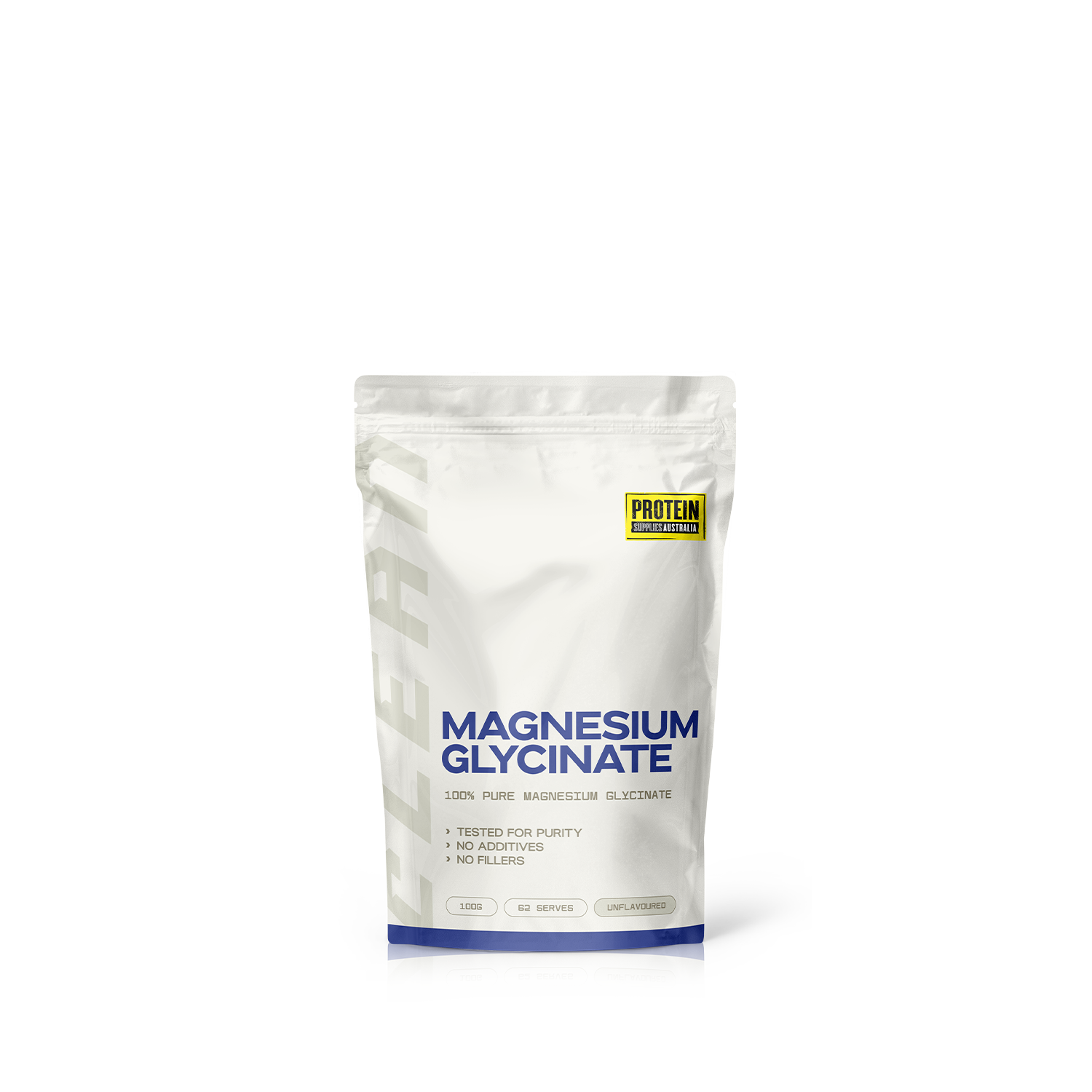
Shop Magnesium Glycinate — $19.95 for 100g
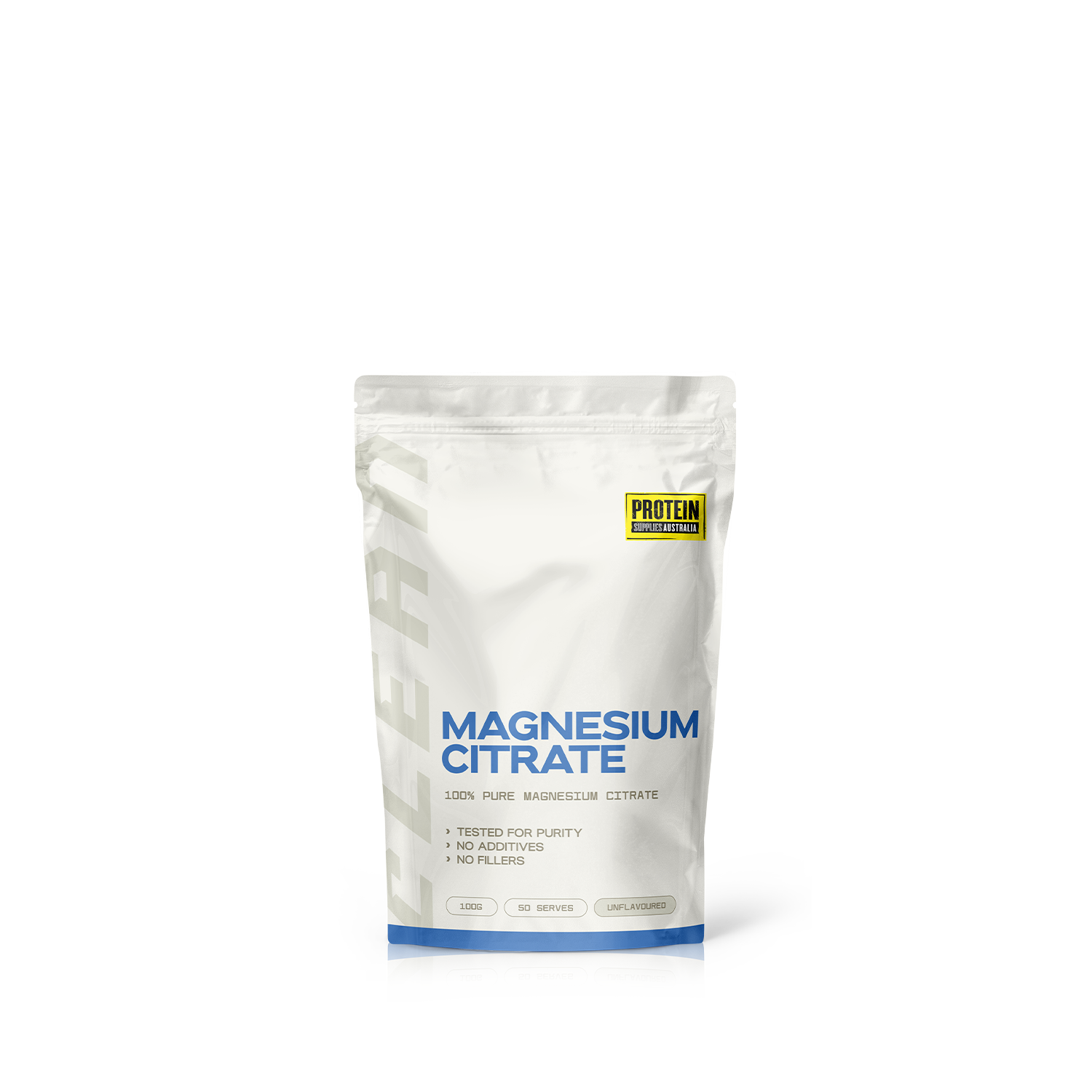
Shop Magnesium Citrate — $19.95 for 100g
Both are in stock, vegan-friendly, and packed in Australia. Free shipping on orders over $120.
Not sure which one? Start with Magnesium Glycinate if sleep is your priority. If digestion is your main concern, start with Citrate. You can always add the other form later.
Useful Sources
- International Society of Sports Nutrition - Magnesium Supplementation — Research on magnesium and athletic performance
- PubMed - Magnesium and Sleep — Peer-reviewed studies on magnesium and sleep quality
- PubMed - Magnesium Glycinate — Research on glycine-bound magnesium
- PubMed - Magnesium and Anxiety — Studies on magnesium and stress relief
- Australian Sports Commission - Supplement Guidelines — Evidence-based supplement recommendations
L-Glutamine Benefits for Muscle Recovery & Gut Health
Single-Ingredient Supplements That Actually Work