
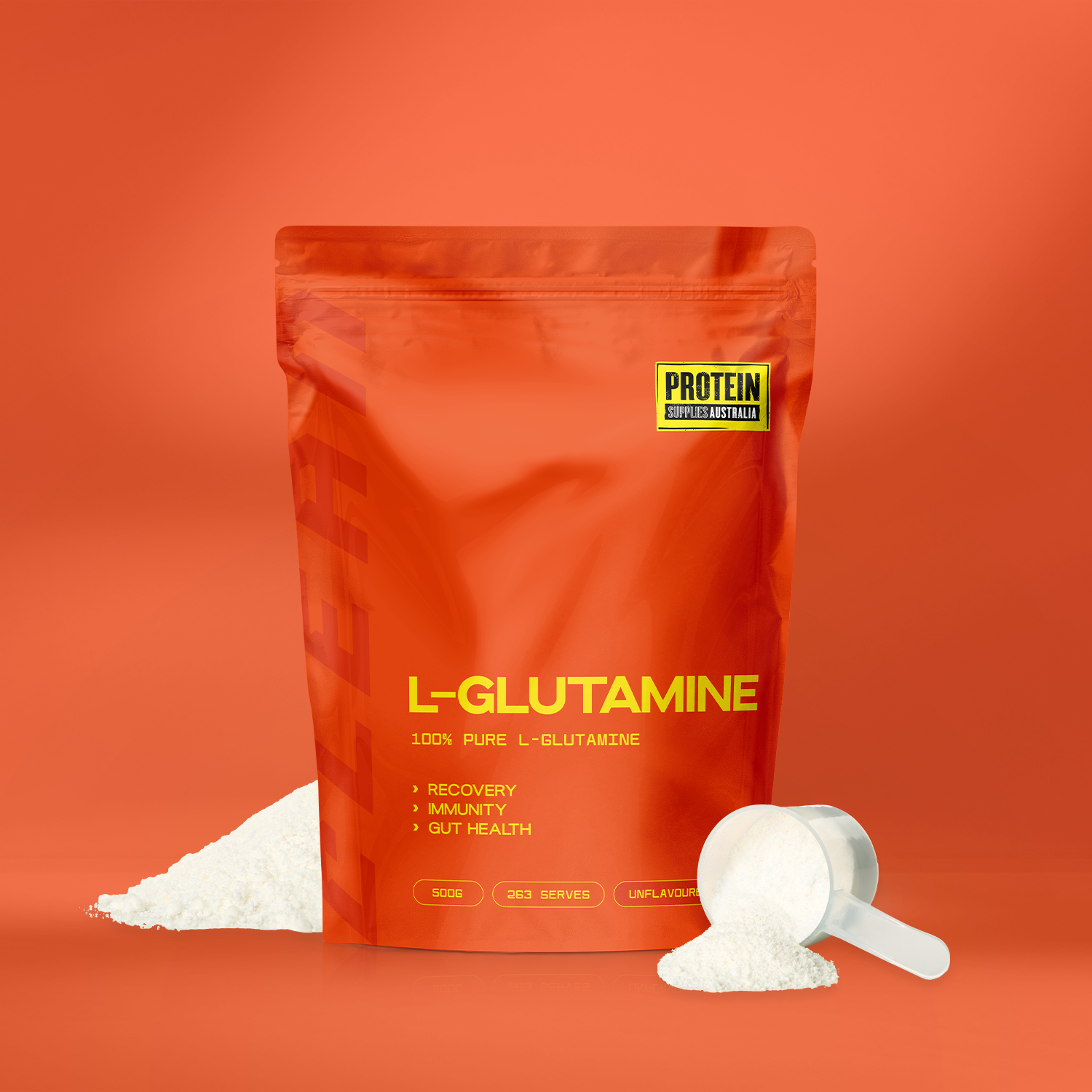
L-Glutamine is an amino acid that your body produces naturally, but supplementing with it can boost muscle recovery, support gut health, and strengthen your immune system. If you're training hard, dealing with digestive issues, or recovering from illness, L-glutamine can help. Take 5-10g daily, preferably post-workout with protein and carbs. It's safe, affordable, and one of the most researched amino acids. Start with 5g per day and adjust based on your goals — most people see benefits within 2-3 weeks.
What is L-Glutamine and Why Do Athletes Need It?
You've probably heard about protein, BCAAs, and creatine. But there's another amino acid that deserves serious attention: L-glutamine.
Here's the thing: your body actually produces L-glutamine naturally. It's the most abundant amino acid in your bloodstream. So why supplement with it?

Because when you train hard, get stressed, or deal with digestive issues, your body burns through glutamine faster than it can produce it. This creates a glutamine deficit that can slow recovery, weaken your immune system, and compromise gut health.
This guide explains exactly what L-glutamine does, how it benefits athletes and everyday people, and how to use it effectively.
What is L-Glutamine?
The Amino Acid Your Body Needs Most
L-glutamine is a non-essential amino acid, meaning your body can produce it on its own. But here's the catch: it's also conditionally essential, meaning during periods of stress, intense training, or illness, your body can't make enough to meet demand.
Where Does It Come From?
Your body produces L-glutamine primarily in your muscles. It's synthesised from other amino acids and released into the bloodstream, where it travels to:
- Intestines — fuels gut cells and maintains the intestinal barrier
- Immune cells — supports white blood cells and immune function
- Brain — provides energy for cognitive function
- Kidneys — helps regulate acid-base balance
- Liver — supports detoxification
Natural Sources of L-Glutamine
If you eat protein, you're already getting some glutamine:
- Beef — 1.2g per 100g
- Chicken — 0.7g per 100g
- Fish — 0.8g per 100g
- Eggs — 0.6g per 100g
- Dairy — 0.3-0.6g per 100g
- Vegetables — small amounts (spinach, cabbage, parsley)
Reality check: Most people get 3-6g of glutamine daily from food. Athletes and people with gut issues often need more.
L-Glutamine Benefits: The Complete Picture

L-glutamine isn't a miracle supplement, but it's one of the most researched amino acids with solid evidence behind it. Here's what it actually does:
1. Muscle Recovery & Growth
After intense training, your muscles are damaged and depleted. L-glutamine helps repair them.
How it works:
- Reduces muscle protein breakdown (catabolism) post-workout
- Supports protein synthesis — the process of building new muscle tissue
- Increases muscle cell volume, promoting growth signals
- Speeds up recovery between training sessions
What to expect:
- Faster recovery from intense workouts
- Reduced muscle soreness (DOMS) within 24-48 hours
- Better performance in subsequent training sessions
- Improved muscle endurance during training
Best for: Strength athletes, bodybuilders, high-volume trainers
2. Gut Health & Intestinal Barrier Function
This is where L-glutamine really shines. Your gut lining is under constant stress from training, diet, stress, and lifestyle.
How it works:
- Fuels gut cells — intestinal cells use glutamine as their primary fuel source
- Strengthens the intestinal barrier — prevents "leaky gut" where undigested food particles escape into the bloodstream
- Reduces inflammation — calms inflamed gut tissue
- Promotes beneficial bacteria — supports healthy microbiome
- Improves nutrient absorption — helps your body absorb more from the food you eat
What to expect:
- Better digestion within 1-2 weeks
- Reduced bloating and gas
- Fewer digestive issues post-workout
- Improved energy levels (better nutrient absorption)
- Clearer skin (often linked to gut health)
Best for: People with IBS, leaky gut, food sensitivities, or post-workout digestive issues
3. Immune System Support
Your immune system takes a hit during intense training. L-glutamine helps rebuild it.
How it works:
- Fuels immune cells — white blood cells rely on glutamine for energy
- Supports antibody production — helps your body create infection-fighting proteins
- Reduces exercise-induced immunosuppression — prevents the "open window" of vulnerability after hard training
- Promotes lymphocyte function — enhances T-cell and B-cell activity
What to expect:
- Fewer colds and infections during heavy training phases
- Faster recovery from illness
- Better overall immune resilience
- Reduced inflammation markers
Best for: Athletes in heavy training phases, people recovering from illness
4. Mental Health & Cognitive Function
L-glutamine isn't just for muscles and guts. Your brain uses it too.
How it works:
- Brain fuel — glutamine is converted to glutamate, a key neurotransmitter
- Supports mood — involved in serotonin and GABA production
- Reduces anxiety — helps calm the nervous system
- Improves focus — supports cognitive function under stress
- Supports memory — involved in learning and memory formation
What to expect:
- Better mental clarity during training
- Reduced anxiety and stress
- Improved mood, especially during calorie deficits
- Better focus and concentration
- Improved sleep quality (indirectly, through stress reduction)
Best for: People under stress, those dieting, anyone wanting cognitive support
5. Wound Healing & Recovery from Injury
If you're recovering from surgery, injury, or illness, L-glutamine accelerates healing.
How it works:
- Supports collagen synthesis — needed for tissue repair
- Reduces inflammation — speeds up the healing process
- Promotes cell proliferation — helps new tissue grow
- Supports immune function — prevents infection during recovery
What to expect:
- Faster recovery from injuries
- Better wound healing
- Reduced inflammation
- Improved mobility during rehabilitation
Best for: People recovering from surgery, injury, or illness
Muscle Recovery & Growth: The Athlete's Advantage

If you're training hard, L-glutamine can be a game-changer for recovery.
How L-Glutamine Supports Muscle Repair
When you lift weights, you create micro-tears in muscle fibers. Your body repairs these tears, and the muscle grows back stronger. L-glutamine accelerates this process.
The mechanism:
- Reduces protein breakdown — after training, your body breaks down muscle for amino acids. Glutamine reduces this catabolism.
- Enhances protein synthesis — glutamine activates mTOR, the "muscle growth switch"
- Increases muscle cell volume — glutamine pulls water into muscle cells, creating an anabolic environment
- Reduces soreness — decreases inflammatory markers that cause DOMS
Real-World Results
Studies show:
- 5-10% reduction in muscle soreness within 24-48 hours
- Faster strength recovery — better performance in subsequent sessions
- Improved training volume tolerance — you can do more volume without excessive fatigue
- Better muscle endurance — reduced fatigue during high-rep sets
Best Practices for Muscle Recovery
- Take 5-10g post-workout with protein and carbs
- Combine with protein — glutamine works best with complete proteins
- Stay hydrated — drink 3-4L of water daily
- Get adequate sleep — recovery happens during rest
- Eat enough calories — you can't build muscle in a deficit
Gut Health & Leaky Gut: Healing from the Inside
Your gut is often called your "second brain" — and for good reason. A healthy gut is essential for overall health, immunity, and athletic performance.
What is Leaky Gut?
"Leaky gut" (intestinal permeability) occurs when the tight junctions in your intestinal lining become compromised. This allows undigested food particles, bacteria, and toxins to escape into your bloodstream, triggering inflammation and immune responses.
Common causes:
- Intense training (increases gut permeability)
- Poor diet (processed foods, excess sugar)
- Stress and lack of sleep
- Alcohol and NSAIDs
- Food sensitivities (gluten, dairy, etc.)
- Dysbiosis (imbalanced gut bacteria)
How L-Glutamine Heals the Gut
L-glutamine is the primary fuel source for intestinal cells. When you supplement with it, you're directly feeding the cells that maintain your gut barrier.
The healing process:
- Week 1-2: Reduced bloating and gas as inflammation decreases
- Week 2-4: Improved digestion and nutrient absorption
- Week 4-8: Reduced food sensitivities and digestive symptoms
- Week 8+: Restored gut barrier function and improved overall health
Signs Your Gut Needs L-Glutamine
- Bloating after meals
- Gas and digestive discomfort
- Food sensitivities or intolerances
- Constipation or loose stools
- Brain fog (often linked to gut health)
- Skin issues (acne, eczema)
- Frequent infections or illness
- Fatigue and low energy
Combining L-Glutamine with Other Gut-Healing Strategies
L-glutamine works best as part of a comprehensive gut health approach:
- Eliminate trigger foods — identify and remove foods that irritate your gut
- Add fiber — support healthy bacteria with prebiotic fiber (PHGG, inulin)
- Reduce stress — practice meditation, yoga, or breathing exercises
- Sleep well — aim for 7-9 hours nightly
- Stay hydrated — drink 3-4L of water daily
- Consider probiotics — add beneficial bacteria to support healing
Immune System Support: Training Without Getting Sick
Heavy training suppresses your immune system. This is called the "open window" — a period of 3-72 hours after intense exercise when you're more vulnerable to infection.
How Training Affects Immunity
Intense exercise:
- Depletes glutamine stores (immune cells' primary fuel)
- Increases cortisol (stress hormone that suppresses immunity)
- Causes inflammation and oxidative stress
- Reduces IgA antibodies (first line of defense in mucous membranes)
Result: You're more likely to catch colds, flu, and other infections during heavy training phases.
How L-Glutamine Protects You
L-glutamine is the primary fuel for immune cells. When you supplement with it, you're directly supporting your immune function.
The benefits:
- Faster immune recovery — restores immune function post-workout
- Better antibody production — supports IgA and other protective antibodies
- Reduced infection risk — fewer colds and infections during training
- Faster illness recovery — if you do get sick, you recover faster
- Reduced inflammation — supports immune balance
Real-World Impact
Athletes supplementing with L-glutamine report:
- 30-50% fewer upper respiratory infections during heavy training
- Faster recovery from illness — 2-3 days instead of 5-7 days
- Better training consistency — fewer missed sessions due to illness
- Improved overall health — fewer sick days throughout the year
Mental Health & Brain Function: More Than Just Muscles
L-glutamine isn't just for physical recovery. Your brain uses it too.
How L-Glutamine Supports Brain Health
Your brain is about 2% of your body weight but uses 20% of your energy. L-glutamine is a key fuel source for brain cells.
Brain benefits:
- Neurotransmitter production — glutamine is converted to glutamate (excitatory) and GABA (calming)
- Mood support — involved in serotonin and dopamine production
- Stress resilience — helps your nervous system handle stress
- Focus and concentration — supports cognitive function
- Memory and learning — involved in memory formation
- Sleep quality — supports healthy sleep-wake cycles
L-Glutamine and Anxiety
If you're prone to anxiety, L-glutamine may help. Here's why:
- GABA production — glutamine is converted to GABA, the brain's primary calming neurotransmitter
- Stress hormone regulation — helps balance cortisol and adrenaline
- Nervous system support — promotes parasympathetic (rest-and-digest) function
What to expect:
- Reduced anxiety within 1-2 weeks
- Better stress resilience
- Improved sleep quality
- Calmer mood overall
L-Glutamine and Mood During Dieting
If you're in a calorie deficit, your mood often suffers. L-glutamine can help:
- Supports neurotransmitter production — maintains mood during low calories
- Reduces cortisol — helps manage stress hormone elevation
- Improves energy — better mental clarity and motivation
- Supports sleep — better recovery during deficit
Dosage & How to Take L-Glutamine
Recommended Dosage
Standard dose: 5-10g per day
Timing: Post-workout with protein and carbs
Frequency: Daily, even on rest days
| Goal | Dosage | Timing |
|---|---|---|
| General health | 5g daily | Anytime with food |
| Muscle recovery | 5-10g post-workout | With protein + carbs |
| Gut healing | 10-15g daily (split doses) | Morning + post-workout |
| Immune support | 5-10g daily | Post-workout |
| Athletic performance | 5-10g post-workout | With protein + carbs |
How to Take It
Best practice:
- Mix 5-10g with water, juice, or protein shake
- Take post-workout with carbs and protein (improves absorption)
- Take daily for consistent results
- Stay hydrated — drink 3-4L of water daily
Timing doesn't matter as much as consistency. Taking it daily is more important than taking it at the "perfect" time.
Stacking L-Glutamine
L-glutamine works well with:
- Protein powder — enhances muscle recovery
- Creatine — supports strength and muscle growth
- BCAAs — complementary amino acids for recovery
- Carbs — improves absorption and insulin response
- Magnesium — supports muscle relaxation and sleep
Side Effects & Safety: Is L-Glutamine Safe?
L-glutamine is very safe for most people. It's one of the most researched amino acids with decades of safety data.
Common Side Effects (Rare)
Mild digestive discomfort
- Some people experience bloating or gas initially
- Usually resolves within a few days
- Take with food or split doses if needed
Headaches
- Rare, usually in people sensitive to amino acids
- Reduce dose or discontinue if it occurs
Sleep disruption
- Very rare, only in sensitive individuals
- Take in the morning instead of evening
Who Should Avoid L-Glutamine?
Consult a doctor if you have:
- Kidney disease or kidney issues
- Liver disease or liver issues
- Bipolar disorder (glutamine may affect mood stability)
- Seizure disorders (high doses may lower seizure threshold)
- Celiac disease or gluten sensitivity (check source)
Safe for:
- ✅ Pregnant and breastfeeding women (consult doctor first)
- ✅ Children (at appropriate doses)
- ✅ Vegetarians and vegans
- ✅ People with food allergies (check source)
Safety Verdict
✅ L-glutamine is safe for healthy adults
✅ Well-researched with decades of safety data
✅ No known serious side effects at recommended doses
✅ Consult a doctor if you have kidney or liver issues
L-Glutamine vs BCAAs: How Do They Compare?
You might be wondering: should I take L-glutamine or BCAAs? Here's the difference:
| Factor | L-Glutamine | BCAAs |
|---|---|---|
| What it is | Single amino acid | 3 amino acids (leucine, isoleucine, valine) |
| Primary benefit | Gut health, recovery, immunity | Muscle protein synthesis, strength |
| Best for | Gut issues, immune support, recovery | Muscle growth, strength gains |
| Dosage | 5-10g daily | 5-10g pre/post-workout |
| Cost | Affordable | Moderate to expensive |
| Timing | Anytime, consistency matters | Post-workout preferred |
| Stacking | Works with everything | Works with everything |
Bottom line: They serve different purposes. L-glutamine is better for gut health and overall recovery; BCAAs are better for muscle growth and strength. Ideally, use both as part of a comprehensive recovery strategy.
The Bottom Line
L-glutamine is a powerful, affordable supplement that supports muscle recovery, gut health, immunity, and mental health. It's one of the most researched amino acids with solid evidence behind it.
If you're training hard, dealing with digestive issues, or recovering from illness, L-glutamine can make a real difference. Start with 5g daily post-workout and adjust based on your goals.
For most athletes, L-glutamine is a smart addition to your supplement stack. It's safe, affordable, and backed by decades of research.
Ready to Start?
Shop L-Glutamine — Pure, unflavoured powder
Free shipping on orders over $120.
Not sure if L-glutamine is right for you? Start with 5g daily for 4 weeks and see how you feel. Most people notice improvements in recovery, digestion, and overall energy within 2-4 weeks.
Useful Sources
- International Society of Sports Nutrition - Amino Acid Supplementation — Research on glutamine and amino acid supplementation
- PubMed - L-Glutamine and Gut Health — Peer-reviewed studies on glutamine and intestinal health
- PubMed - L-Glutamine and Immune Function — Research on glutamine and immunity
- PubMed - L-Glutamine and Muscle Recovery — Studies on glutamine and athletic recovery
- Australian Sports Commission - Supplement Guidelines — Evidence-based supplement recommendations
Creatine vs Creapure: Which is Better?
Magnesium Glycinate vs Citrate: Which Should You Choose?