
TL;DR
-
L-theanine and caffeine is one of the most researched nootropic combinations, with multiple double-blind trials showing improved focus, accuracy and reaction time.
-
The sweet spot is a 2:1 ratio — roughly 200 mg L-theanine per 100 mg caffeine.
-
L-theanine smooths out caffeine's rough edges (jitters, anxiety, blood pressure spikes) without blunting the energy boost.
-
It works with your morning coffee, tea, or pre-workout. Effects kick in within 30–60 minutes.

What Is L-Theanine?
L-theanine is an amino acid found almost exclusively in tea leaves (Camellia sinensis). It's what gives green tea that calm, focused quality that coffee on its own just doesn't deliver.
Structurally, it's similar to glutamate — the brain's main excitatory neurotransmitter. That similarity lets it cross the blood-brain barrier and directly influence brain activity.
How it works in the brain:
-
Increases alpha brain wave activity, which is associated with a state of relaxed alertness — similar to what you'd experience during meditation.
-
Boosts levels of GABA, serotonin and dopamine, all of which influence mood and calm.
-
Reduces the brain's response to distractor stimuli, helping you stay on task.
On its own, L-theanine is calming but doesn't sharpen focus much. That's exactly why pairing it with caffeine makes sense.

Why People Combine L-Theanine with Caffeine
Caffeine works by blocking adenosine receptors — the receptors that build up "sleep pressure" throughout the day. Block them, and you feel more alert. The downside is that caffeine also ramps up the sympathetic nervous system, which can tip into anxiety, jitters and a racing heart in some people.
L-theanine acts as a counterbalance. It promotes calm without sedation, meaning you get the alertness from caffeine without the wired, scattered feeling that too much coffee can cause.
The combination does something neither compound achieves alone:
-
Caffeine alone improves alertness but can increase tension and blood pressure.
-
L-theanine alone has minimal effect on cognitive performance in most studies.
-
Together, they improve speed and accuracy on attention tasks, reduce jitteriness, and produce what researchers describe as a state of "calm attentiveness."
This is why green tea — which naturally contains both — has been associated with mental clarity for centuries. The ratio in tea is just too low to get the full effect, which is why supplementing makes sense.

What the Research Actually Says
This isn't fringe science. The L-theanine and caffeine stack has been tested in multiple double-blind, placebo-controlled human trials. Here's what the evidence shows.
Focus and attention
A 2025 double-blind crossover trial published in the British Journal of Nutrition tested 200 mg L-theanine combined with 160 mg caffeine in sleep-deprived adults. The combination significantly improved hit rate and target-distractor discriminability compared to placebo, and reaction time improvement was nearly three times greater than placebo.
A well-cited 2008 study (Owen et al., Nutritional Neuroscience) compared 50 mg caffeine with and without 100 mg L-theanine in 27 participants. The combination improved both speed and accuracy on an attention-switching task and reduced susceptibility to distracting information in a memory task — at both 60 and 90 minutes post-dose.
An fMRI study (Kahathuduwa et al., 2018) found that L-theanine and the combination both reduced activity in the brain's default mode network — the region associated with mind wandering. In plain terms: your brain stays on the task in front of you instead of drifting.
Anxiety and jitter reduction
A 2025 systematic review and meta-analysis (Nutrition Reviews) found that feelings of jitteriness were significantly lower with the theanine-plus-caffeine combination compared to placebo. Headache ratings were also reduced.
A separate study (Haskell et al., 2008, Biological Psychology) found that 250 mg L-theanine combined with 150 mg caffeine produced effects not seen with either compound alone, including increased speed on several tasks and reduced susceptibility to distraction — without the tension that caffeine alone can cause.
L-theanine also appears to blunt caffeine's vasoconstrictive effect (the narrowing of blood vessels that contributes to the "caffeine headache" some people get).
Mood and alertness
The research on mood is more mixed, but the direction is positive. The 2025 Nutrition Reviews meta-analysis found a small-to-moderate improvement in overall mood favouring the theanine-plus-caffeine combination over placebo in the first two hours post-dose.
Multiple studies report that the combination increases subjective alertness ratings more than either compound alone. The 2008 Haskell study found improved semantic memory and increased alertness with the combined dose — effects that weren't present with caffeine or L-theanine taken separately.
The Ideal Ratio: How Much L-Theanine Per mg of Caffeine?
The most consistently used ratio across studies is 2:1 (L-theanine to caffeine).
|
Caffeine dose |
L-theanine dose |
|---|---|
|
50 mg |
100 mg |
|
80 mg (espresso) |
160 mg |
|
100 mg (standard coffee) |
200 mg |
|
160 mg |
320 mg |
Most clinical trials use doses in the range of 50–250 mg L-theanine paired with 40–160 mg caffeine. A 1:1 ratio also shows benefits, but the 2:1 ratio is the most commonly recommended for balancing stimulation with calm focus.
A few things to keep in mind:
-
Start low. If you're caffeine-sensitive, begin with 50 mg caffeine and 100 mg L-theanine and work up from there.
-
The ratio matters more than the absolute dose. Doubling your caffeine without increasing L-theanine will just bring back the jitters.
-
Green tea alone won't cut it. A cup of green tea contains roughly 25–60 mg L-theanine and 30–50 mg caffeine — not enough to hit the therapeutic ratio without supplementing.

How to Use It in Practice
With your morning coffee
This is the most common approach. A standard cup of coffee contains around 80–100 mg of caffeine. Take 200 mg of L-theanine at the same time — either as a powder mixed into the coffee or as a capsule alongside it.
You don't need to change your coffee habit at all. Just add the L-theanine and let the two compounds do their thing. Effects are typically felt within 30–60 minutes.
Tip: Avoid taking it too late in the day. Caffeine's half-life is 4–6 hours, so a 2 pm coffee with L-theanine is still going to affect your sleep.
With tea
Green tea and matcha naturally contain both compounds, but at lower concentrations. If you're a tea drinker, supplementing with an extra 100–150 mg of L-theanine on top of your cup gets you closer to the effective range.
Matcha tends to have higher L-theanine content than regular green tea, so it's a better base if you want to keep supplementation minimal.
With a pre-workout
Many pre-workouts already contain caffeine — often 150–200 mg per serve. If yours doesn't include L-theanine (check the label), adding 200–400 mg of L-theanine is worth considering.
The combination may help you stay focused during training without the anxious, overstimulated feeling that high-caffeine pre-workouts can cause in some people. It's particularly useful for activities that require precision — lifting, sport, skill work — rather than just raw output.
Is It Safe? Side Effects to Know
L-theanine has a strong safety profile. According to Examine.com, it's generally well-tolerated at doses up to 400 mg per day for up to two months, with few to no reported side effects. Doses up to 900 mg per day have been used in clinical trials for up to 8 weeks without significant adverse effects.
What to be aware of:
-
Mild headache or drowsiness are occasionally reported, though these are uncommon.
-
Pregnancy and breastfeeding: There's limited safety data. Avoid supplementing during pregnancy or while breastfeeding.
-
Medications: L-theanine may interact with sedatives, blood pressure medications and some sleep aids. Check with your GP if you're on any regular medication.
-
Long-term safety: Short-term evidence is solid. Long-term data (beyond a few months) is limited, so it's sensible to cycle off periodically if you're using it daily.
The caffeine side of the equation is worth managing too. L-theanine can reduce jitters and anxiety, but it won't fully cancel out the effects of excessive caffeine. If you're drinking five coffees a day, adding L-theanine isn't a fix — it's a band-aid.
The bottom line: For most healthy adults, L-theanine with caffeine at standard doses is safe and well-tolerated. If you have any health conditions or take regular medications, have a chat with your GP first.
Try It With PSA L-Theanine Pure

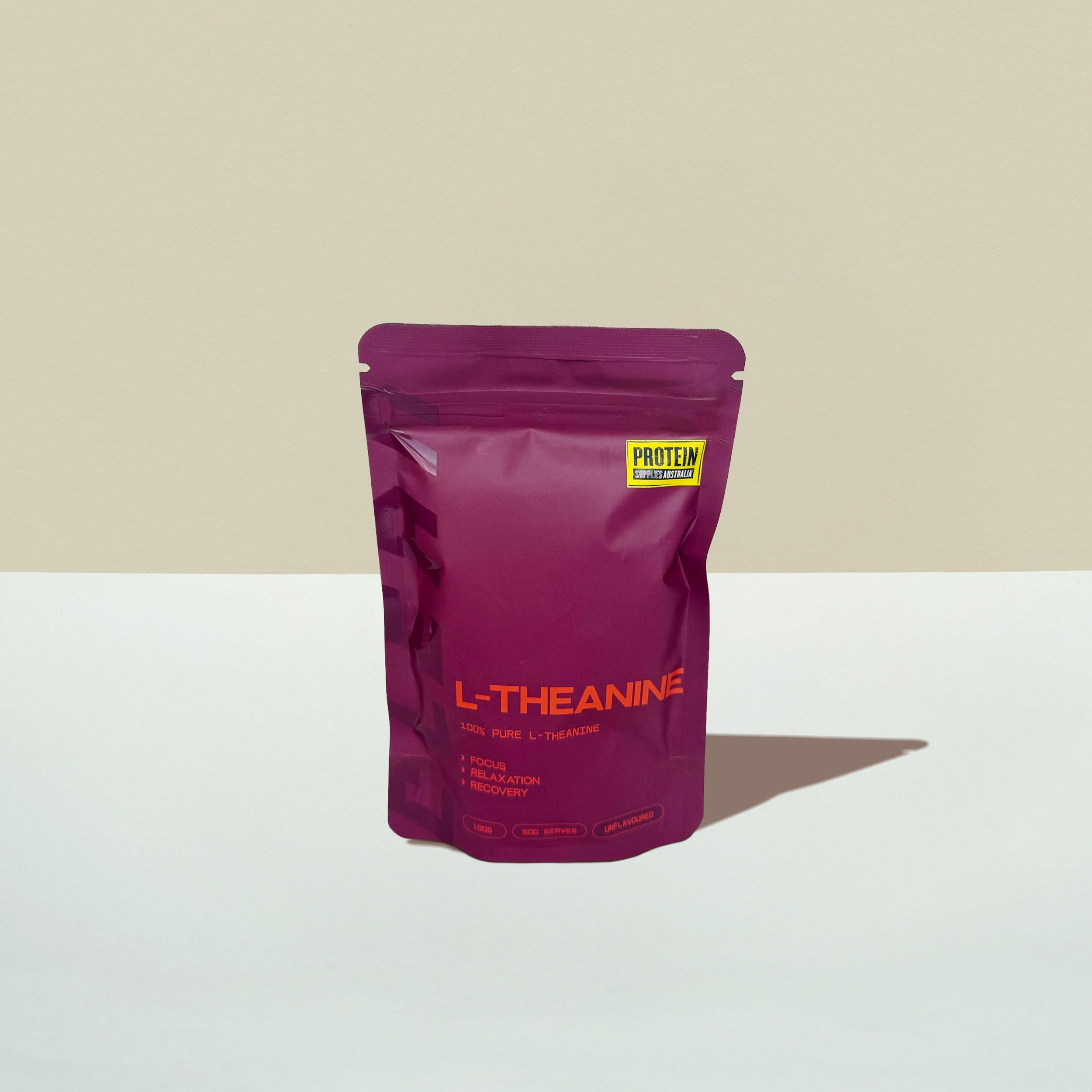
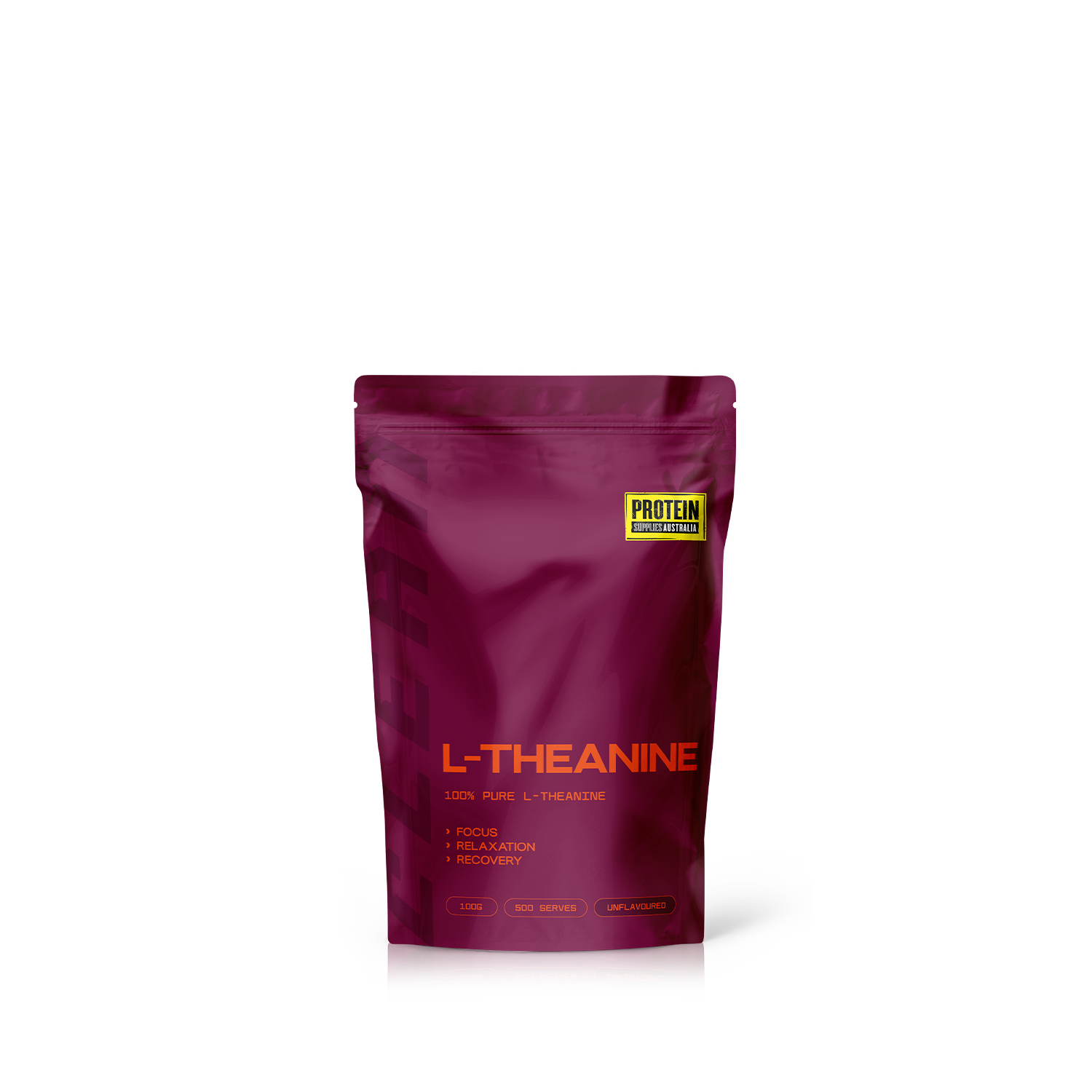
If you want to try the stack, PSA L-Theanine Pure is a clean, single-ingredient powder with no fillers, flavours or additives — made in Australia. It's easy to dose precisely, which matters when you're trying to hit a specific ratio with your morning coffee or pre-workout.


Natural Pre-Workout vs Regular Pre-Workout
White Choc Caramel Protein Smoothie (High-Protein)