TL;DR – Electrolyte Hydration Essentials
Plain water doesn't cut it. When you train hard, you lose electrolytes (sodium, potassium, magnesium, calcium) through sweat. These minerals are essential for muscle function, hydration, and recovery. Electrolyte hydration drinks replace what you lost and support faster recovery. The science is clear: proper electrolyte balance improves muscle function, prevents cramps, accelerates recovery, and enhances performance.

You need a complete electrolyte profile with sodium, potassium, magnesium, and calcium plus supporting nutrients like coconut water, B-vitamins, and vitamin C. Use electrolyte hydration during intense training, immediately post-workout, and throughout the day. It's not just for endurance athletes anyone who sweats needs proper electrolyte replacement.
Why Plain Water Isn't Enough: The Electrolyte Reality
Here's a scenario you've probably experienced: You finish a hard workout, you're drenched in sweat, and you chug a bottle of water. Your thirst is quenched, but something feels off. Your muscles are tight, you feel a bit lightheaded, and your recovery feels slower than usual.
The problem? You replaced the fluid, but not the minerals.
When you train hard, you lose way more than just water. You lose electrolytes—minerals that are absolutely essential for muscle function, hydration, and recovery. Drink only water, and you're creating an electrolyte imbalance that actually slows down your recovery.

What You Lose Through Sweat
Every time you sweat, you're losing:
Sodium (Na+): The primary electrolyte lost through sweat. Regulates fluid balance, supports muscle contraction, and maintains blood pressure.
Potassium (K+): Essential for muscle contraction, heart function, and nerve signalling. Low potassium = muscle weakness and cramping.
Magnesium (Mg2+): Supports muscle relaxation, energy production, and nervous system function. Loss through sweat contributes to fatigue and muscle tension.
Calcium (Ca2+): Critical for muscle contraction and bone health. Sweat loss can impair muscle function.
Lose these minerals, and your body can't function optimally. Your muscles can't contract properly, your hydration status is compromised, and your recovery stalls.
The Science: Why Electrolytes Matter More Than Water
Your body is about 60% water, but that water doesn't just sit there. It's distributed between:
- Intracellular fluid (inside cells) – 2/3 of body water
- Extracellular fluid (outside cells) – 1/3 of body water
Electrolytes control where water goes. Sodium and potassium maintain the balance between these compartments. Without proper electrolyte balance, water can't be absorbed or retained effectively.
Here's what happens when you drink only water post-workout:
- You drink water
- Your blood becomes diluted (hyponatremia – low sodium)
- Your body tries to restore balance by excreting water
- You urinate more than you drank
- You end up more dehydrated than before
- Your muscles don't get the hydration they need for recovery
Here's what happens when you drink electrolyte hydration:
- You drink electrolyte solution
- Sodium and potassium help your body retain fluid
- Water is absorbed and distributed to cells
- Your electrolyte balance is restored
- Your muscles get the hydration they need
- Recovery is optimised
This isn't theory—it's basic physiology. Electrolytes are non-negotiable for proper hydration and recovery.
The Complete Electrolyte Profile: What You Actually Need
Not all electrolyte drinks are created equal. The best ones have a complete electrolyte profile with all four key minerals, plus supporting nutrients.

The Big Four: Essential Electrolytes
1. Sodium (Na+)
- Role: Maintains fluid balance, supports muscle contraction, regulates blood pressure
- Loss through sweat: 500-1000mg per hour of intense training
- Optimal post-workout amount: 500-1000mg
- Why it matters: Sodium is the primary electrolyte lost through sweat. Without it, your body can't retain fluid or support muscle function
2. Potassium (K+)
- Role: Supports muscle contraction, heart function, nerve signalling
- Loss through sweat: 100-200mg per hour of intense training
- Optimal post-workout amount: 200-400mg
- Why it matters: Low potassium = muscle weakness, cramping, and poor recovery. It's often overlooked but absolutely essential
3. Magnesium (Mg2+)
- Role: Supports muscle relaxation, energy production, nervous system function
- Loss through sweat: 10-15mg per hour of intense training
- Optimal post-workout amount: 50-100mg
- Why it matters: Magnesium helps muscles relax after contraction. Without it, you get muscle tension and cramping
4. Calcium (Ca2+)
- Role: Essential for muscle contraction, bone health, nerve function
- Loss through sweat: 20-40mg per hour of intense training
- Optimal post-workout amount: 100-200mg
- Why it matters: Calcium works with sodium and potassium to support muscle function. It's also critical for bone health
The Supporting Cast: Additional Recovery Nutrients

Beyond the big four, the best electrolyte drinks include:
Coconut Water Powder:
- Natural source of electrolytes and minerals
- Contains carbohydrates (helps with glycogen replenishment)
- Supports hydration and nutrient absorption
- Adds natural flavour and nutrition
B-Vitamin Complex:
- Supports energy metabolism during physical activity
- Helps your body convert food into energy
- Reduces fatigue and supports recovery
- Essential for athletes
Vitamin C (Ascorbic Acid):
- Antioxidant protection (reduces exercise-induced oxidative stress)
- Supports immune function (training suppresses immunity)
- Aids collagen synthesis (supports joint and connective tissue health)
- Enhances iron absorption
Zinc:
- Immune support (training stresses the immune system)
- Supports protein synthesis and muscle recovery
- Antioxidant and anti-inflammatory properties
- Essential for athletic performance
Taurine:
- Supports muscle function and endurance
- Reduces muscle damage and soreness
- Supports cardiovascular function
- Enhances hydration
A complete electrolyte formula includes all of these. It's not just about replacing minerals it's about supporting your entire recovery process.
How Electrolyte Hydration Accelerates Recovery
Now let's talk about what electrolyte hydration actually does for your recovery.

1. Restores Fluid Balance & Hydration Status
This is the obvious one, but it's critical. Proper hydration is the foundation of recovery.
Why it matters: Dehydration impairs every aspect of recovery—muscle repair, energy production, nutrient transport, and sleep quality. Even 2% dehydration (which is easy to achieve) reduces performance and recovery.
How electrolytes help: Sodium and potassium help your body retain fluid and absorb water more efficiently. This means you stay hydrated longer and recover faster.
The benefit: Better nutrient delivery to muscles, faster recovery, improved performance next session.
2. Supports Muscle Function & Prevents Cramps
Electrolytes are essential for muscle contraction and relaxation. Without them, you get cramps and muscle dysfunction.
Why it matters: Muscle cramps are often caused by electrolyte imbalance, not just dehydration. You can be "hydrated" but still cramp if your electrolytes are off.
How electrolytes help: Sodium, potassium, magnesium, and calcium work together to support proper muscle contraction and relaxation. This prevents cramping and supports muscle function.
The benefit: No cramps, better muscle function, faster recovery.
3. Accelerates Nutrient Delivery to Muscles
Your muscles need amino acids, carbs, and minerals to recover. But they can't get them without proper hydration.
Why it matters: Nutrient transport depends on fluid balance. Without proper hydration, nutrients can't reach your muscles efficiently.
How electrolytes help: By maintaining proper fluid balance, electrolytes ensure that nutrients are delivered to muscles quickly and efficiently.
The benefit: Faster muscle repair, better nutrient absorption, improved recovery.
4. Supports Energy Production & Reduces Fatigue
Electrolytes are essential for ATP production—your muscles' energy currency.
Why it matters: Low electrolytes = poor ATP production = muscle fatigue and slow recovery.
How electrolytes help: Magnesium and potassium are cofactors in ATP production. Proper electrolyte balance ensures your muscles have the energy they need.
The benefit: Better energy levels, less fatigue, faster recovery.
5. Reduces Inflammation & Supports Immune Function
Intense training causes inflammation and temporarily suppresses immune function. Electrolyte hydration with vitamin C and zinc supports recovery.
Why it matters: Excessive inflammation slows recovery. Immune suppression increases injury risk and illness.
How electrolytes help: Vitamin C and zinc provide antioxidant and immune support. Proper hydration supports your body's natural anti-inflammatory response.
The benefit: Faster reduction of post-workout inflammation, better immune function, reduced injury risk.
6. Improves Sleep Quality & Nervous System Recovery
Your nervous system needs proper electrolyte balance to recover from training stress.
Why it matters: Training activates your sympathetic nervous system (fight or flight). Recovery requires shifting to parasympathetic mode (rest and digest). Electrolyte imbalance prevents this shift.
How electrolytes help: Magnesium and potassium support parasympathetic activation. Proper electrolyte balance helps your nervous system shift into recovery mode, improving sleep quality.
The benefit: Better sleep, faster nervous system recovery, improved performance next session.
Electrolyte Hydration Timing & Amount: The Practical Guide
Knowing you need electrolytes is one thing. Knowing when and how much is another. Let's break it down.

During Intense Training (45+ Minutes)
Why it matters: During long or intense sessions, you're continuously losing electrolytes through sweat. Waiting until after training to replace them means you're operating at a deficit.
How much: Sip 200-300mL of electrolyte hydration every 15-20 minutes
Why this amount: This matches your sweat rate and prevents both dehydration and electrolyte depletion during the session.
Pro tip: Don't wait until you're thirsty. Thirst is a late indicator of dehydration. Drink on a schedule.
Immediately Post-Workout (0-30 Minutes)
Why it matters: This is your golden window for recovery. Your muscles are primed to absorb nutrients and restore electrolyte balance.
How much: 500mL of electrolyte hydration immediately post-workout
Why this amount: This provides a significant electrolyte dose to start the rehydration process and support immediate recovery.
Pro tip: Drink this before or with your protein shake. The combination of electrolytes, protein, and carbs is optimal for recovery.
In the Hours After Training (2-4 Hours)
Why it matters: Recovery continues for hours after training. Continued electrolyte and fluid replacement supports the process.
How much: Another 500mL of electrolyte hydration in the 1-2 hours post-workout, then water as needed
Why this amount: This completes the rehydration process and ensures sustained electrolyte balance.
Pro tip: Adjust based on how much you sweated. Hot weather or intense sessions might need more.
Daily Hydration (On Rest Days)
Why it matters: Electrolyte balance isn't just for training days. Your body needs consistent electrolyte intake for optimal function.
How much: 250-500mL of electrolyte hydration daily, or get electrolytes from whole foods (coconut water, bananas, leafy greens, nuts)
Why this amount: This maintains baseline electrolyte levels and supports recovery between sessions.
Pro tip: You don't need electrolyte drinks every single day. Whole foods can provide electrolytes on rest days.
Electrolyte Hydration vs Traditional Sports Drinks: The Difference
You've probably seen traditional sports drinks at the gym. Gatorade, Powerade, and similar brands dominate the market. But there's a big difference between those and clean electrolyte hydration formulas.

Traditional Sports Drinks
What they have:
- Electrolytes (sodium, potassium)
- Carbohydrates (sugar)
- Artificial colours and flavours
- Artificial sweeteners
The problem:
- High sugar content (30-50g per serve) = energy crash
- Artificial ingredients = unnecessary additives
- Often lack magnesium and calcium
- Lack supporting nutrients (B-vitamins, vitamin C, zinc)
Best for: Endurance athletes who need quick carbs during long sessions (2+ hours)
Clean Electrolyte Hydration
What they have:
- Complete electrolyte profile (sodium, potassium, magnesium, calcium)
- Natural carbohydrates (coconut water powder)
- Natural colours and flavours
- Natural sweeteners (stevia)
- Supporting nutrients (B-vitamins, vitamin C, zinc, taurine)
The benefit:
- Low sugar (3-4g per serve) = no energy crash
- Natural ingredients = no artificial additives
- Complete mineral profile = optimal recovery
- Supporting nutrients = enhanced recovery and immune support
Best for: Anyone who trains and wants optimal recovery without artificial junk
The Real Difference
Traditional sports drinks were designed for endurance athletes who need quick carbs during long sessions. They're not optimised for recovery—they're optimised for performance during activity.

Clean electrolyte hydration is designed for recovery. It has the minerals you need, the carbs you need (but not too much), and supporting nutrients that enhance recovery. It's the smarter choice for most athletes.
Restore Hydration: Complete Electrolyte Support for Recovery
We've covered the science. Now let's talk about a practical solution: Restore Hydration.
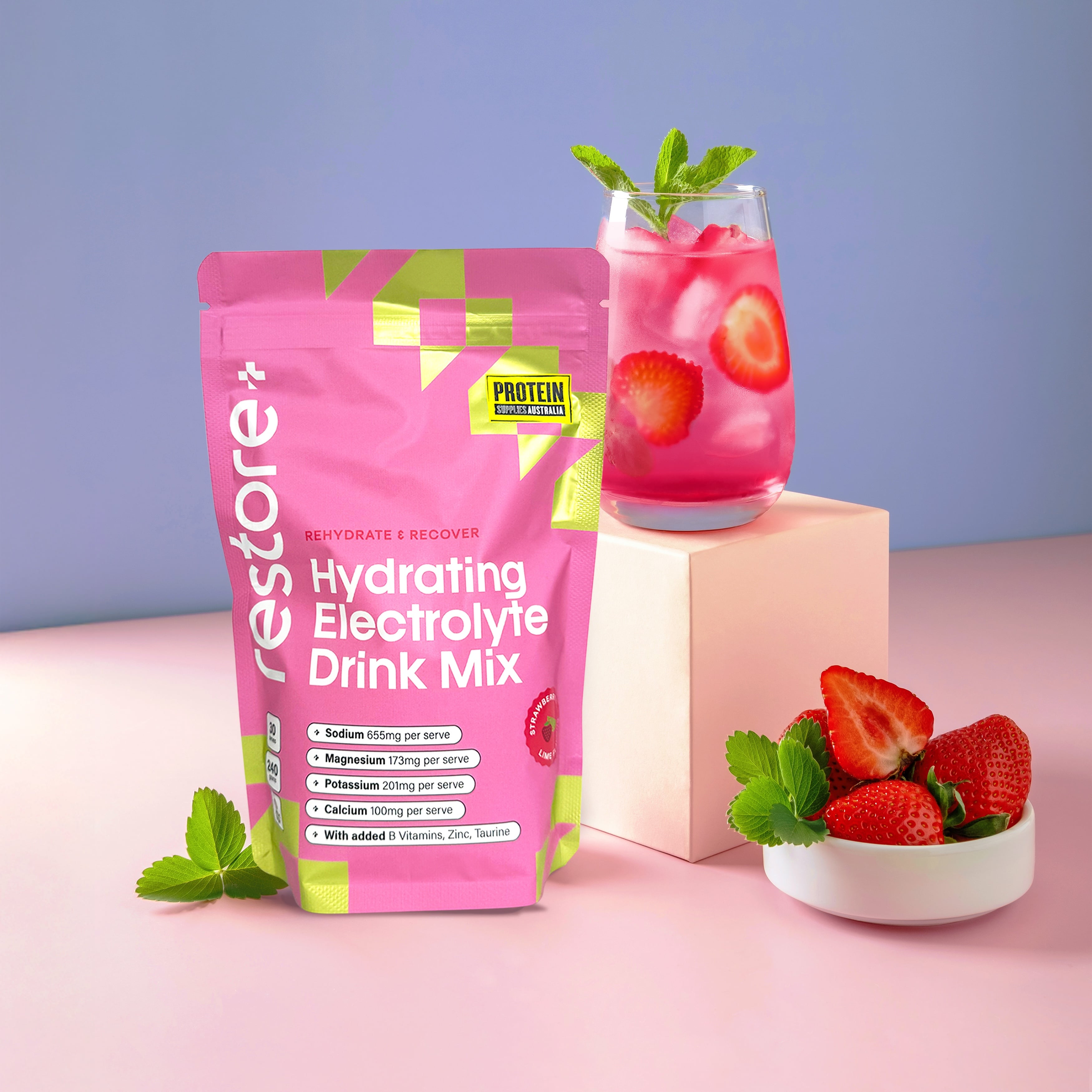
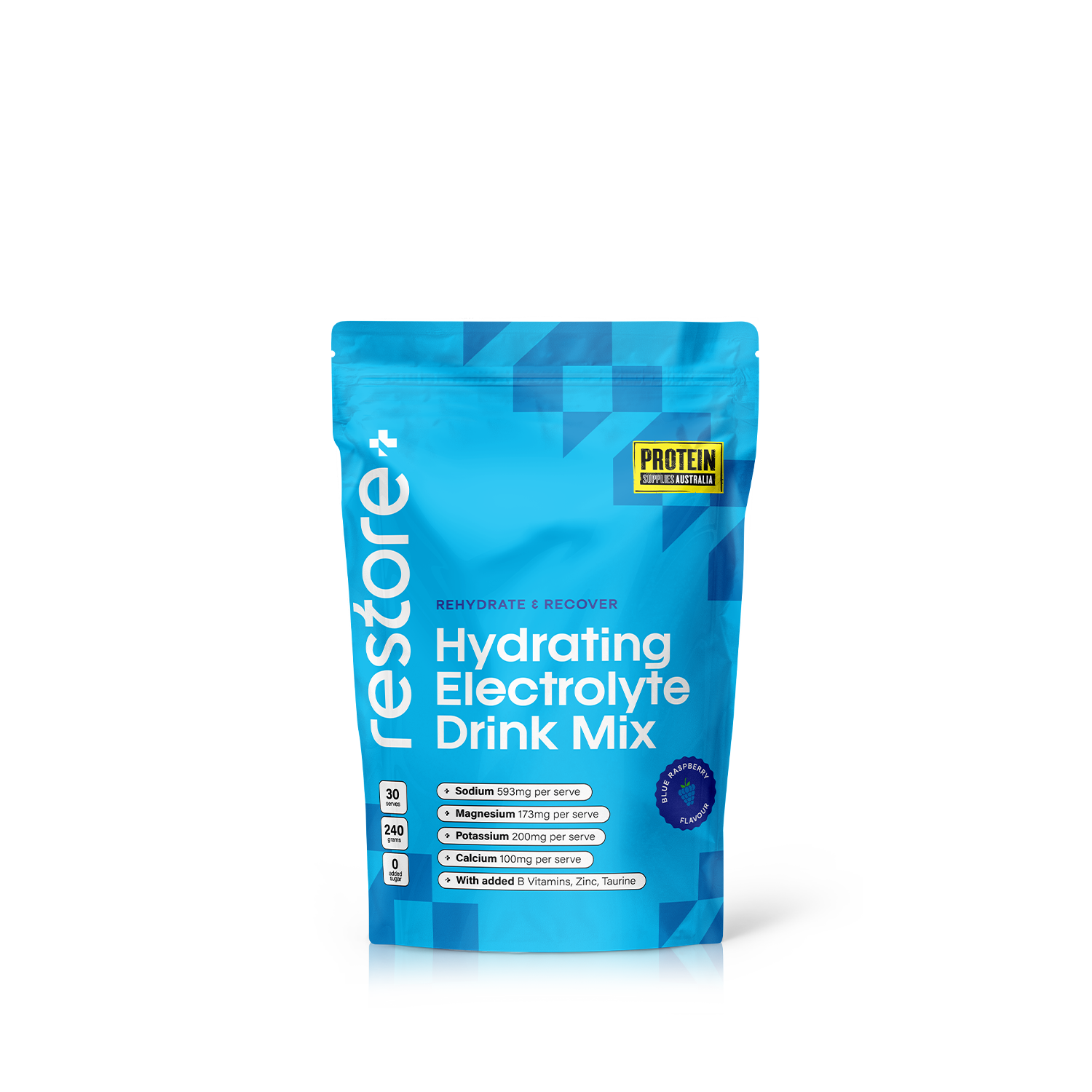
Restore is a clean electrolyte formula designed specifically for recovery. It includes:
- Complete electrolyte profile: Sodium, potassium, magnesium, calcium
- Coconut water powder: Natural minerals and carbohydrates
- B-Vitamin complex: Energy metabolism support
- Vitamin C + Zinc: Antioxidant and immune support
- Taurine: Muscle function and endurance support
- Natural flavours & colours: No artificial junk
- Low sugar: 3-4g per serve (no crash)
It comes in four delicious flavours, each designed to keep you drinking and stay hydrated:
Tropical Twist – A refreshing tropical blend with coconut water and natural tropical flavours. Light, fruity, and perfect for hot weather or intense sessions.
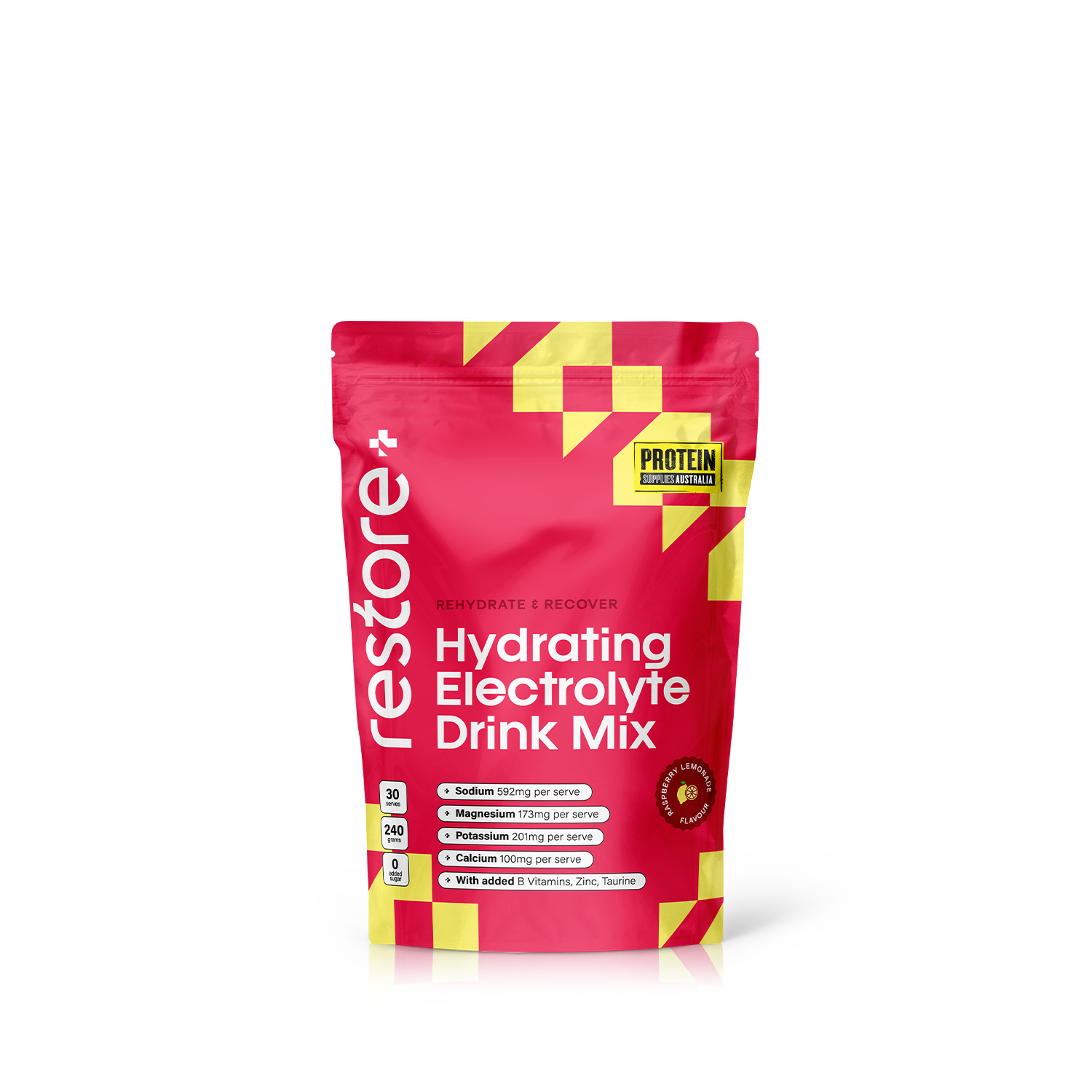
Raspberry Lemonade – Clean, fruity blend of juicy raspberry and bright lemonade. Not too sweet, not too sour—just crisp and hydrating.
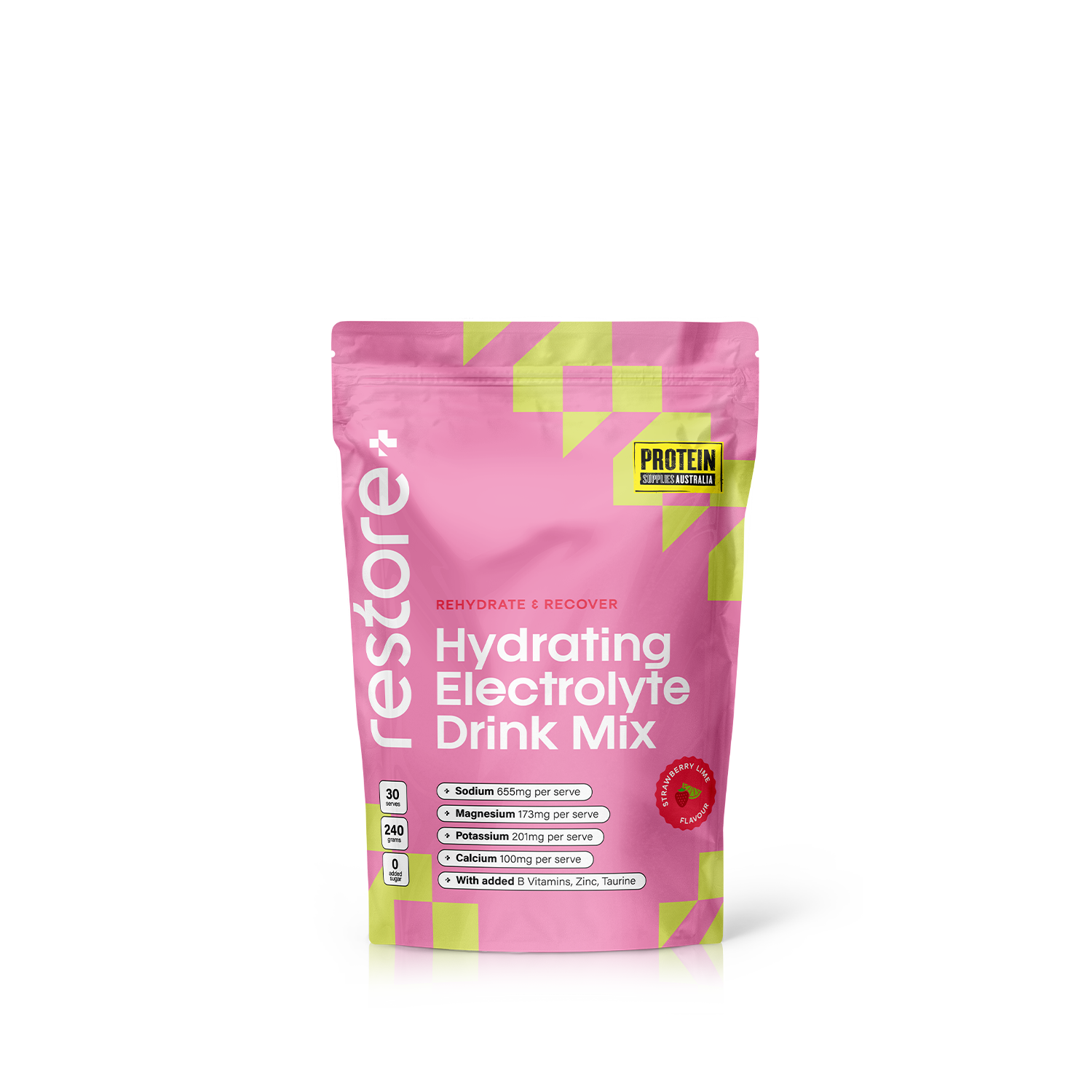
Strawberry Lime – Bright, refreshing strawberry burst with a zesty lime twist. Light, hydrating, and genuinely delicious.
Blue Raspberry – Crisp, refreshing blue raspberry with a subtle natural sweetness. Modern, clean, and perfect for any workout.
The bottom line: All four flavours deliver the same complete electrolyte profile and recovery support. Choose based on your taste preference—you can't go wrong with any of them.
Build Your Hydration & Recovery Stack
Electrolyte hydration is the foundation of proper recovery. Get it right, and everything else works better.
The simple formula:
- During training: Sip electrolyte hydration every 15-20 minutes
- Immediately post-workout: 500mL electrolyte hydration + protein shake
- 1-2 hours post-workout: Another 500mL electrolyte hydration
- Throughout the day: Water + whole food electrolytes
Combine this with solid protein intake, creatine, magnesium, and quality sleep—and you've got a recovery system that actually works.
Ready to optimise your hydration and recovery?
Choose Your Restore Hydration Flavour:
Tropical Twist – Refreshing Tropical Blend
Raspberry Lemonade – Clean, Fruity Blend
Strawberry Lime – Bright, Zesty Taste
Blue Raspberry – Modern, Crisp Flavour
All four deliver the same complete electrolyte profile and recovery support. Pick your favourite flavour and start hydrating smarter.
Your recovery depends on it. Hydrate hard, recover harder.

Magnesium for Muscle Recovery & Sleep
Complete Guide to Muscle Recovery: Supplements, Nutrition & Science