
TL;DR
-
Collagen is the main structural protein in your skin — it gives it firmness, elasticity, and moisture-holding capacity.
-
Your body produces less collagen every year from around age 25, which is why skin gradually loses its bounce and density.
-
Clinical trials show hydrolysed collagen peptides can improve skin hydration, elasticity, and wrinkle depth — but results take 8–12 weeks of daily use.
-
Form matters: hydrolysed collagen peptides (not whole collagen) are what actually gets absorbed. Type 1 and Type 3 are the most relevant for skin.
What Is Collagen and Why Does Your Skin Need It?
Collagen is the most abundant protein in the human body. For your skin specifically, it's the structural backbone — the protein that keeps it firm, plump, and resilient.

Your skin has three main layers. The dermis (the middle layer) is where collagen does most of its work. According to the Better Health Channel, the dermis is made up of elastic fibres (elastin) for suppleness and protein fibres (collagen) for strength. Without adequate collagen, that structure starts to break down.
Type 1 and Type 3 collagen are the most important for skin health. Type 1 is the dominant structural collagen, making up the bulk of the dermis. Type 3 works alongside it to maintain flexibility and hydration.
The problem? Collagen production declines with age. Healthdirect Australia notes that as skin ages, there are fewer elastic and collagen fibres, leading to more obvious wrinkles and thinner skin. This decline starts gradually from around age 25 and accelerates with UV exposure, stress, poor diet, and smoking.
The result is visible: less bounce, more dryness, and deeper lines.
What Does the Science Say? (The Studies)
This is where it gets interesting — and where we'll be straight with you.
There's a growing body of clinical evidence supporting collagen peptide supplementation for skin. Here are three well-designed RCTs worth knowing about.

Study 1: 77 women, 5,000mg/day BCP for 12 weeks (PMC, 2025)
A randomised, double-blind, placebo-controlled trial found that 12 weeks of oral bioactive collagen peptide (BCP) supplementation significantly improved skin biophysical properties including thickness, density, elasticity, and hydration compared to placebo. Importantly, these improvements were maintained during a 4-week washout period after supplementation ended suggesting lasting structural changes in the dermis, not just surface-level effects.
Study 2: 100 women aged 30–60, 1,650mg/day for 12 weeks (RSC Food & Function, 2023)
A double-blind, placebo-controlled study found that 1,650mg per day of collagen peptides for 12 weeks had beneficial effects on skin health in 100 women aged 30–60. Skin hydration improved from week 4, and wrinkling and elasticity showed significant improvements by week 12 compared to the placebo group. No side effects were reported.
Study 3: 64 individuals, 1,000mg LMWCP daily for 12 weeks (MDPI Nutrients, 2018)
In this randomised, double-blind, placebo-controlled trial, 64 individuals received either 1,000mg of low-molecular-weight collagen peptides or placebo daily for 12 weeks. Skin hydration values were significantly higher in the collagen group after 6 and 12 weeks, and wrinkling parameters were significantly improved at 12 weeks compared to placebo.
The honest caveat: A 2025 meta-analysis in the American Journal of Medicine analysed 23 RCTs and found that while collagen supplements significantly improved skin hydration, elasticity, and wrinkles overall, studies not funded by pharmaceutical companies showed weaker effects. Most collagen research is industry-funded. That doesn't make the results invalid — but it's worth knowing.
The key takeaway: Hydrolysed collagen peptides (small-chain peptides like Gly-Pro and Pro-Hyp) are what get absorbed into the bloodstream. Whole collagen molecules are too large to be absorbed intact. The form you take matters enormously.
What Collagen Does for Your Skin — Benefit by Benefit

Skin Elasticity and Firmness
Collagen fibres are the structural scaffolding of your dermis. When collagen levels are high, skin snaps back. When they're low, it doesn't.
Supplementation with hydrolysed collagen peptides has been shown to stimulate fibroblast activity — the cells responsible for producing new collagen in the skin. This is the mechanism behind the elasticity improvements seen in clinical trials. It's not just topical plumping; it's triggering your skin's own repair processes from the inside.
Hydration and Moisture Retention
Collagen peptides improve skin moisture content partly by reducing transepidermal water loss (TEWL) — the rate at which water evaporates through the skin barrier.
Glycine, which is naturally present in collagen protein (including PSA's collagen), plays a role in skin barrier function. A stronger barrier means less moisture escaping and better overall hydration.
Wrinkle Reduction
Wrinkles deepen as dermal collagen breaks down and the structural support beneath the skin weakens. It's not just a surface issue — it's structural.
Clinical studies show measurable improvement in wrinkle depth parameters after 8–12 weeks of consistent collagen peptide supplementation. Results aren't overnight, but they're real and measurable with objective tools.
Skin Healing and Repair
Collagen is essential for wound healing. When skin is damaged, collagen fibres are among the first structural components recruited in the repair process.
Glutamine, which is naturally present in collagen protein, supports tissue repair and helps maintain the integrity of the skin barrier. Again — not an added ingredient, just what's naturally in the protein.
How to Choose a Collagen Supplement for Skin
Not all collagen products are the same. Here's what actually matters.

Hydrolysed collagen peptides are the most bioavailable form. The hydrolysis process breaks the protein into small peptides that can be absorbed through the gut wall and reach the bloodstream. Whole collagen or gelatin won't do the same job.
Type 1 and Type 3 are the collagen types most relevant to skin. Make sure the product specifies these — not just "collagen" generically.
Source matters. Grass-fed, hormone-free bovine collagen is a clean, well-studied source. It provides a Type 1 and Type 3 profile that closely matches the collagen found in human skin.
Dosage: Clinical studies have used anywhere from 1,000mg to 5,000mg per day. Most quality products recommend 10g/day — which sits comfortably within the effective range and is the dose used in several real-world studies.
Australian-made products are subject to stricter labelling and manufacturing standards, which means you're more likely to get what's on the label.
What to look for on the label:
👉 Hydrolysed collagen peptides
👉Type 1 and Type 3
👉Grass-fed bovine source
👉No artificial additives or fillers
PSA Collagen Peptides — What Makes Them Different
We're not going to oversell this. Here's what's actually in our collagen and why it matters.
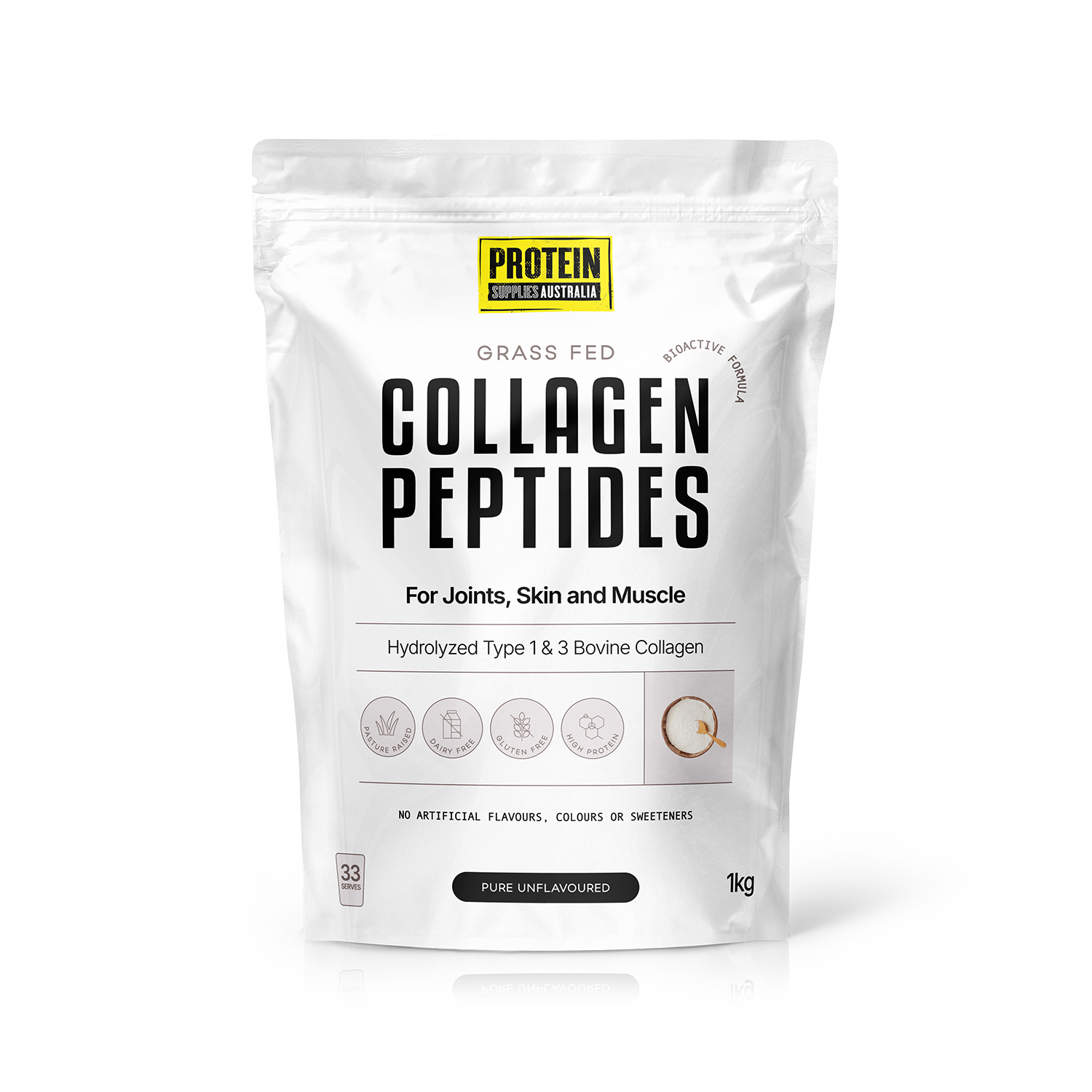
PSA collagen is 100% hydrolysed bovine collagen peptides (Type 1 and Type 3) — the form and types that the clinical evidence actually supports for skin health.
The source: Grass-fed, hormone-free cattle. No shortcuts on sourcing.
Naturally occurring amino acids: Our collagen naturally contains Glycine and Glutamine — not added separately, just present in the protein as it occurs in bovine collagen. These amino acids play roles in skin barrier function and tissue repair.
Australian Collagen option: Our Australian Collagen Unflavoured is 100% Australian sourced and made — for those who want full local traceability.
Zero fillers: No sugar, no fat, no artificial additives. Just collagen.
Mixes easily: Dissolves in coffee, tea, smoothies, or water without clumping or changing the flavour of your drink (especially the unflavoured versions).
The range:
-
Collagen Peptides Pure — unflavoured, 500g or 1kg, $49.95. The most versatile option — invisible in any drink or meal.
-
Australian Collagen Unflavoured — 100% Australian sourced, 1kg, $49.95. For those who want full local traceability.
-
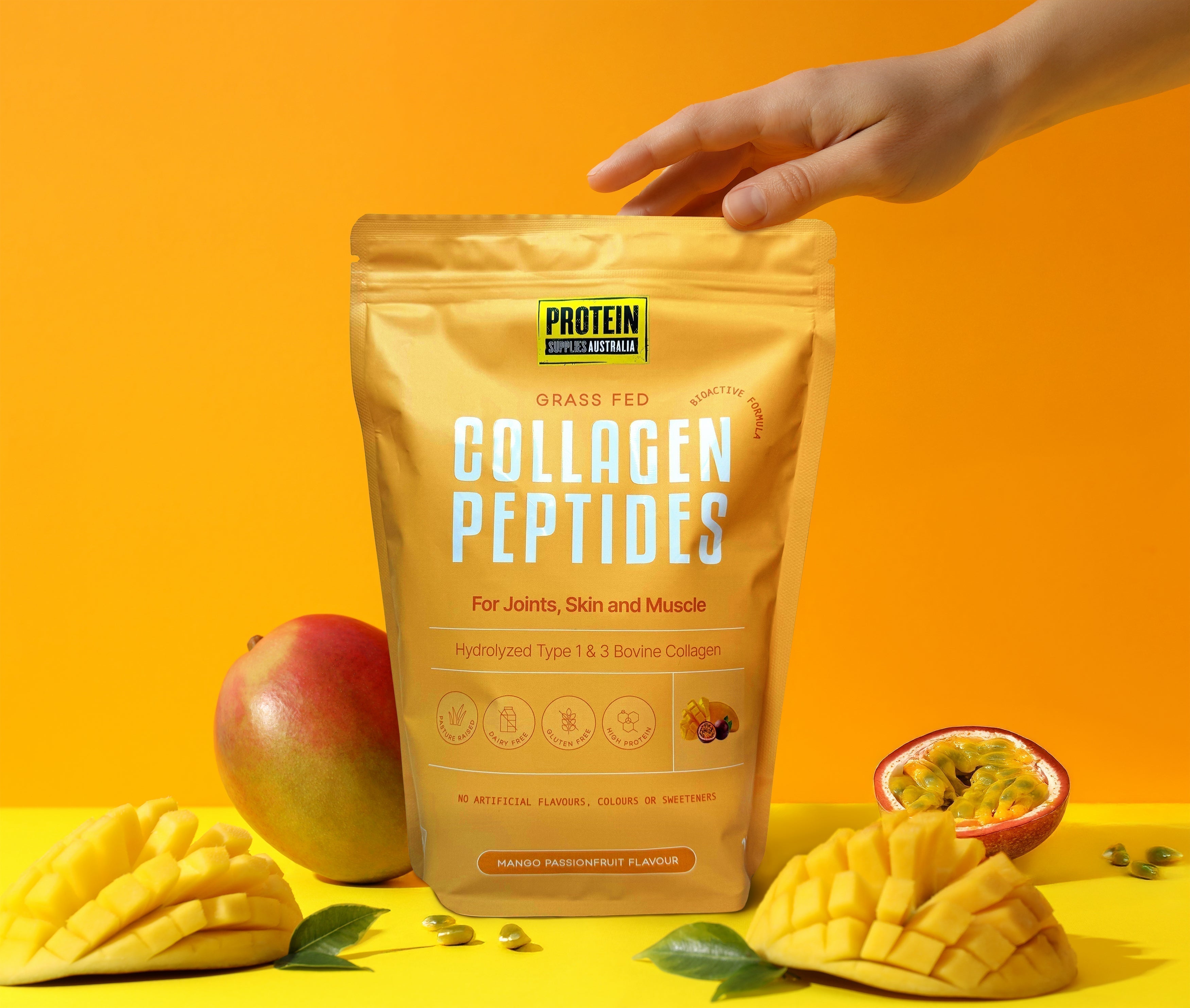
Collagen Peptides Mango Passionfruit — a tropical option that works well mixed with water.
-
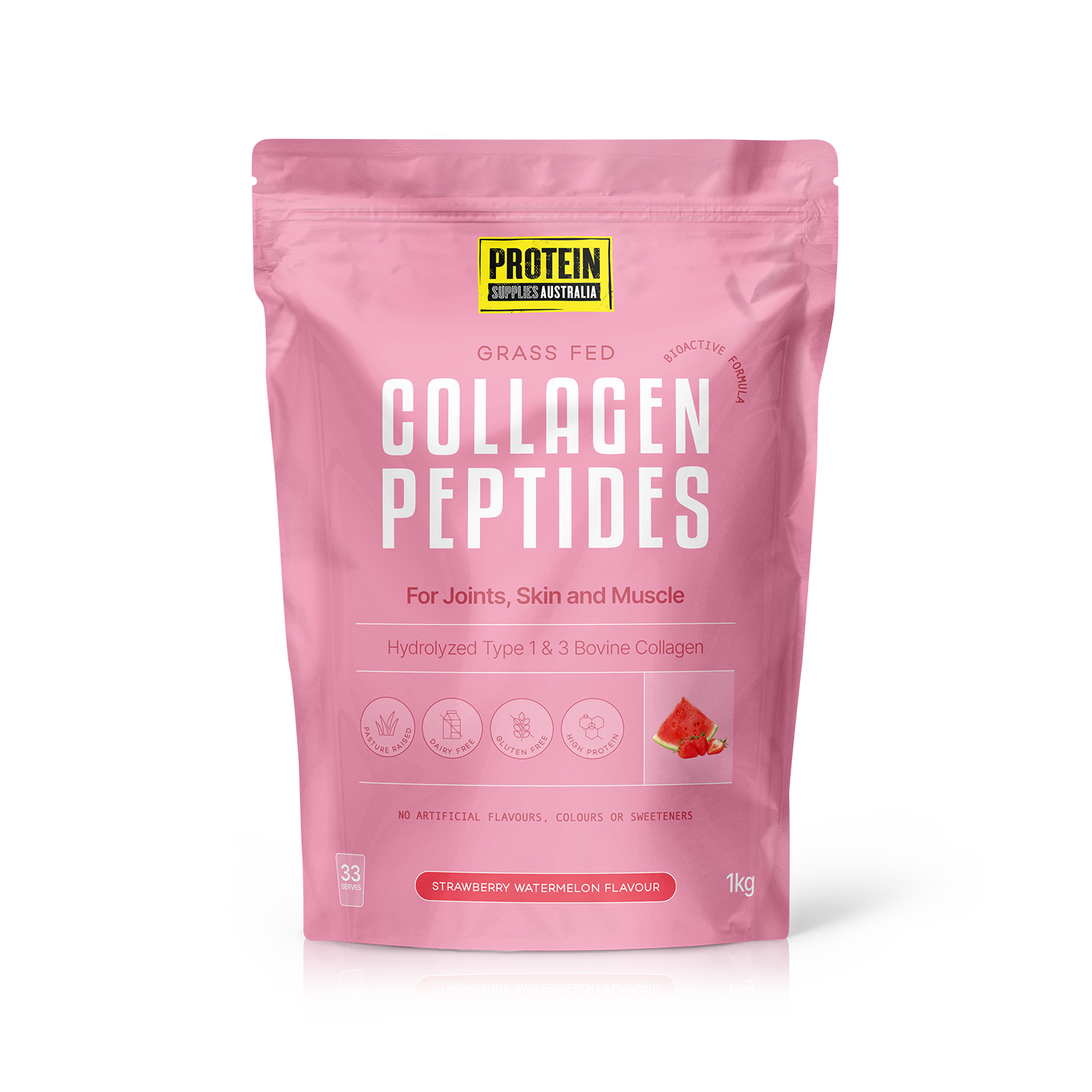
Collagen Peptides Strawberry Watermelon — light and refreshing, popular in summer.
-
Collagen Peptides Vanilla — pairs well with coffee or smoothies.
-
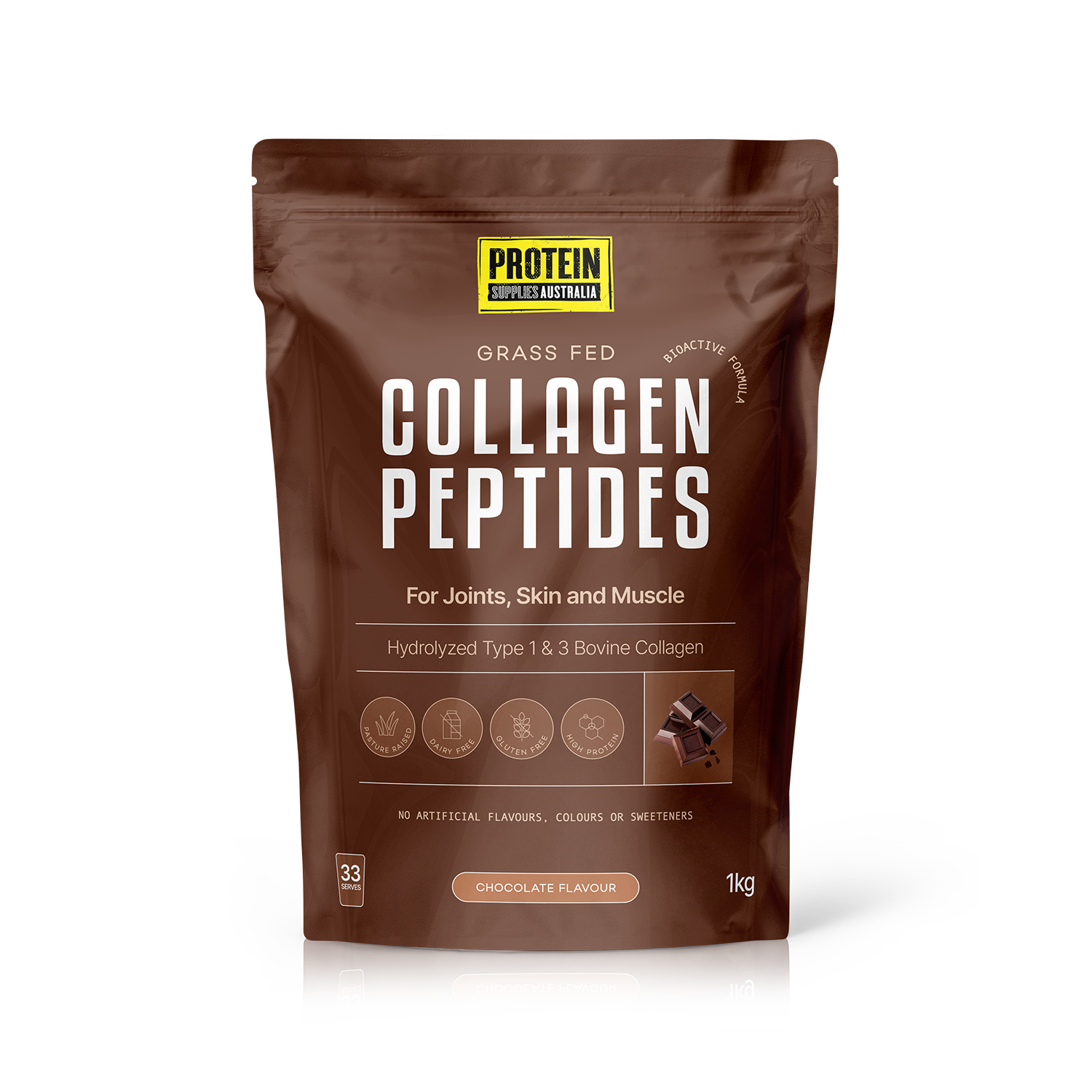
Collagen Peptides Chocolate — for those who want a richer flavour profile.
-
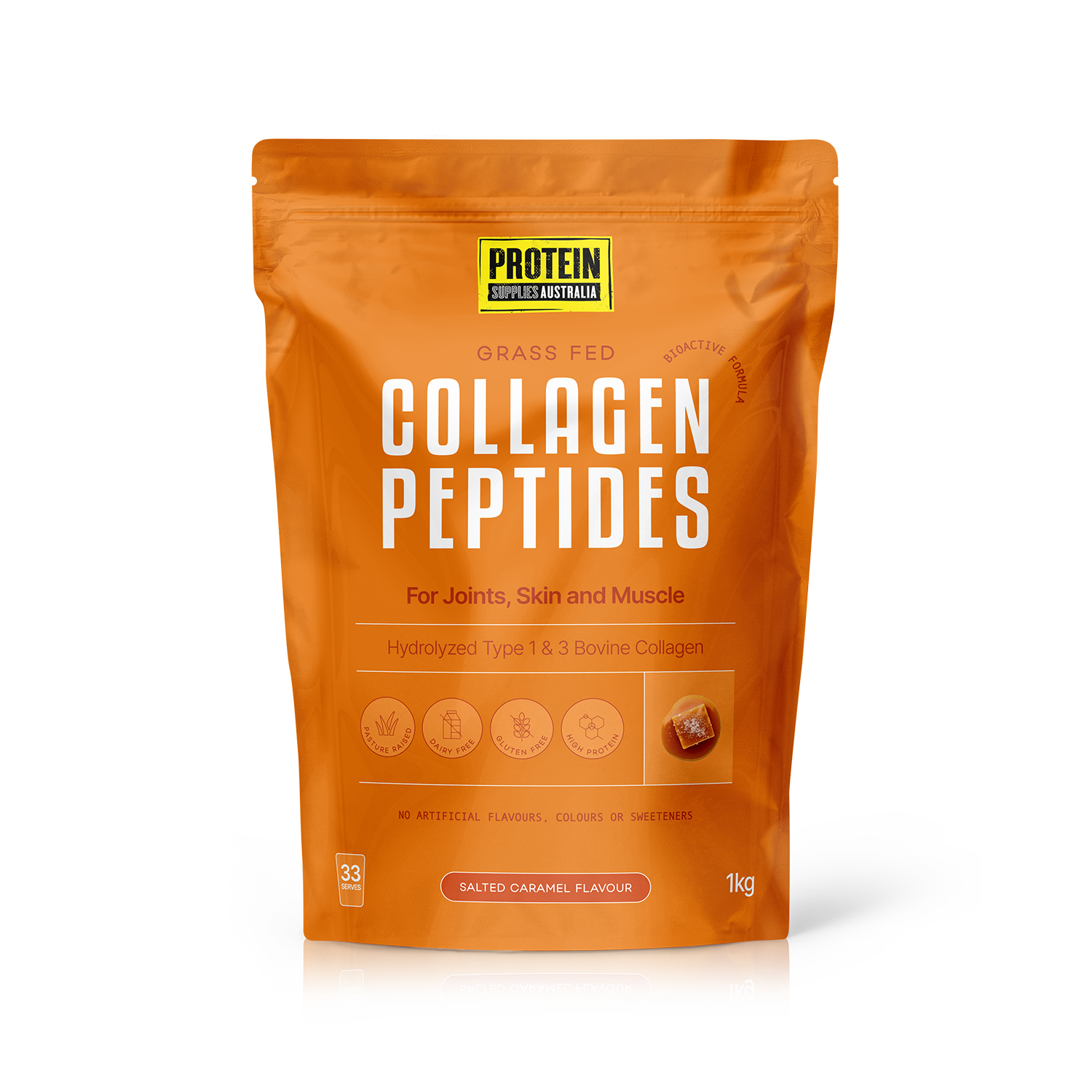
Collagen Salted Caramel — a crowd favourite.
-
Collagen Sample Bundle — try all the flavours before committing to a full bag.
Not sure where to start? Browse the full Collagen Peptides range.
How to Use Collagen for Best Skin Results
Consistency is everything. The clinical studies that showed real results ran for 8–12 weeks of daily supplementation. Taking collagen once a week won't move the needle.
Dosage: 10g per day (one scoop of PSA collagen) is the practical sweet spot — within the range used in clinical studies and easy to maintain as a daily habit.
Best time to take it:
-
Morning — stir into your coffee or tea (unflavoured versions are completely invisible)
-
Post-workout — collagen peptides also support connective tissue recovery
Pair it with Vitamin C. Vitamin C is a required cofactor for collagen synthesis in the body. Without adequate Vitamin C, your body can't efficiently build new collagen fibres. A squeeze of lemon in your morning collagen drink, or a Vitamin C supplement alongside it, makes a real difference.
Practical tip: The unflavoured versions (Pure and Australian Collagen) mix invisibly into any drink, soup, or even oats. There's no excuse to skip a day.
Useful Sources
-
Better Health Channel — Skin Explained (Victorian Government)
-
Healthdirect Australia — Skin (Australian Government)
-
PMC Clinical Study — BCP, 77 women, 12 weeks (Randomised controlled trial)
-
RSC Food & Function — 100 women, 1,650mg/day, 12 weeks (Peer-reviewed RCT, 2023)
-
MDPI Nutrients — 64 individuals, 1,000mg LMWCP, 12 weeks (Peer-reviewed RCT, 2018)


White Choc Caramel Protein Squares (12g Protein Each)
Collagen for Joints: Does It Actually Help?