
TL;DR
-
Does collagen help joints? The evidence is promising but not conclusive. Multiple studies and reviews show reductions in activity-related joint pain, improved mobility, and potential cartilage support,but more long-term independent research is still needed.
-
What does the science say? A 2025 umbrella review of 113 RCTs found significant improvements in self-reported pain and joint stiffness. The Australian Institute of Sport (AIS) classifies collagen as potentially beneficial for connective tissue injury prevention and management.
-
Recommended dose for joints: Minimum 20g/day of hydrolysed collagen, taken 40–60 minutes before exercise, with 50mg of Vitamin C.
-
Minimum timeframe: Allow at least 12 weeks before assessing results.
-
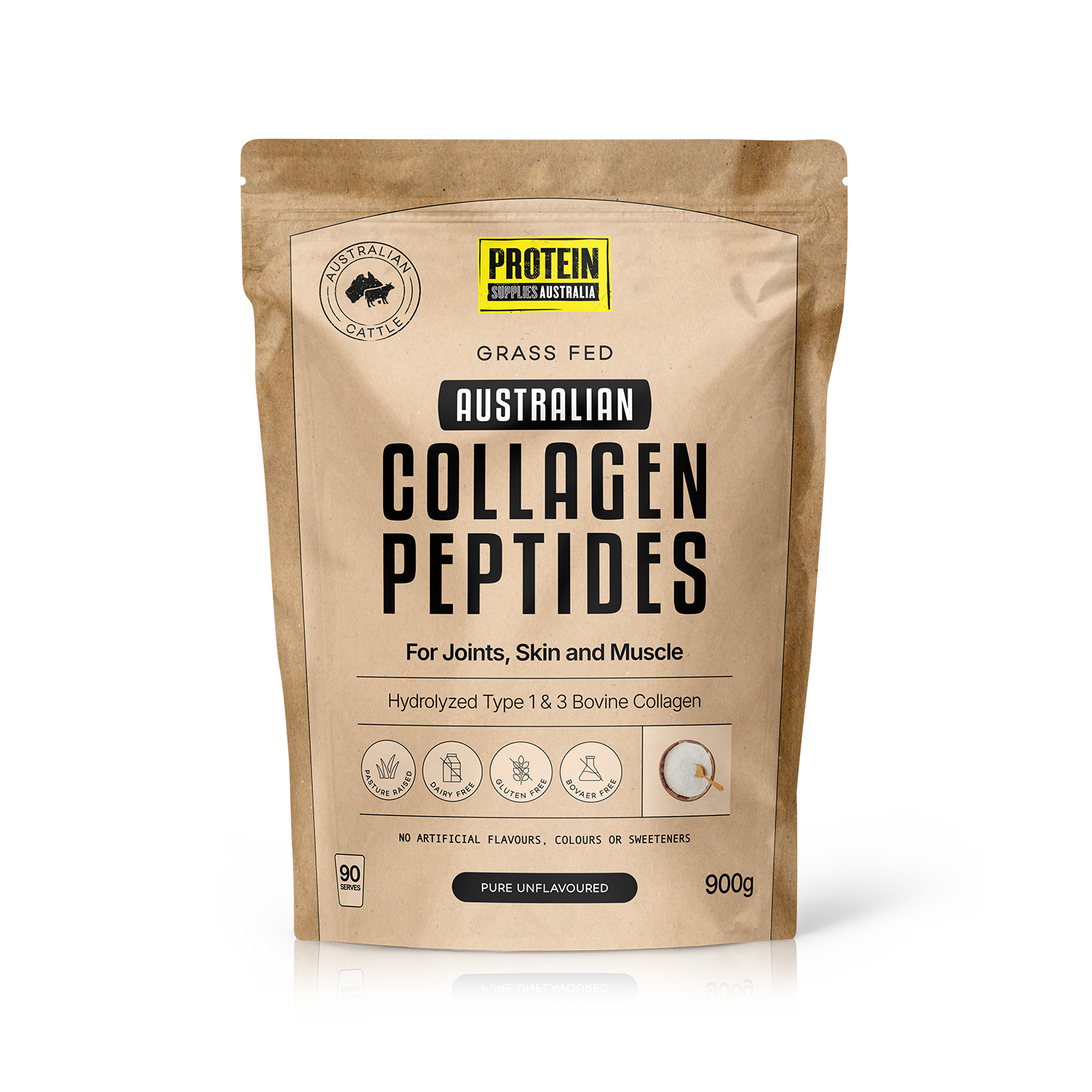
Which PSA product? Australian Collagen Unflavoured delivers a 30g serve of pure hydrolysed bovine collagen — matching the AIS-recommended dose for connective tissue support.
What Happens to Your Joints as You Age?

Cartilage is the rubbery tissue that cushions your joints. It's made up of roughly 60–70% collagen — primarily Type II collagen — which gives it the structure and resilience to absorb load and reduce friction.
The problem? Your body's collagen production starts declining around age 25. After 40, that decline accelerates, and the collagen you do produce is lower quality than when you were younger.
The result: joints become stiffer, cartilage thins, cushioning reduces, and injury risk climbs.
This isn't a niche issue. According to Arthritis Australia, 1 in 5 Australians (22%) over the age of 45 have osteoarthritis — making joint health one of the most pressing health concerns for active Australians in their 40s and beyond.
If you're noticing morning stiffness, aching knees after a run, or slower recovery from training, your joints are likely already feeling the effects of that collagen decline.
How Does Collagen Supplementation Work for Joints?
Here's the basic mechanism:
-
You ingest hydrolysed collagen peptides (broken down into small, absorbable fragments)
-
They're absorbed in the gut and circulate in the bloodstream
-
They stimulate chondrocytes (the cells that build and maintain cartilage) to produce more collagen
-
Combined with exercise, this may increase collagen synthesis in connective tissue

Type I vs Type II collagen for joints
Type II collagen is the native form found in cartilage. But hydrolysed Type I collagen (the most common supplement form, derived from bovine hide or fish) has also shown meaningful effects on joint health in clinical studies — likely because the body uses the amino acid building blocks regardless of the original collagen type.
The role of Glycine and Proline
Collagen is uniquely rich in the amino acids Glycine and Proline. Glycine has been shown to inhibit inflammatory cell activation, which may help with conditions like tendinopathy. Proline is a key building block for the collagen triple-helix structure that gives cartilage its load-bearing strength.
Don't skip the Vitamin C
Vitamin C is an essential cofactor in collagen synthesis. The AIS specifically notes that the diet must be sufficient in Vitamin C for collagen supplementation to work properly. A simple 50mg dose alongside your collagen is enough — you don't need megadoses.
Exercise matters too
Collagen in musculoskeletal tissue is non-responsive to feeding in the absence of exercise. The AIS notes that exercise is necessary to "switch on" the synthetic machinery in connective tissue. This is why timing your collagen intake around training sessions makes a real difference.
What Does the Science Say?
Let's be straight with you: the evidence is encouraging, not definitive. Here's an honest breakdown.
Positive signals
A 2025 umbrella review published in PMC — the most comprehensive synthesis to date, drawing on 113 RCTs and nearly 8,000 participants — found significant improvements in self-reported pain, VAS scores, total WOMAC score, and joint stiffness, all supported by high-certainty evidence. The review concluded that collagen supplementation "exerts a potentially clinically relevant, symptom-modifying effect in osteoarthritis."
A 2025 systematic review of 36 RCTs on Type I hydrolysed collagen (screened from 4,246 articles) found that studies on joint health consistently reported beneficial outcomes: pain reduction, improvements in clinical parameters, and increased physical mobility.
A separate review from Springer found "some potential for the use of collagen hydrolysate and undenatured collagen as an option for management of patients with OA."
The AIS states that collagen supplementation "may assist in the prevention and/or treatment of muscle, cartilage, connective and bone tissue injury" and that other investigations have shown "a reduction in subjective joint pain."
Where the evidence is still developing
The AIS is clear: "the research remains within its infancy and more long-term studies are required to determine optimal doses, formulations and contra-indications for use."
Many studies have used industry funding, which introduces potential bias. Study designs vary widely in dose, duration, and population — making direct comparisons difficult. Most trials are also relatively short (average ~20 weeks).
The honest summary
Collagen for joints shows real, consistent signals across multiple reviews. The strongest evidence is for activity-related joint pain, tendinopathy recovery, and cartilage preservation. It's not a cure, and it's not a replacement for medical treatment. But for active Australians wanting to support their joints proactively, the risk-benefit profile is favourable.
Collagen for Joints vs Other Joint Supplements
|
Supplement |
Mechanism |
Evidence Level |
Best For |
|---|---|---|---|
|
Collagen peptides |
Stimulates cartilage cell (chondrocyte) activity |
Moderate |
Long-term joint support, cartilage matrix |
|
Glucosamine |
Cartilage building block |
Moderate |
OA symptom relief |
|
Fish oil (Omega-3) |
Anti-inflammatory |
Strong |
Inflammation reduction |
|
Turmeric/Curcumin |
Anti-inflammatory |
Moderate |
Pain management |
One key distinction: collagen is the only supplement on this list that directly targets cartilage matrix repair — not just inflammation or pain signalling. That makes it a different tool, not necessarily a competing one.
Many people combine collagen with fish oil or turmeric for a broader approach to joint health.
Dosage & Timing — How to Take Collagen for Joints
Getting the dose and timing right matters more for joints than for skin.
Dose
The AIS recommends a minimum of 20g/day for connective tissue support. This is higher than the 2.5–5g typically used in skin studies. Research confirms that higher doses of 10–20g/day are more effective for joint health and muscle recovery than lower skin-focused doses.
Timing
-
40–60 minutes pre-exercise (AIS recommendation): collagen amino acids peak in the bloodstream 40–60 minutes after ingestion, coinciding with exercise-driven collagen synthesis
-
Immediately post-exercise: also useful for muscle tissue repair and recovery
Vitamin C
Take 50mg of Vitamin C alongside your collagen dose. It's a required cofactor for collagen synthesis and costs next to nothing to add.
Consistency
Allow a minimum of 12 weeks before judging results. Some studies didn't show statistically significant improvements until 24 weeks. Joint tissue remodels slowly — patience is part of the protocol.
PSA tip
Mix your collagen into a pre-workout smoothie with a squeeze of lemon (natural Vitamin C source), or stir into your post-training shake. It's unflavoured and dissolves easily in any liquid.
PSA Collagen Peptides — The Right Choice for Joint Health
Not all collagen supplements are equal. For joint health specifically, you want a product that delivers the right dose, in the right form, without fillers muddying the picture.
Here's the PSA range we'd point you to for joint support:
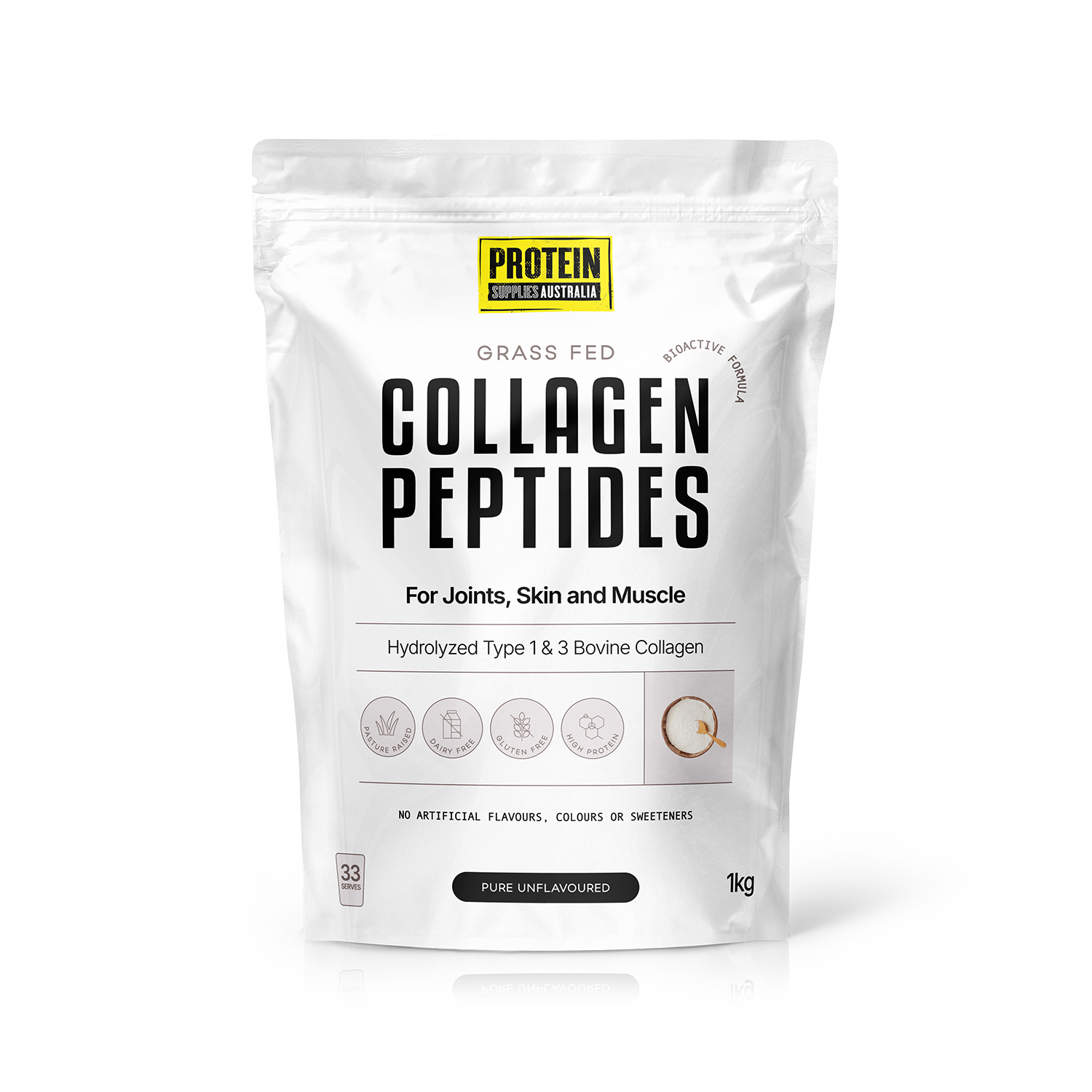
Australian Collagen Unflavoured
A 20g serve of pure hydrolysed bovine Type I & III collagen. No additives, no flavours, no fillers. This is the one that aligns directly with the AIS-recommended dose for connective tissue support. Stacks easily into any pre-workout or post-training drink.
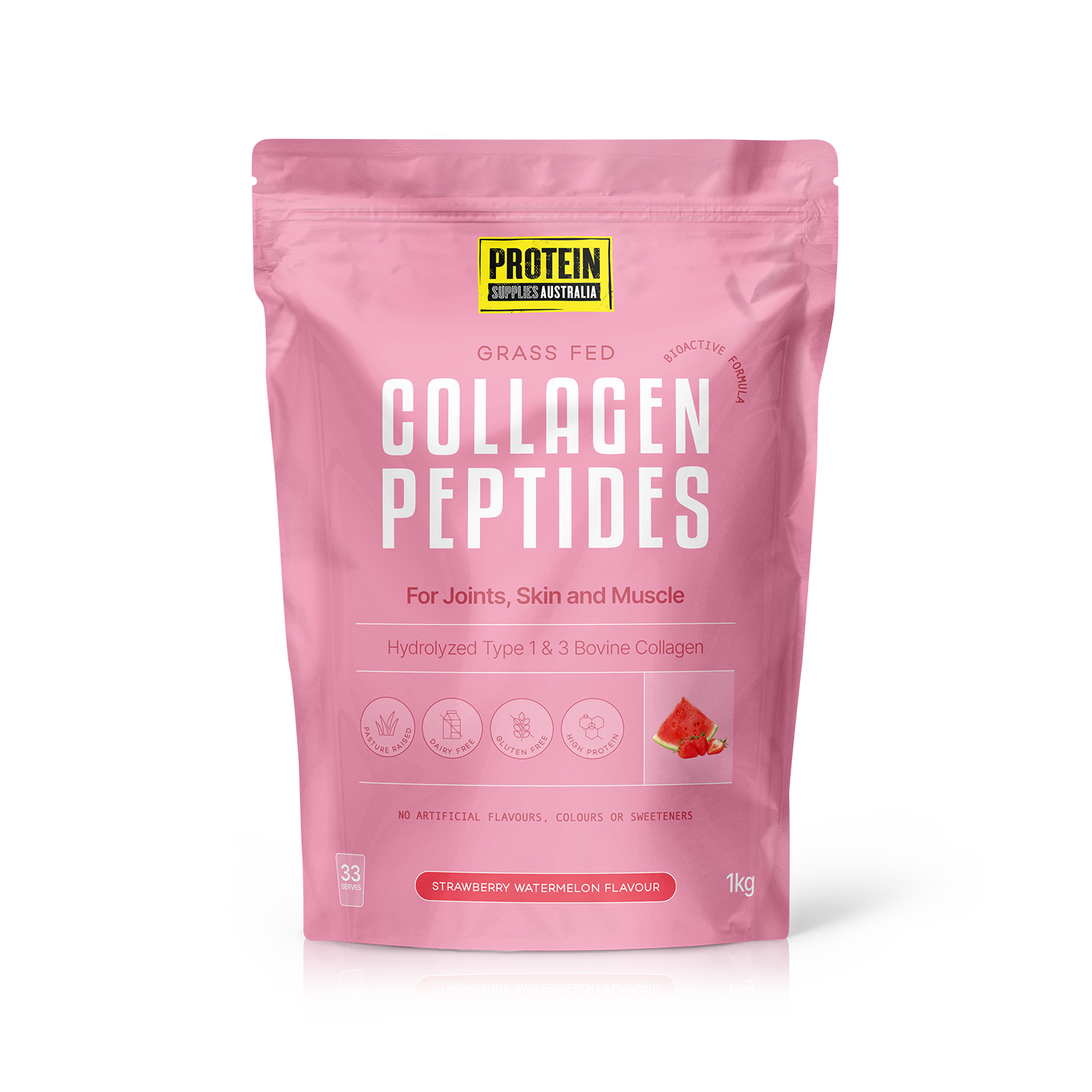
Another clean, unflavoured option. Pure hydrolysed collagen peptides that dissolve in anything — water, coffee, smoothies. Simple and effective.
Not sure which flavour or format suits you? The sample bundle lets you try multiple options before committing to a full bag. Smart if you're just starting out.
The best-value option for consistent daily use. Joint benefits require 12+ weeks of supplementation — the bundle is built for that kind of commitment.
Browse the full range: proteinsuppliesaustralia.com.au/collections/collagen-peptides

Why PSA for joints specifically:
-
100% hydrolysed bovine collagen (Type I & III) in bioavailable peptide form — absorbed efficiently
-
Grass-fed, hormone-free Australian sourcing
-
No fillers, no proprietary blends — you know exactly what you're getting and how much
-
30g serve aligns with the AIS minimum recommended dose for connective tissue support
-
Natural Glycine and Proline content supports cartilage matrix structure and anti-inflammatory action
Who Should Consider Collagen for Joint Health?
Collagen for joints isn't just for people already in pain. It's worth considering if you fall into any of these categories:
-
Athletes and gym-goers with repetitive joint stress (runners, lifters, crossfitters, team sport players)
-
People 35+ noticing morning stiffness, reduced mobility, or slower recovery after training
-
Those recovering from tendon or ligament injuries — collagen supports connective tissue repair alongside rehab
-
Anyone wanting to protect their joints proactively before issues develop
-
People with early-stage OA looking for a non-pharmacological adjunct to their management plan
If you're also looking at collagen for skin benefits, check out our article: Collagen for Skin: Does It Actually Work?
Important caveat: Collagen is not a replacement for medical treatment. If you have a diagnosed joint condition, always consult your GP before starting any supplement protocol. For general information on joint pain, Healthdirect Australia is a reliable starting point.
Useful Sources

Collagen for Skin: Does It Actually Work?
Collagen for Gut Health: What the Science Actually Says