
TL;DR
-
Collagen peptides have decent evidence for nail strength (a 12% increase in nail growth rate and a 42% drop in broken nails in one key clinical trial).
-
For hair, the evidence is indirect — collagen supports the dermis around your follicles and supplies amino acids your body uses to make keratin.
-
It won't reverse genetic hair loss. If androgenetic alopecia is your concern, collagen is not the answer.
-
10-15g per day is the sweet spot for beauty-focused goals.
-
Results take time — expect 8-12 weeks minimum before you notice a difference.
-
Stack it with vitamin C, zinc, and biotin for the best outcome.

Why Hair and Nails Need Collagen
Hair and nails are both made primarily of keratin — a tough structural protein. Collagen doesn't become keratin directly, but the two are deeply connected. Your body needs a steady supply of specific amino acids to produce keratin, and collagen is one of the richest sources of those amino acids.
On top of that, collagen forms the structural scaffolding that physically supports your follicles and nail matrix. When collagen levels drop (which happens gradually from your mid-20s), that scaffolding weakens.
The role of collagen in hair structure
Collagen makes up around 70% of the dermis — the middle layer of skin where every hair follicle is anchored. A well-supported dermis means a more stable environment for hair growth. As collagen production declines with age, the dermis thins, and hair can become finer and more prone to shedding.
The mechanism for hair growth is indirect. Collagen peptides supply proline and glycine — two amino acids that your body uses in keratin synthesis. Proline, in particular, plays a structural role in the keratin protein that forms the hair shaft. Glycine also acts as a precursor for glutathione, your body's main antioxidant, which helps protect follicle cells from oxidative damage.
There's also emerging research on the dermal papilla — the cluster of cells at the base of each follicle that controls the hair growth cycle. Animal studies suggest collagen peptides may support dermal papilla cell activity and promote the anagen (growth) phase, though human data here is still limited.

The key amino acids in collagen relevant to hair:
|
Amino acid |
Role |
|---|---|
|
Proline |
Structural component of keratin; supports the hair shaft |
|
Glycine |
Antioxidant precursor; protects follicle cells |
|
Hydroxyproline |
Supports the extracellular matrix around follicles |
How collagen supports nail strength
Nails are made of keratin too, but the nail matrix (the tissue beneath the nail that generates growth) sits in a bed of collagen-rich connective tissue. Type I collagen is the most relevant type here — it's the most abundant in skin, nails, and hair-related structures.
When collagen levels are adequate, the nail matrix has better structural support. This translates to nails that grow more consistently and are less prone to brittleness, peeling, and breakage.
What Does the Science Say?
Let's be straight: the evidence for collagen and hair/nails is promising but not ironclad. Here's what the research actually shows.
Evidence for hair growth
Direct human trials on collagen for hair growth are limited. The proposed mechanism — that collagen peptides support the dermis and supply amino acids for keratin production — is biologically plausible, but we don't yet have large, well-controlled randomised controlled trials (RCTs) confirming a direct hair-growth effect in humans.
A 2024 study (Gibson et al.) tested hydrolysed collagen combined with vitamin C over 12 weeks and found improvements in both skin and hair health markers. A separate 2023 RCT found that a supplement containing marine hydrolysed collagen alongside amino acids and micronutrients reduced hair loss in subjects with telogen effluvium. However, those studies used combination formulas — making it hard to isolate collagen's individual contribution.
Bottom line on hair: Collagen likely helps by creating a better environment for follicles and providing amino acid building blocks. Don't expect dramatic regrowth, but consistent supplementation may support hair thickness and reduce shedding over time — particularly if your diet is low in collagen-rich foods.
Evidence for nail strength
This is where the evidence is stronger. The most-cited study is Hexsel et al. (2017), published in the Journal of Cosmetic Dermatology (PMID: 28786550). In that trial, 25 women with brittle nail syndrome took 2.5g of bioactive collagen peptides daily for 24 weeks. The results:
-
12% increase in nail growth rate
-
42% decrease in the frequency of broken nails
-
64% of participants showed global clinical improvement in brittle nail symptoms
-
88% of participants reported improvement even 4 weeks after stopping supplementation
A 2024 double-blind, placebo-controlled RCT (Vleminckx et al.) also found significant improvements in nail colour and appearance in women taking collagen peptides over 84 days.
The Hexsel study had no placebo control group — an important limitation to acknowledge. But the consistency of results across multiple studies points in the same direction.

Honest caveat: what collagen can't do
Collagen won't reverse androgenetic alopecia (genetic hair loss). That condition is driven by hormones (specifically DHT) and genetics. No amount of collagen supplementation changes that. If you're experiencing significant hair thinning or loss, speak to a GP or dermatologist — collagen is a supportive tool, not a treatment.
Collagen also won't repair nails that are damaged by fungal infections, thyroid issues, or severe nutritional deficiencies. Address the root cause first.
How Long Before You See Results?
Patience is non-negotiable with collagen. Hair and nails grow slowly — that's just biology.
|
Goal |
Expected timeframe |
|---|---|
|
Reduced nail brittleness |
6-8 weeks |
|
Improved nail growth rate |
10-12 weeks |
|
Reduced hair shedding |
8-12 weeks |
|
Noticeable hair thickness |
3-6 months |
These timelines assume consistent daily use. Missing days regularly will push results out further. The Hexsel nail study ran for 24 weeks — and participants were still seeing benefits 4 weeks after they stopped. That tells you something about how cumulative this process is.
How to Get the Most Out of Collagen for Hair and Nails
Dosage
For beauty-focused goals like hair and nails, 10-15g per day is the recommended range. This is slightly lower than the doses used in joint studies (which often go up to 15-20g). The Hexsel nail study used just 2.5g — but that was a highly specific bioactive peptide formula. For a standard hydrolysed collagen powder, 10g is a practical daily target.
|
Goal |
Suggested daily dose |
|---|---|
|
Nail strength and growth |
10g |
|
Hair support |
10-15g |
|
Joint and connective tissue |
15-20g |
Timing
Collagen can be taken any time of day — absorption doesn't depend on the clock. That said, taking it with vitamin C (whether from food or a supplement) is worth doing, because vitamin C is a required cofactor for collagen synthesis. Without adequate vitamin C, your body can't efficiently incorporate collagen peptides into new collagen or keratin structures.
Some people prefer morning (mixed into coffee or a smoothie), others take it at night. Consistency matters more than timing.
What to stack with collagen (biotin, zinc, vitamin C)
Collagen works best as part of a broader nutritional approach. These three nutrients pair particularly well:
Vitamin C Vitamin C is essential for collagen synthesis — it helps hydroxylate proline and lysine residues, a critical step in building the collagen triple helix. The Better Health Channel notes that vitamin C plays a key role in collagen formation throughout the body. Aim for at least 45mg per day (Australia's recommended dietary intake), though many people benefit from more when actively supplementing collagen.
Zinc Zinc is a cofactor for keratin synthesis and hair follicle cell division. Low zinc is associated with hair loss and brittle nails. Good dietary sources include red meat, shellfish, pumpkin seeds, and legumes.
Biotin Biotin (vitamin B7) is probably the most famous "hair and nail" supplement — and for good reason. It supports keratin infrastructure. Most Australians get enough biotin through diet, but supplementing at 2.5-5mg/day is common for hair and nail goals. Note: biotin deficiency is rare, so if your levels are already adequate, extra biotin may not add much.

PSA Collagen Peptides — Which One to Choose?
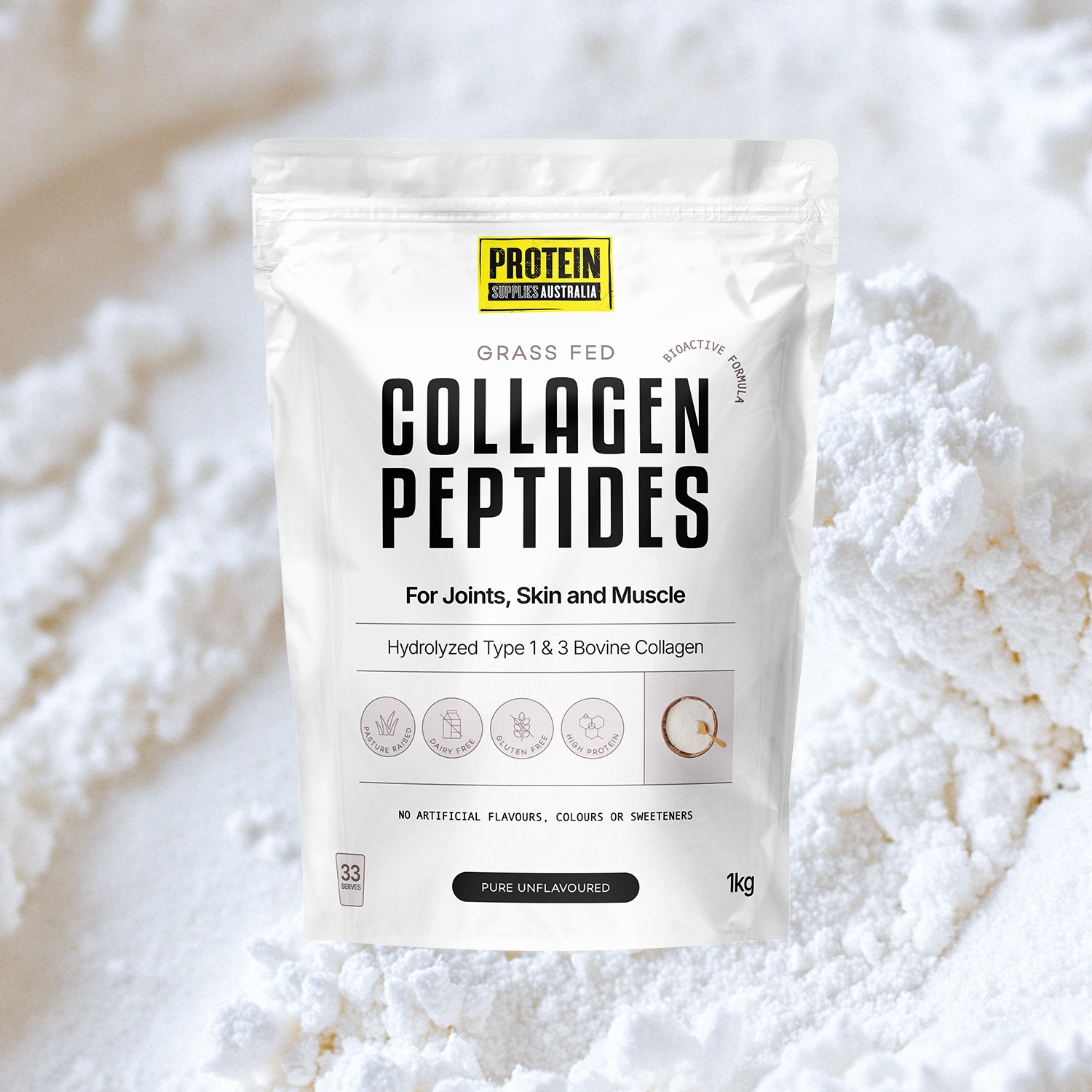
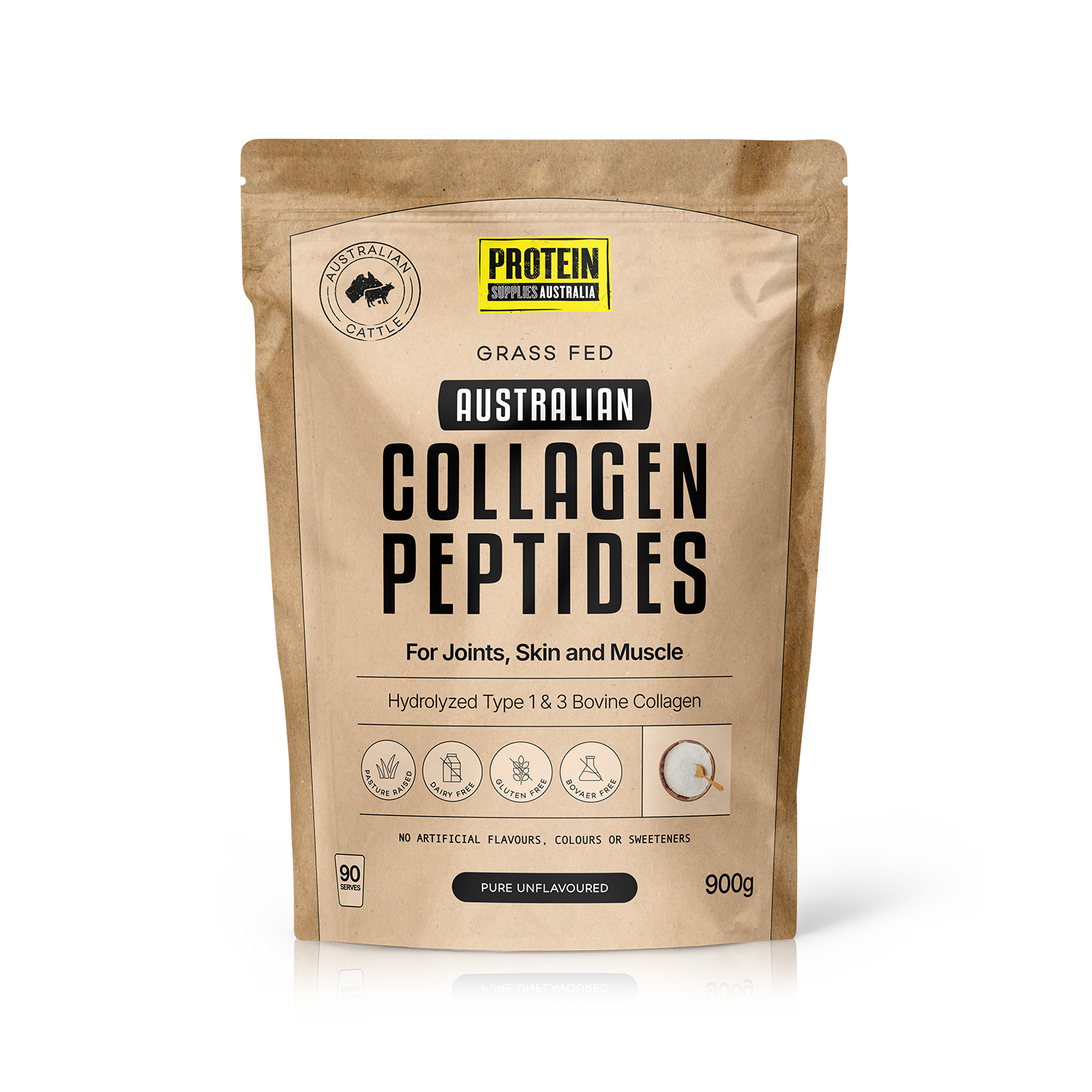
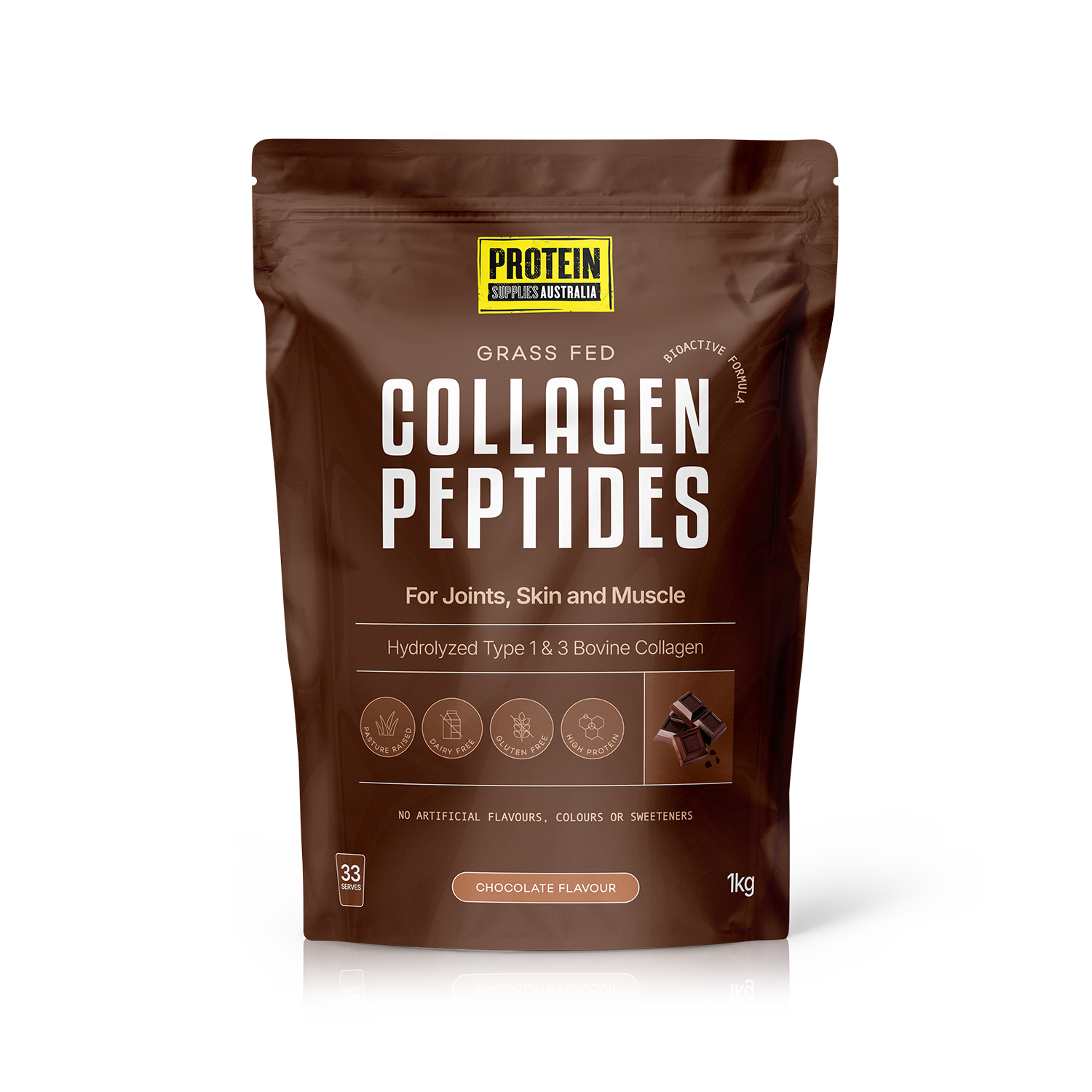
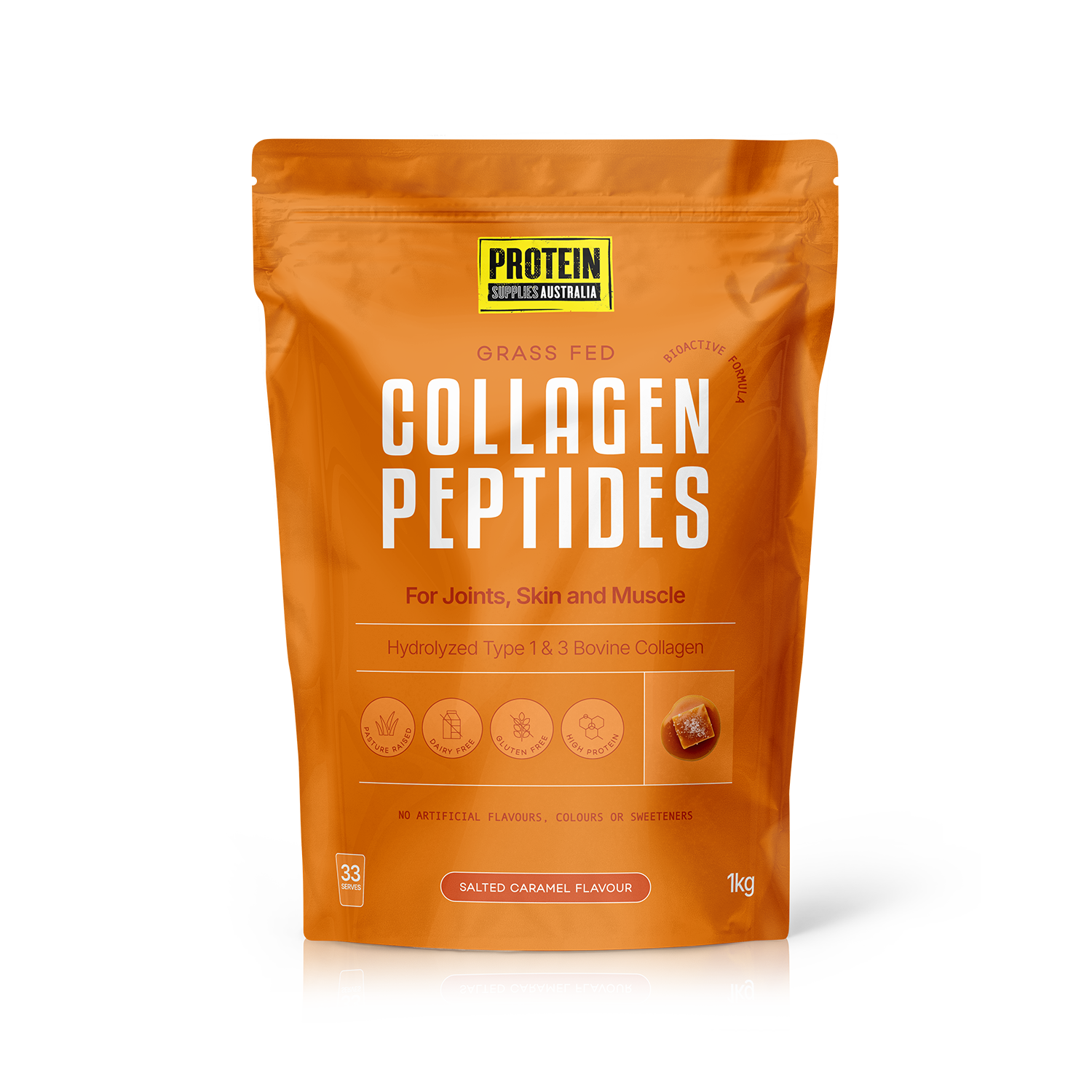
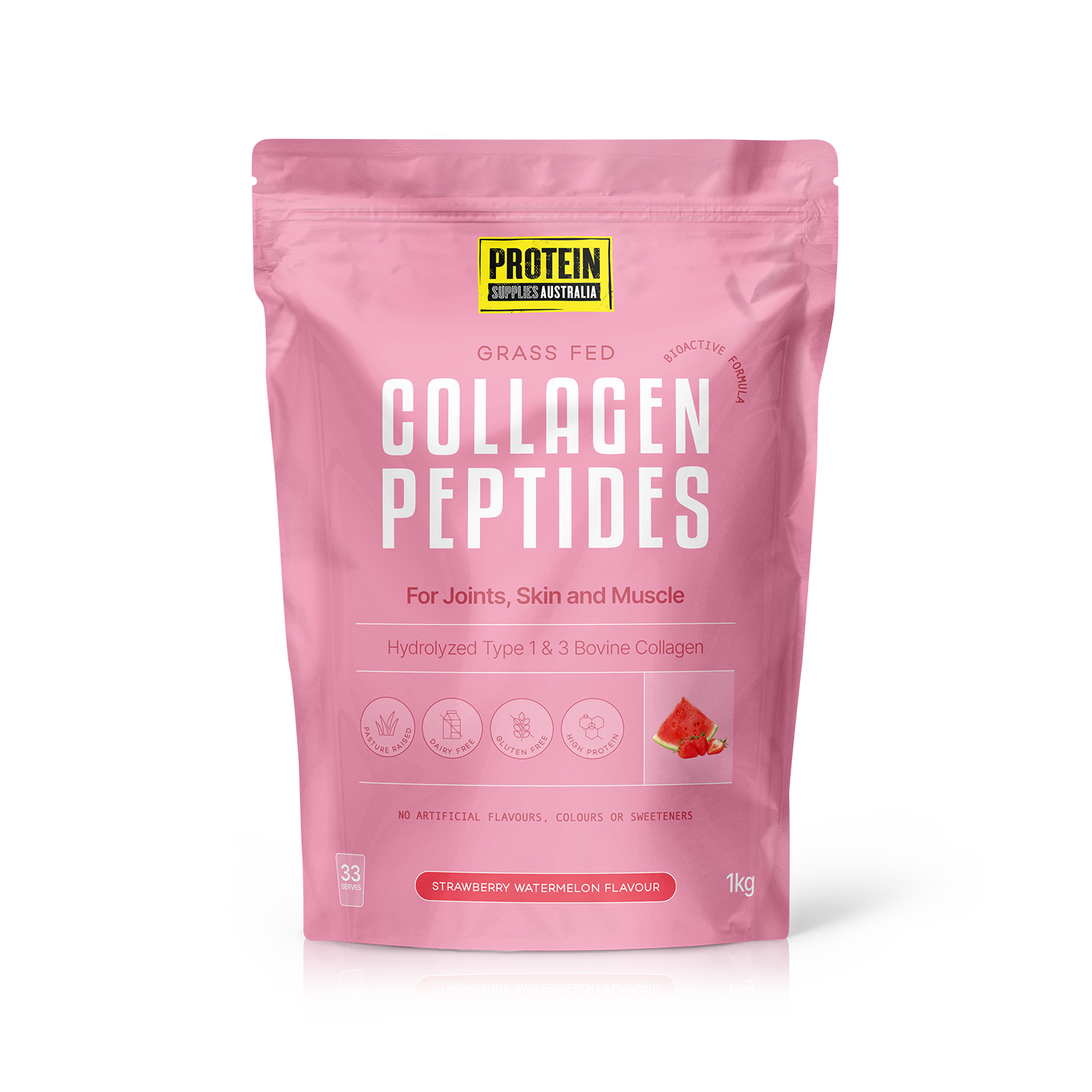
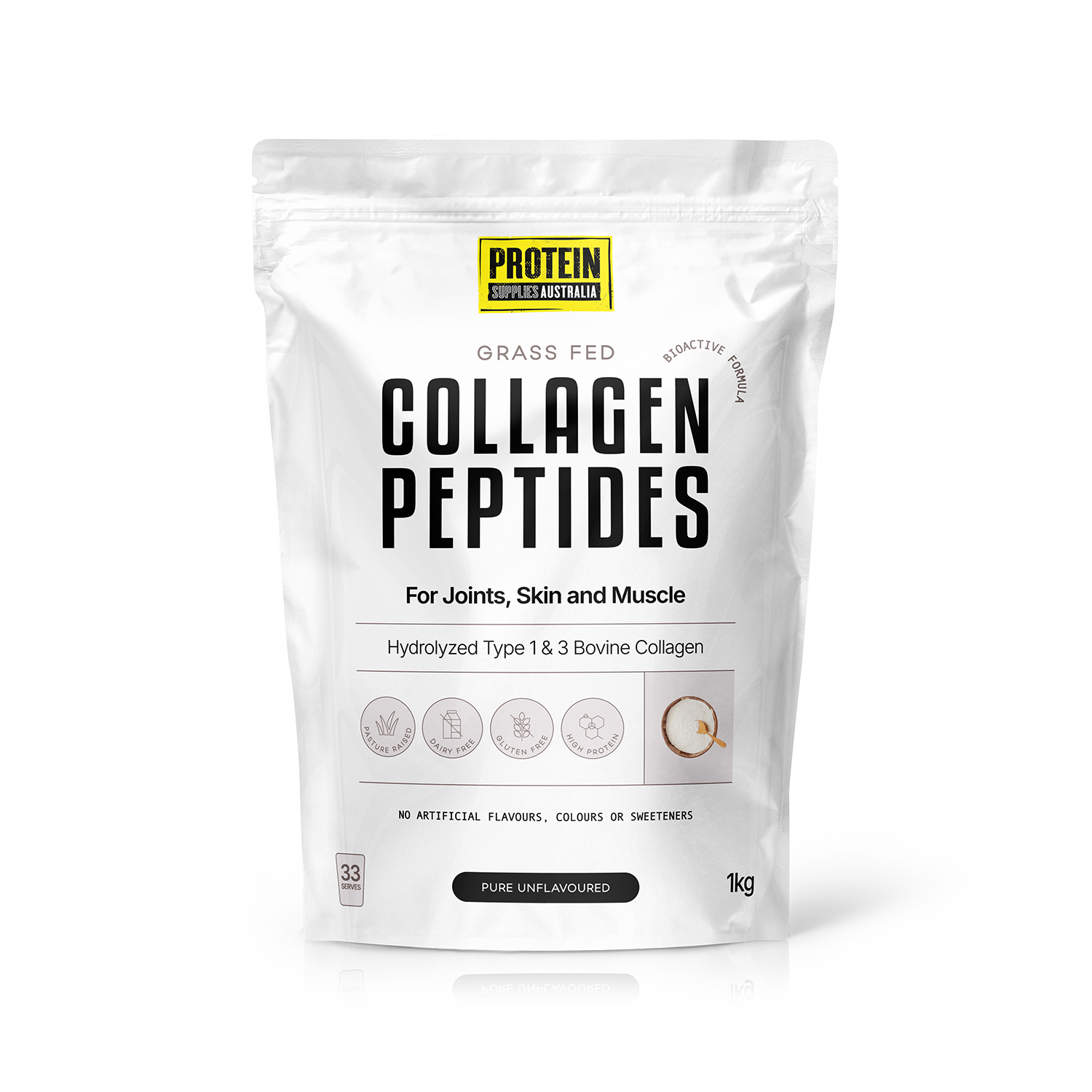
All PSA collagen products use grass-fed bovine collagen peptides — fully hydrolysed for maximum absorption, with no fillers, no proprietary blends, and a fully disclosed label. You know exactly what you're getting.
Why bovine over marine for hair and nails? Bovine collagen is predominantly Type I and Type III collagen — the types most relevant to skin, hair, and nail structure. It's also naturally high in glycine and proline, the amino acids most useful for keratin production and dermal support.
Here's a quick breakdown of the PSA range:
|
Product |
Best for |
Flavour |
|---|---|---|
|
Mixing into anything — coffee, soups, smoothies |
None |
|
|
Clean, no-fuss daily dose |
Unflavoured |
|
|
Morning smoothies or water |
Tropical |
|
|
Summer drinks, cold water |
Fruity |
|
|
Coffee, oats, baking |
Vanilla |
|
|
Post-workout shakes |
Chocolate |
|
|
Afternoon treats, lattes |
Salted caramel |
Not sure where to start? The Collagen Sample Bundle lets you try multiple flavours before committing to a full bag — a smart move if you're new to collagen supplementation.
Browse the full PSA Collagen Peptides collection to compare all options.
Useful Sources
-
Hexsel et al. (2017) — Oral supplementation with specific bioactive collagen peptides improves nail growth and reduces symptoms of brittle nails — PubMed (PMID: 28786550)
-
Vleminckx et al. (2024) — Influence of collagen peptide supplementation on visible signs of skin and nail health in an East Asian population — Journal of Cosmetic Dermatology
-
Collagen supplementation and regenerative health: advances in biomarker detection (2025) — Frontiers in Nutrition / PMC
-
Hair-growth-promoting effects of fish collagen peptide in human dermal papilla cells — PMC
-
Vitamins and minerals — Better Health Channel — betterhealth.vic.gov.au
-
Dietary supplements — Healthdirect Australia — healthdirect.gov.au
-
Biochemistry, Collagen Synthesis — StatPearls, NCBI — ncbi.nlm.nih.gov

Collagen for Gut Health: What the Science Actually Says
Protein Caramel Slice (With WPI)